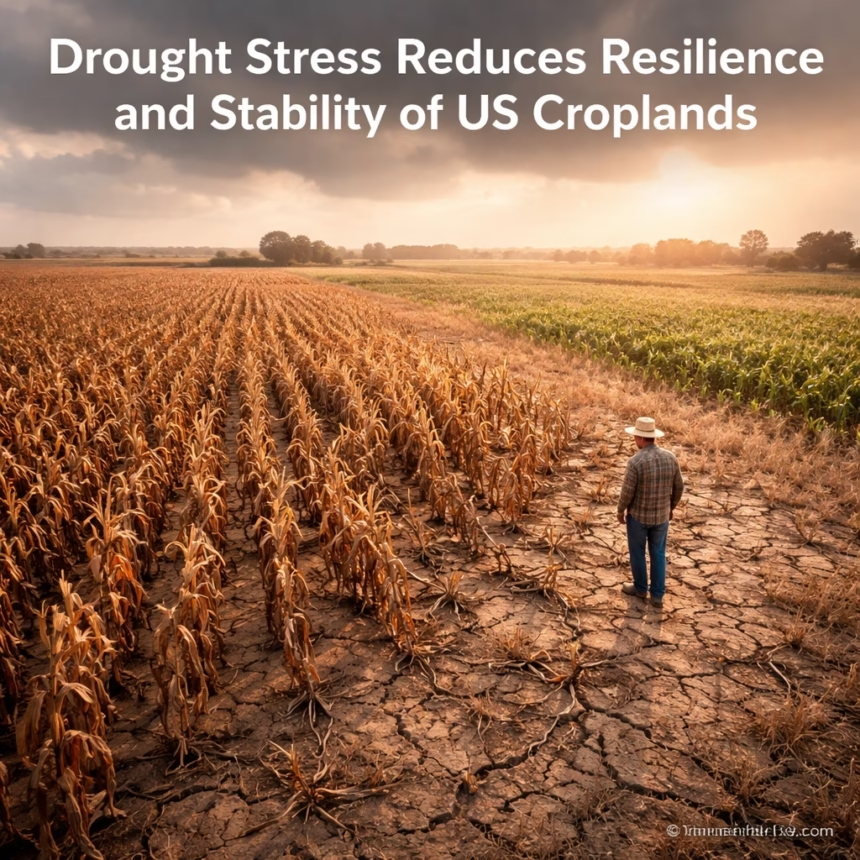
Farming's Future: Can US Fields Weather the Dry Spell?
Across the United States, from California's Central Valley to the Midwest's cornfields, persistent drought conditions are significantly weakening the ability of croplands to withstand environmental shocks. This ongoing crisis, intensified by climate change, poses a serious threat to agricultural production and the livelihoods of millions.
A History of Water Challenges
The American agricultural landscape has always grappled with water scarcity. Historically, regions like the Great Plains have experienced cyclical droughts. However, the frequency and severity of these events have been increasing in recent decades. The U.S. Drought Monitor, established in 1998, provides a continuous assessment of drought conditions, and its maps have shown a marked expansion of drought areas, particularly in the western and southern states, since 2010.
Significant droughts occurred in 2012-2015, impacting crop yields nationwide. The Colorado River Basin, a vital water source for over 40 million people across seven states, has been in a state of crisis since 2000, leading to mandatory water restrictions. The federal government has been grappling with water management strategies for decades, implementing programs like the Farm Bill to provide assistance during droughts and encouraging water conservation practices.
Recent Intensification of the Crisis
The past three years – 2020, 2022, and 2023 – have witnessed exceptional drought conditions across large swaths of the US. The Southwest, including Arizona, New Mexico, and Nevada, is experiencing its longest drought in 1,200 years, according to the U.S. Geological Survey. The NOAA (National Oceanic and Atmospheric Administration) reports that the Southwest has seen record-breaking temperatures and significantly reduced precipitation during this period.

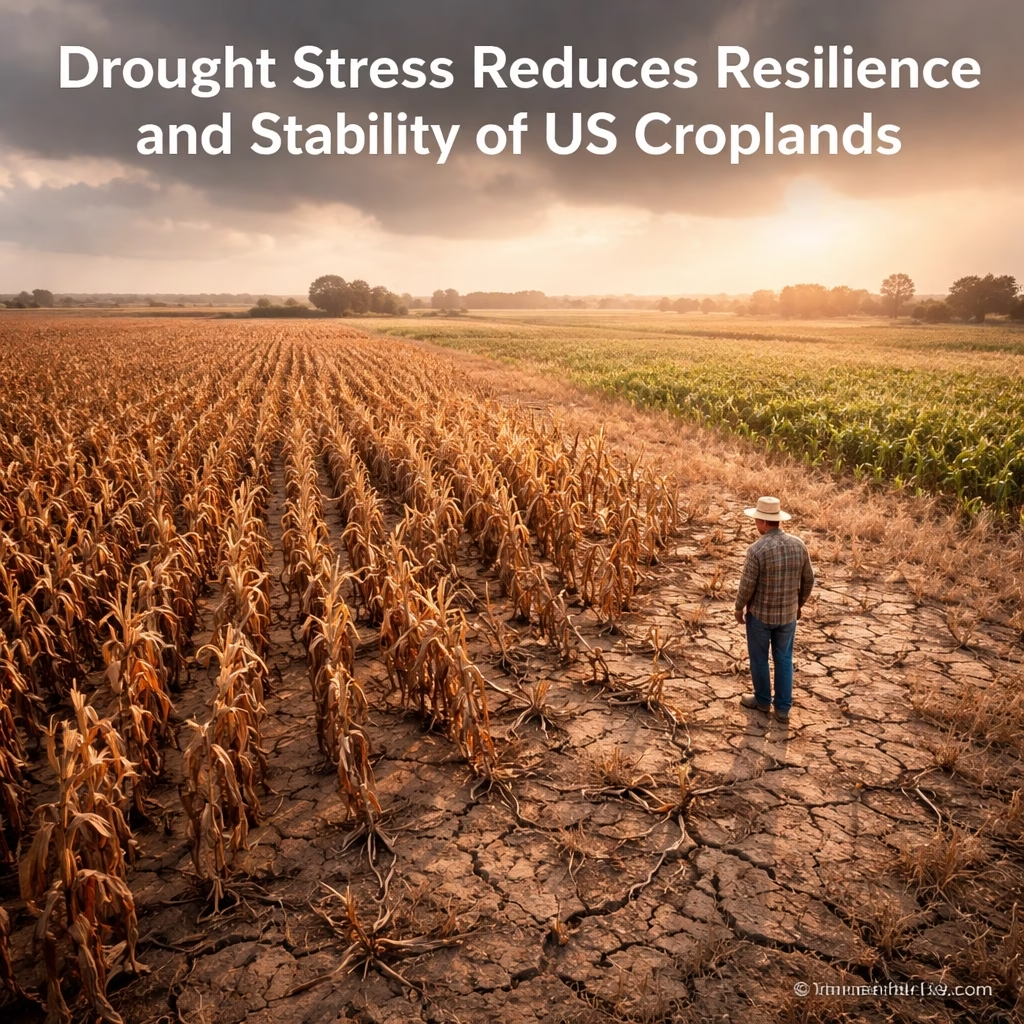
The California drought, a recurring issue, has intensified. Lake Mead and Lake Powell, the largest reservoirs in the US, have reached historically low levels, impacting hydroelectric power generation and agricultural irrigation. Farmers in California's Central Valley are facing mandatory water cuts, forcing difficult decisions about which crops to prioritize and implement water-saving technologies. The USDA (United States Department of Agriculture) has declared drought conditions in 12 states as of October 2023.
Ripple Effects: Who Feels the Strain?
The drought’s impact extends far beyond individual farmers. Agricultural businesses, from seed suppliers to food processors, are feeling the pressure. Increased crop prices are being passed on to consumers, contributing to inflation. Livestock producers are struggling to find adequate grazing land and water for their animals, leading to economic losses.
More Read

Rural communities heavily reliant on agriculture are particularly vulnerable. Job losses in the agricultural sector can have cascading effects on local economies, impacting businesses like restaurants, equipment suppliers, and housing markets. Food security is also a concern, as reduced crop yields could lead to shortages and higher food prices, especially for vulnerable populations. The economic consequences are particularly acute in states like Texas, Oklahoma, and Kansas, where agriculture is a major driver of the economy.
Economic Impacts on Specific Sectors
California’s almond industry, a significant contributor to the state’s economy, is facing severe water restrictions, threatening production and export volumes. Corn and soybean farmers in the Midwest are experiencing reduced yields due to lack of rainfall, impacting the nation’s grain supply. The dairy industry in Texas is facing challenges in maintaining milk production due to water scarcity for feed crops.
Looking Ahead: Mitigation and Adaptation
Addressing the long-term challenges posed by drought requires a multi-faceted approach. Investment in water infrastructure, such as improved irrigation systems and water storage facilities, is crucial. Promoting drought-resistant crop varieties and implementing water-efficient farming practices are also essential.
The US government is focusing on drought resilience strategies through programs like the USDA's Environmental Quality Incentives Program (EQIP), which provides financial and technical assistance to farmers implementing conservation practices. Research into water-saving technologies, including precision irrigation and rainwater harvesting, is ongoing.
Potential Milestones
The implementation of new water management agreements in the Colorado River Basin, currently under negotiation among the seven basin states, is expected to significantly impact water allocation in the region by 2026. Ongoing research into drought-tolerant crops could lead to wider adoption of these varieties within the next five years. Increased investment in water recycling and desalination technologies is likely as water scarcity intensifies.
Ultimately, mitigating the impact of drought on US croplands requires a combination of technological innovation, policy changes, and individual farmer adaptation. The future of American agriculture depends on building resilience to withstand the increasing challenges of a changing climate.