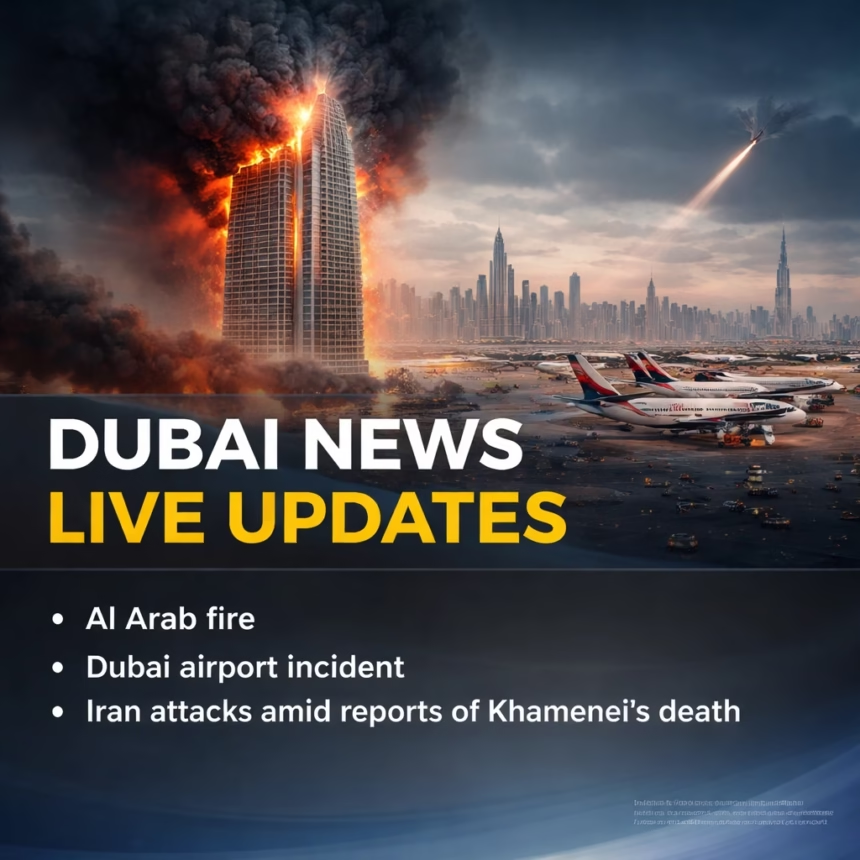
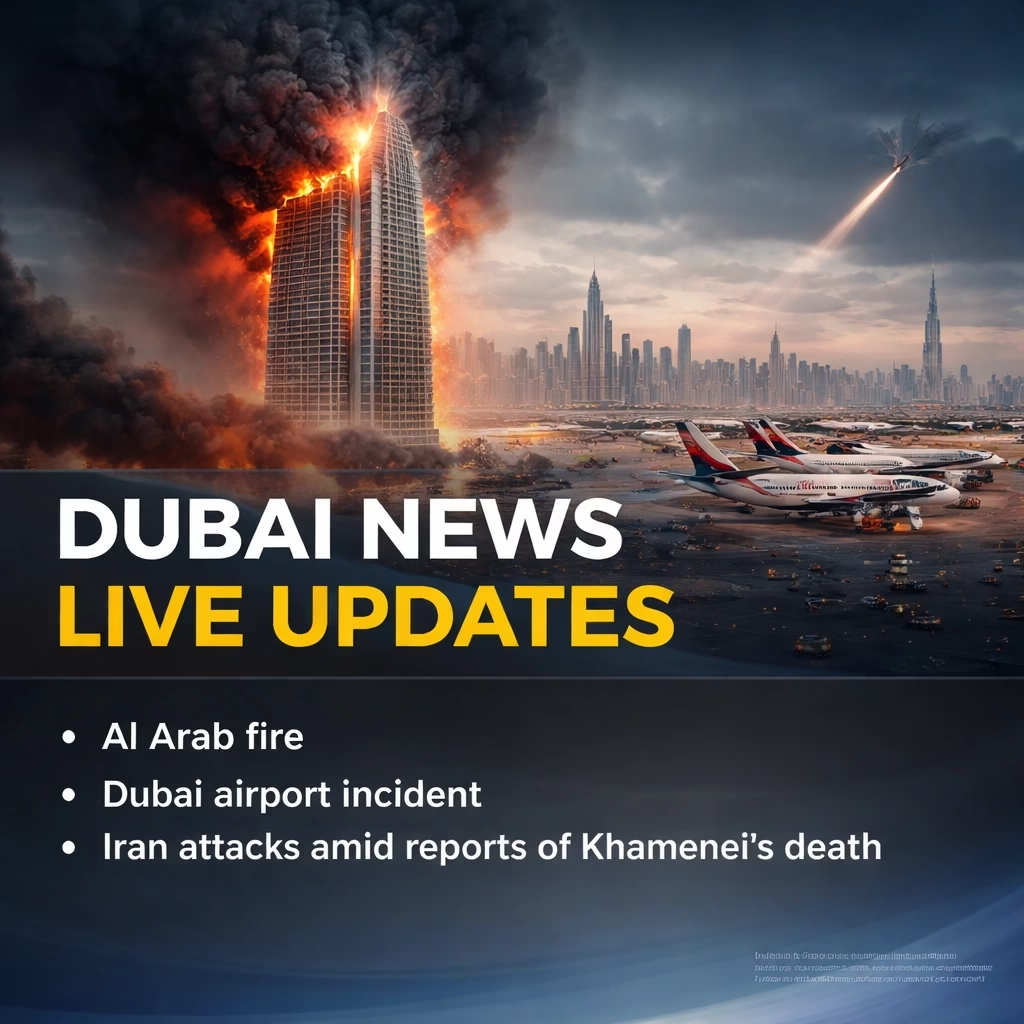
Dubai has been gripped by a series of unsettling developments, including a significant fire incident and disruptions at its major airport, alongside widespread unconfirmed reports linking these events to alleged Iranian actions and circulating rumors regarding the health of Iran's Supreme Leader. The situation remains highly fluid, prompting heightened regional and international attention.
Background: A Region on Edge
The past week has seen a rapid escalation of events in the United Arab Emirates. Reports first emerged of a substantial fire at a prominent location in Dubai, identified as the "Al Arab" area, though specific details on the extent of damage and casualties remain sparse and subject to ongoing investigation. Shortly thereafter, Dubai International Airport (DXB), a critical global aviation hub, experienced disruptions, leading to flight delays and cancellations. While initial reports from authorities focused on operational issues or technical faults, a parallel narrative quickly began to circulate, alleging a more sinister cause.
These incidents unfold against a backdrop of long-standing geopolitical tensions in the Middle East, particularly between Iran and several Gulf Cooperation Council (GCC) states, including the UAE. This rivalry is often characterized by proxy conflicts, maritime incidents, and cyber warfare, with both sides frequently accusing the other of destabilizing the region. The Strait of Hormuz, a vital shipping lane, has been a flashpoint for many of these confrontations. The broader regional context includes ongoing conflicts in Yemen and Syria, where Iran and its adversaries support opposing factions, further fueling animosity and distrust.
Key Developments: Unconfirmed Claims and Lingering Questions
The most significant development following the incidents in Dubai has been the proliferation of unconfirmed claims linking them directly to alleged Iranian attacks. While UAE authorities have maintained a cautious stance, often referring to ongoing investigations and refraining from immediate attribution, various media outlets and social media channels have amplified reports suggesting Iranian involvement. These reports, which lack official corroboration from either Emirati or international bodies, have contributed significantly to regional anxiety.
Adding another layer of complexity to the volatile situation are widespread, unverified reports concerning the health and status of Iran's Supreme Leader, Ayatollah Ali Khamenei. These rumors, which have circulated periodically in the past, gained renewed traction in the wake of the Dubai incidents. Official Iranian sources have not confirmed any significant change in the Supreme Leader's health or status, and state media continues to broadcast regular programming featuring his activities. However, the sheer volume of these unconfirmed reports has led to speculation about potential succession scenarios within Iran and the implications for regional stability should such a change occur.
More Read

Official statements from UAE authorities have consistently emphasized the need for calm and have reiterated that investigations into the Dubai fire and airport disruptions are underway. These statements have generally avoided making definitive accusations, focusing instead on ensuring public safety and restoring normal operations. International bodies and allied nations have largely called for de-escalation and urged all parties to exercise restraint, highlighting the potential for miscalculation in an already tense environment.
Regional reactions have been mixed. Some neighboring states have expressed solidarity with the UAE and called for swift investigations, while others have remained silent or issued general calls for peace. The lack of concrete, officially confirmed information regarding the alleged causes of the Dubai incidents and the status of Iran's leadership has created a vacuum, which has unfortunately been filled by speculation and rumor.
Impact: Ripple Effects Across the Region
The unfolding situation carries significant implications across multiple fronts. Economically, Dubai, known globally as a hub for tourism, trade, and finance, faces potential challenges. Any perception of heightened insecurity or instability could deter foreign investment and impact its crucial tourism sector, which relies heavily on a reputation for safety and reliability. Disruptions at Dubai International Airport, one of the world's busiest, have already caused inconvenience for thousands of travelers and could have broader ripple effects on global supply chains if prolonged or repeated.
More Read

Geopolitically, the unconfirmed allegations of Iranian involvement threaten to further escalate regional tensions. If substantiated, such claims could lead to retaliatory measures, deepening the existing rifts between Gulf states and Iran. This could have destabilizing consequences for the entire Middle East, potentially drawing in international powers with vested interests in the region's security and energy stability. The reports surrounding Ayatollah Khamenei's health also introduce an element of uncertainty into Iran's domestic politics, with potential implications for its foreign policy and regional posture. Any leadership transition in Iran, particularly under ambiguous circumstances, could reshape the dynamics of power in the Middle East.
Locally, residents of Dubai and the wider UAE have expressed concerns. While official reassurances aim to maintain public calm, the circulating reports and the visible disruptions have naturally caused anxiety. The incidents serve as a stark reminder of the region's vulnerability to geopolitical shifts and the importance of robust security measures.
What Next: Awaiting Clarity and De-escalation
The immediate future hinges on several critical factors. Official investigations into the Dubai fire and airport incident are paramount. The findings from these inquiries, once released, will be crucial in either confirming or refuting the unconfirmed allegations of external involvement. Transparency in these investigations will be key to managing regional perceptions and preventing further speculation.
Concurrently, the international community will be closely watching for any official statements from Tehran regarding the reports concerning Supreme Leader Khamenei. A definitive clarification from Iranian authorities could help dispel rumors and reduce uncertainty surrounding Iran's leadership.
Diplomatic efforts are also expected to intensify. Regional and international actors are likely to engage in back-channel communications and public calls for de-escalation to prevent any further escalation of tensions. The focus will be on encouraging restraint from all parties and fostering dialogue to address underlying grievances.

The coming days are critical for the region. The prevailing uncertainty demands careful navigation by all stakeholders to prevent miscalculation and ensure stability in a region already grappling with numerous complex challenges. The world watches for clarity and a pathway towards de-escalation.