Cosmic Beauty Amidst Earth's Challenges: Webb Unveils Stunning Nebula
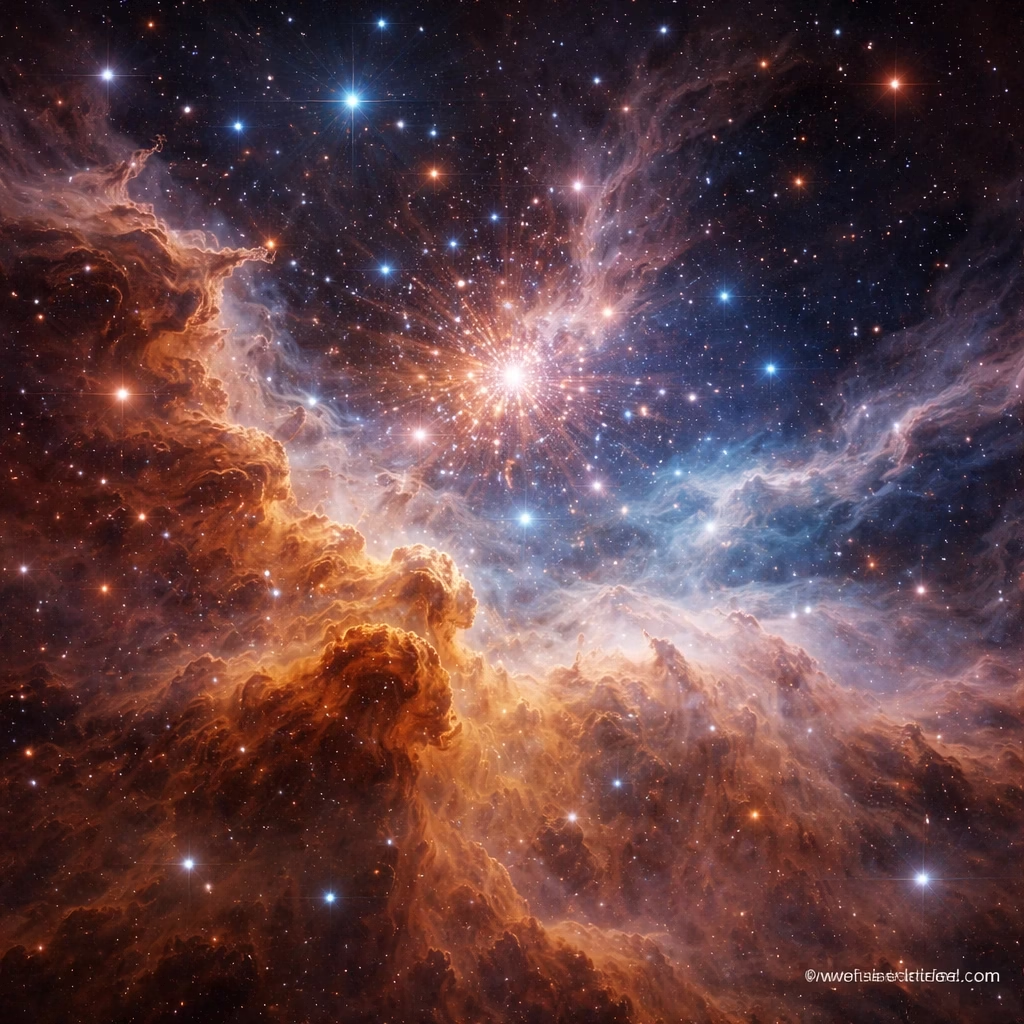
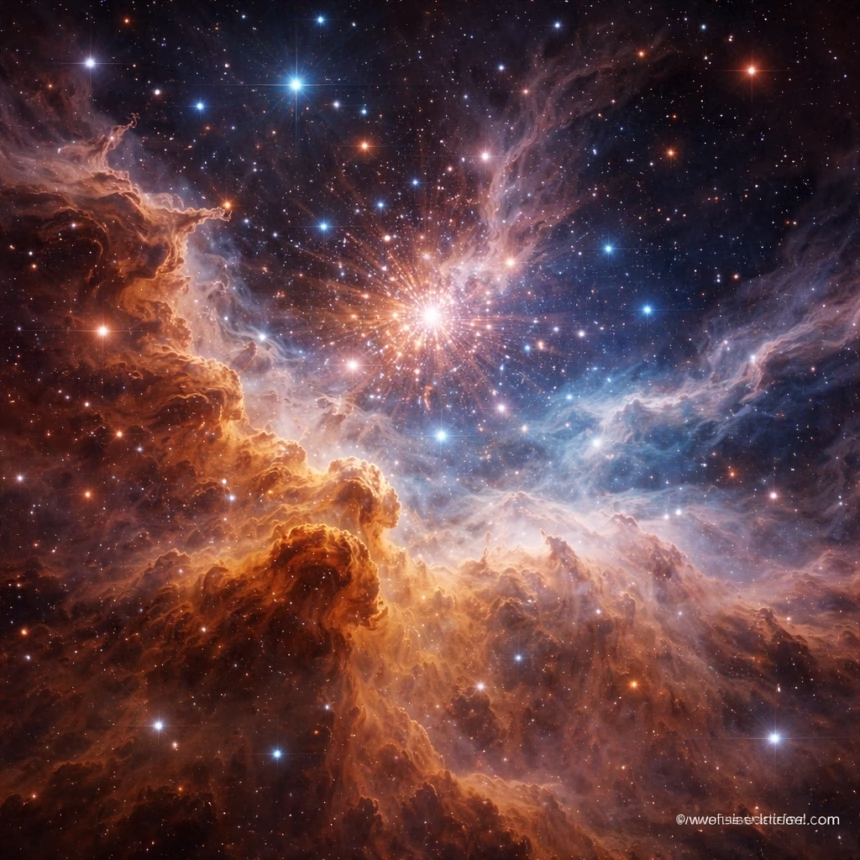
Amidst ongoing concerns about climate change and environmental degradation on Earth, the James Webb Space Telescope (JWST) has released a new, stunning image of the Carina Nebula, a vast stellar nursery located approximately 7,500 light-years away in the constellation Carina. The image, unveiled on July 12, 2023, provides unprecedented detail of star formation within this celestial region.
Background: A New Era of Cosmic Exploration
The James Webb Space Telescope, a collaborative project led by NASA, the European Space Agency (ESA), and the Canadian Space Agency (CSA), launched on December 25, 2021, from French Guiana. Designed to be the most powerful space telescope ever built, JWST observes primarily in infrared light, allowing it to peer through cosmic dust clouds and observe some of the earliest stars and galaxies forming in the universe. Its development spanned decades, with initial concept studies beginning in the late 1990s and construction commencing in 2007. The telescope replaced the Hubble Space Telescope as the primary infrared observatory, offering vastly improved capabilities for understanding the universe's origins and evolution.
Key Developments: Unveiling the Carina Nebula’s Secrets
The recent image of the Carina Nebula is a culmination of months of observing data captured by JWST’s Near-Infrared Camera (NIRCam). The Carina Nebula is one of the largest and most active star-forming regions in the Milky Way. The new image reveals intricate details of previously hidden structures within the nebula, including towering pillars of gas and dust where new stars are being born. Notably, the image highlights the "Cosmic Cliffs," dramatic formations sculpted by intense stellar winds and radiation from young, massive stars. Researchers have identified over 120 young stars within the imaged region, some of which are still embedded in their natal clouds.
NIRCam’s Role
NIRCam, the primary imager on JWST, is crucial for this discovery. Its infrared sensitivity allows it to penetrate the dense dust clouds that obscure visible light, revealing the hidden processes of star birth. The telescope’s ability to detect faint infrared signals has allowed scientists to map the distribution of gas and dust in unprecedented detail.
More Read

Impact: Inspiring Awe and Fostering Scientific Inquiry
While the immediate impact of the nebula image is primarily scientific, it has a broader cultural and societal effect. The breathtaking beauty of the image has captured the public's imagination, offering a moment of awe and wonder during a period marked by significant global challenges. The image has been widely shared across social media platforms, sparking conversations about the scale and complexity of the universe. Furthermore, the data collected by JWST will contribute to a deeper understanding of the processes that led to the formation of our solar system and the potential for life elsewhere in the universe.
Educational institutions are utilizing the image as a teaching tool to engage students in astronomy and astrophysics. The accessibility of high-quality images from JWST is fostering a renewed interest in science and exploration, especially among younger generations.
What Next: Continued Exploration and Discovery
JWST's mission is ongoing, and scientists anticipate many more groundbreaking discoveries in the years to come. Future observations will focus on studying exoplanets – planets orbiting other stars – searching for signs of habitability and potentially even life. The telescope will also continue to probe the earliest galaxies that formed after the Big Bang, providing valuable insights into the universe's infancy. Planned observations include detailed studies of star formation in other nebulae, such as the Pillars of Creation in the Eagle Nebula.
More Read

Future Targets
Scientists are currently prioritizing observations of galaxies billions of light-years away to study their composition and evolution. JWST’s ability to detect the faint light from these distant objects will revolutionize our understanding of the universe’s history. The telescope is also scheduled to observe protoplanetary disks, the swirling clouds of gas and dust around young stars where planets are forming.
The James Webb Space Telescope represents a monumental achievement in human ingenuity and collaboration. As Earth faces complex challenges, the cosmos continues to offer a source of inspiration, reminding us of the vastness and beauty of the universe we inhabit.