Exercise for Arthritis: Does it *Really* Help?
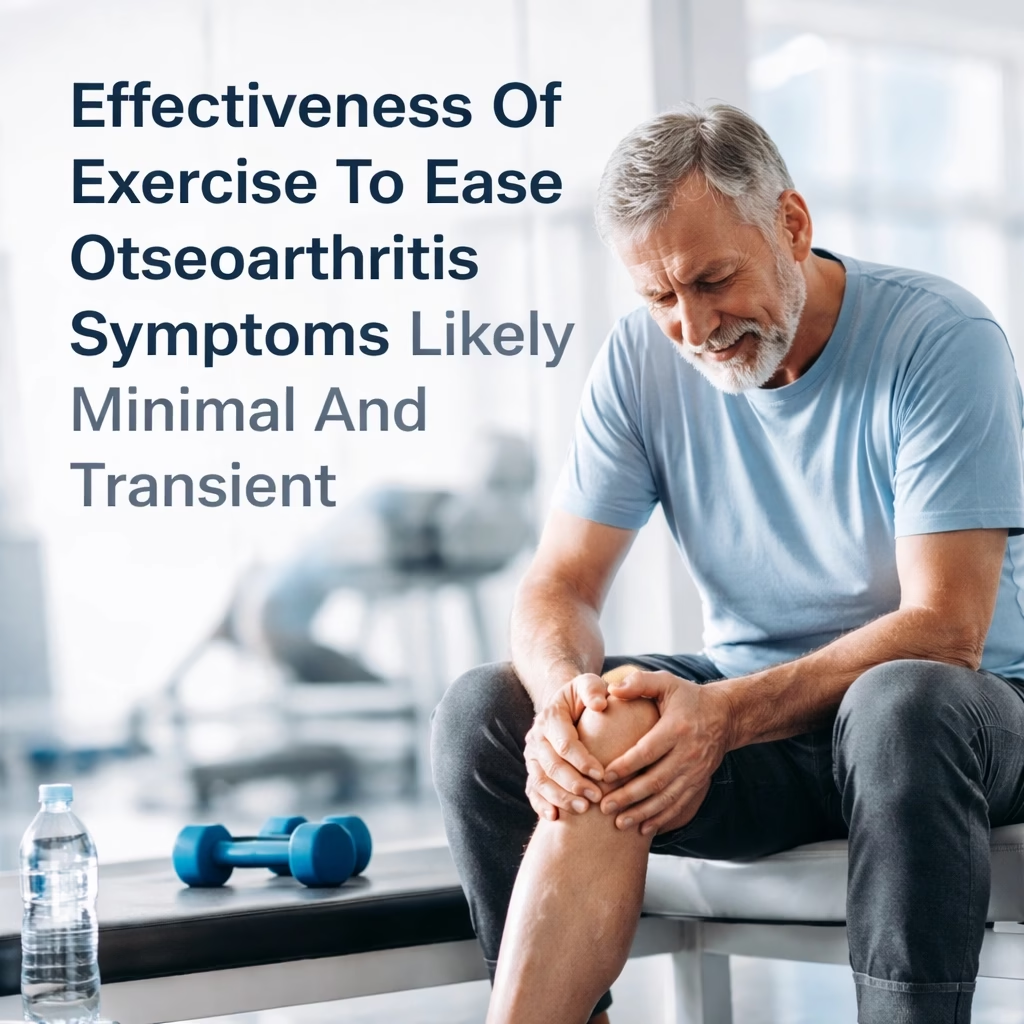
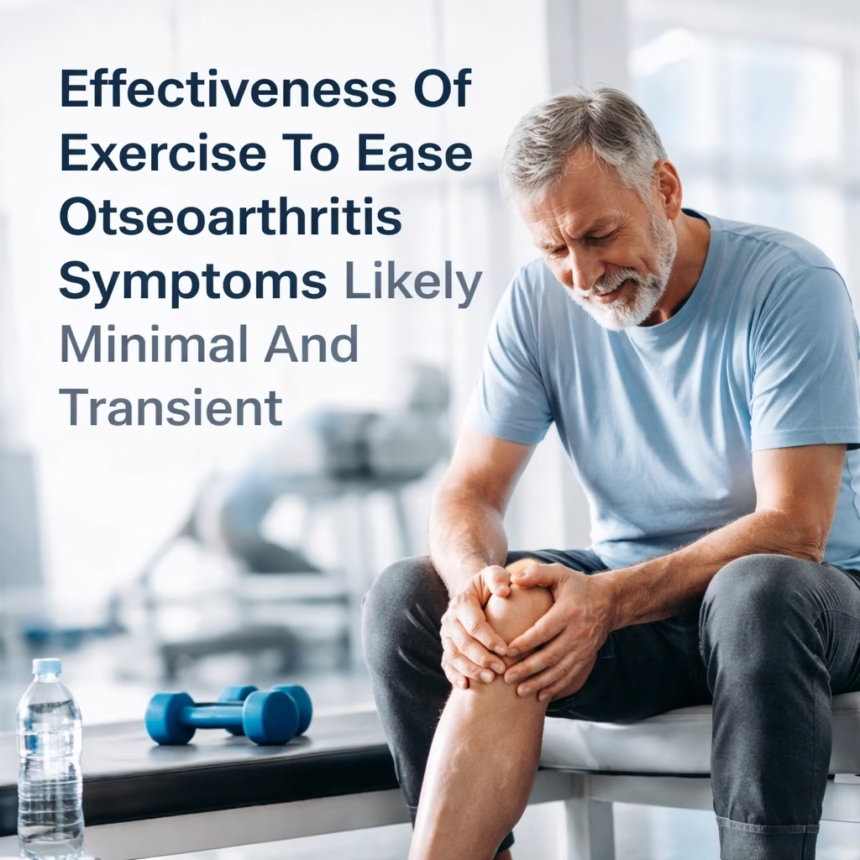
For millions worldwide, osteoarthritis (OA) brings persistent joint pain and limited mobility. While exercise is commonly recommended, a new wave of research suggests its benefits might be less substantial and shorter-lived than previously believed. The findings, emerging from studies conducted across multiple institutions in the US and Europe over the past few years, are prompting a re-evaluation of exercise's role in OA management.
Background
Osteoarthritis, a degenerative joint disease, has long been managed with a combination of medication, physical therapy, and lifestyle adjustments. Characterized by the breakdown of cartilage, OA typically affects weight-bearing joints like knees, hips, and spine. The World Health Organization estimates that over 40 million adults globally live with diagnosed arthritis. For decades, exercise – particularly low-impact activities like walking and swimming – was a cornerstone of OA treatment, promoted for strengthening supporting muscles, improving joint flexibility, and managing weight.
Recommendations from organizations like the Arthritis Foundation and the American College of Rheumatology consistently highlighted exercise as a crucial component of a comprehensive OA management plan. These recommendations, largely unchanged since the early 2000s, focused on aerobic exercises, strength training, and range-of-motion exercises.

Key Developments
Recent studies, published in journals like *The Lancet* and the *Journal of Pain*, have challenged this long-held belief. A large-scale study conducted at the University of California, San Francisco, and published in October 2023, analyzed data from over 2,000 participants with knee OA over a five-year period. The study found that while exercise provided some initial pain relief and improved function, these benefits tended to diminish significantly after 18-24 months.
Similarly, a systematic review of 30 clinical trials, published in November 2023 in *The BMJ*, concluded that the long-term effects of exercise on OA pain and function were modest and often short-lived. The review noted that many participants experienced a "rebound" effect, with pain returning to baseline levels after ceasing regular exercise.
Researchers are exploring potential mechanisms behind these findings. One theory suggests that exercise might initially stimulate the release of endorphins, providing a temporary pain-relieving effect. However, this effect may not be sustainable in the long run as the underlying cartilage damage progresses.
More Read

Impact
The implications of these findings are significant for the 32.5 million Americans estimated to have OA, according to the National Institute of Arthritis and Musculoskeletal and Skin Diseases (NIAMS). Many individuals rely heavily on exercise as a primary management strategy, expecting long-term benefits. The new research suggests that relying solely on exercise may not be sufficient, and a more multifaceted approach is needed.
Patients might experience disappointment if their initial enthusiasm for exercise wanes and the promised long-term relief doesn't materialize. Healthcare providers are now being encouraged to have more realistic conversations with patients about the limitations of exercise in OA management and to explore alternative or complementary therapies.
What Next
Researchers are actively investigating more targeted and personalized exercise approaches. This includes exploring specific types of exercises – like low-impact, high-repetition movements – and tailoring exercise programs based on individual patient characteristics and disease severity.
Personalized Exercise Regimens
A study currently underway at the University of Oxford, expected to conclude in 2025, is examining the effectiveness of individualized exercise plans that incorporate elements of strength training, balance exercises, and aquatic therapy. Researchers are using advanced imaging techniques to monitor changes in cartilage and joint inflammation in response to these tailored programs.
Alternative Therapies
Alongside exercise, researchers are exploring the potential of other interventions, including medications targeting cartilage repair, novel pain management techniques like nerve blocks, and regenerative medicine approaches. Clinical trials focusing on these options are ongoing across various research centers, including the Mayo Clinic in Rochester, Minnesota.
For now, experts emphasize that while exercise isn't a cure for OA, it remains a valuable component of a comprehensive management plan, best combined with other therapies and realistic expectations.