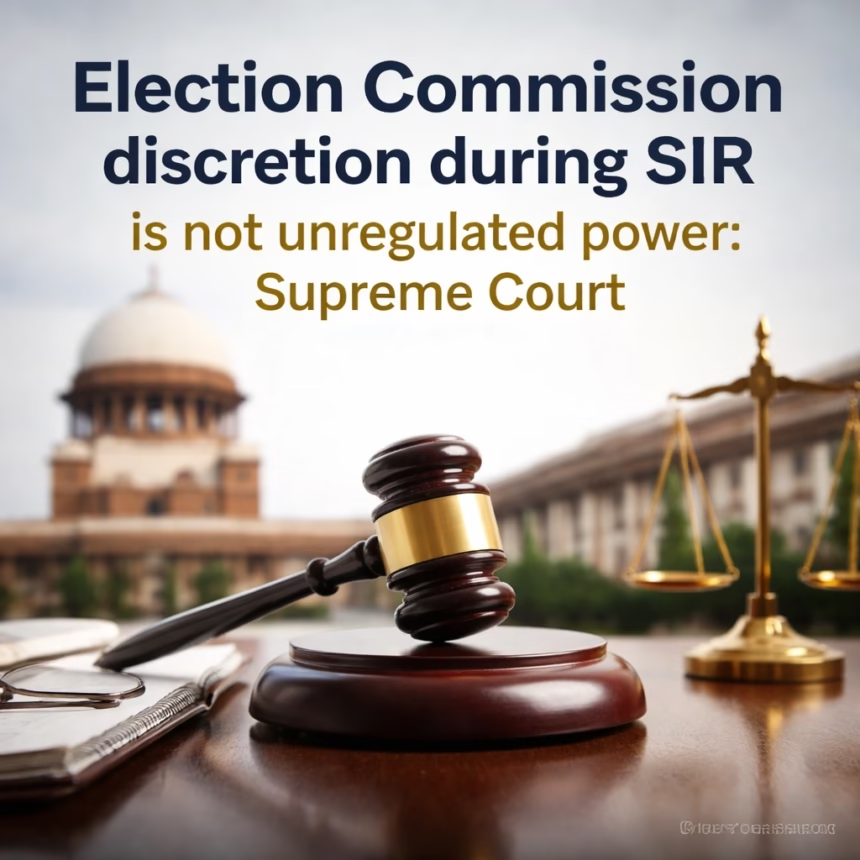
Election Body's Powers Scrutinized: SC Limits Discretion in Sensitive Periods
The Supreme Court of India delivered a significant judgment on May 10, 2024, regarding the Election Commission of India’s (ECI) powers during the model code of conduct (MCC) period. The court clarified that the ECI’s discretion, while necessary, is not absolute and must be exercised within legal boundaries.
Background
The Model Code of Conduct is a set of guidelines the ECI implements during elections in India. It aims to ensure a level playing field for all political parties and maintain free and fair elections. The MCC typically comes into effect well before the election date, effectively freezing certain government activities and imposing restrictions on political campaigning.
Historically, the ECI has been granted considerable discretion in interpreting and applying the MCC, leading to occasional controversies and challenges regarding the scope of its authority. This has often been debated in the courts, particularly concerning decisions made during the sensitive period leading up to elections.
Key Developments
The recent judgment stemmed from petitions challenging the ECI's actions during the 2024 Lok Sabha elections. Several parties and individuals argued that the ECI had exercised its discretionary powers in a manner that was arbitrary, opaque, and potentially violated fundamental rights.
More Read

The core of the dispute revolved around the ECI's decisions regarding the allocation of resources, scheduling of government programs, and the issuance of directives to government officials during the MCC period. Petitioners alleged that these decisions lacked sufficient justification and were influenced by political considerations.
The Supreme Court, in a unanimous decision, emphasized that the ECI's powers, though broad, are not unfettered. The court stated that the ECI must act in accordance with the Constitution and the law, and its decisions must be reasonable, justifiable, and based on objective criteria. The court specifically noted that the ECI’s actions during the MCC period are subject to judicial review.
The court also underscored the importance of transparency and accountability in the ECI's functioning. It directed the ECI to ensure that its decisions are well-reasoned and documented, and that it provides adequate explanations for its actions.
More Read

Impact
This judgment has significant implications for the ECI and the political process in India. It reinforces the principle of judicial oversight over the ECI's actions and limits the scope of its discretionary powers.
Political parties will likely scrutinize ECI decisions more closely during future elections, challenging any actions perceived as arbitrary or unfair. This could lead to increased litigation and greater emphasis on transparency and justification by the ECI.
The ruling could also affect the implementation of the MCC, potentially leading to more stringent guidelines and greater accountability for government officials and political parties. It is expected to foster a more balanced and transparent electoral environment.
What Next
The ECI is expected to review its existing procedures and guidelines to ensure compliance with the Supreme Court's judgment. This may involve revising its internal rules, enhancing transparency mechanisms, and providing more detailed justifications for its decisions.
Future elections will likely see heightened scrutiny of the ECI's actions, with political parties and civil society organizations closely monitoring its decisions. The legal landscape surrounding the ECI’s powers during the MCC period is now clearer, setting a precedent for future challenges and judicial review.
Key Observations from the Court
The Supreme Court specifically highlighted the need for the ECI to avoid decisions that could unduly restrict the fundamental rights of citizens or unfairly disadvantage any political party. The court also emphasized the importance of consistency in the ECI's approach to MCC implementation.
More Read

Potential Challenges
Despite the clarity provided by the judgment, potential challenges remain. The ECI may face difficulties in balancing its need to maintain order and prevent abuses of power with the need to uphold the principles of free and fair elections. The implementation of the court's directives will require careful consideration and ongoing monitoring.