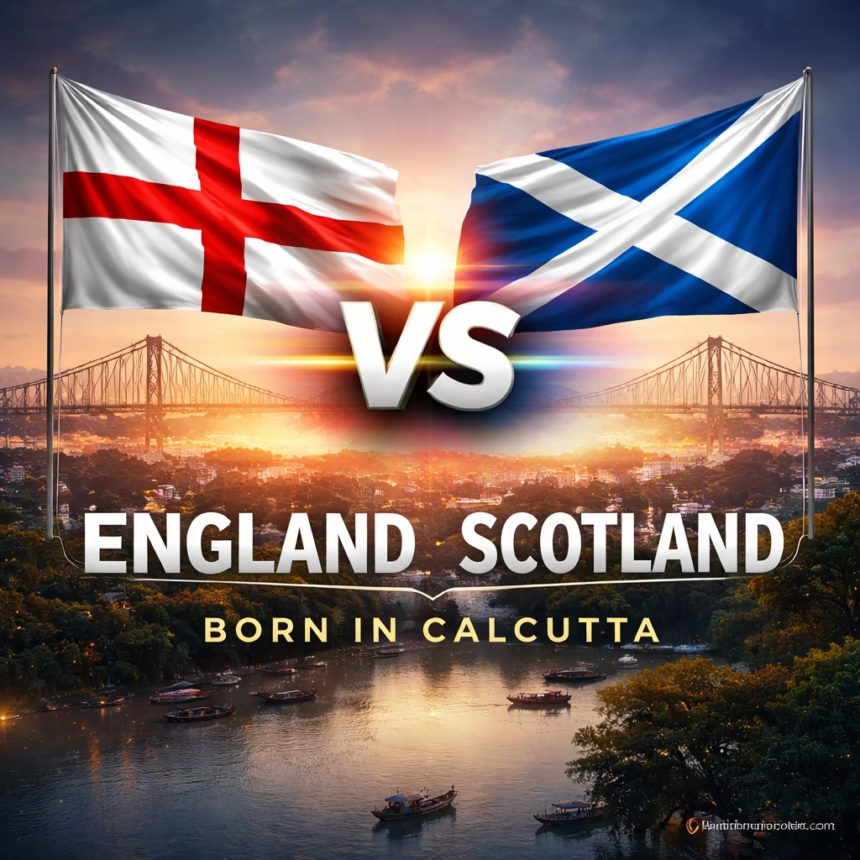
The historic football rivalry between England and Scotland, a fixture steeped in over 150 years of tradition, acquires a fascinating new dimension when viewed through the lens of individuals born thousands of miles away in Calcutta, now Kolkata. This unique geographical twist introduces a complex interplay of heritage, identity, and sporting allegiance, particularly during the highly anticipated encounters between the two nations. The phenomenon underscores how global migration patterns and enduring colonial legacies continue to shape personal loyalties in the 21st century.
Background: A Legacy Forged in Empire and Sport
The footballing animosity between England and Scotland dates back to November 30, 1872, when they contested the world's first official international match at Partick's Hamilton Crescent. This rivalry quickly transcended sport, becoming a potent symbol of national identity, historical grievances, and cultural distinction between two closely linked but fiercely independent nations. The annual fixture, particularly the British Home Championship, became a cornerstone of both countries' sporting calendars.
Simultaneously, thousands of miles away, Calcutta was flourishing as the capital of British India. A vibrant hub of colonial administration, trade, and culture, it attracted a significant British expatriate population. These administrators, soldiers, merchants, and their families established a distinct European community within the city. Football, a sport enthusiastically exported by the British Empire, took root early in Calcutta, with local clubs like Mohun Bagan and East Bengal emerging as powerhouses by the early 20th century, long before India's independence in 1947.
Many British children were born in Calcutta during this era, inheriting a dual identity by birthright. While their parents hailed from England or Scotland, their formative years were spent amidst the bustling streets and unique cultural tapestry of the Indian subcontinent. Post-independence, and particularly after the British Nationality Act of 1948, the lines of citizenship and belonging became more defined, yet the emotional and ancestral ties often remained strong. Descendants of these families, whether still in India or having repatriated to the UK, often carry this unique heritage.
Key Developments: Modern Allegiances in a Globalised World
In the contemporary era, the narratives surrounding individuals born in Calcutta and their allegiance to either England or Scotland have evolved considerably. The increasing ease of international travel and the expansion of diaspora communities have broadened the scope of national identity beyond traditional geographical borders. For those of British descent born in Calcutta, the question of allegiance often becomes a personal journey through family history.

For example, a person born in Calcutta in 1960 to Scottish parents might have spent their early childhood in India before moving to Scotland. Their identity would be deeply rooted in both experiences. When England plays Scotland, their loyalty could be a complex blend of ancestral pride, childhood memories of India, and adopted national identity. Similarly, individuals of Indian heritage, whose families might have had strong ties to British culture during the Raj, might find themselves drawn to one side of the rivalry through cultural osmosis or personal connections developed in the UK.
The globalisation of football, particularly the widespread popularity of the English Premier League and the Scottish Premiership across India, further complicates this dynamic. Millions of Indian fans follow British clubs intently, often developing a secondary allegiance to the national team of their favoured club's country. This phenomenon means that even individuals with no direct British heritage, but born and raised in Kolkata, might find themselves inadvertently drawn into the England-Scotland rivalry through their football fandom, choosing a side based on player preference, playing style, or even the historical success of a particular nation.
Impact: The Personal and Cultural Tapestry of Loyalty
The impact of being born in Calcutta on one's allegiance in the England-Scotland rivalry is profoundly personal and multifaceted. For some, it might be a clear-cut decision, guided by their immediate family's origins. A second-generation Briton born in Calcutta, whose grandparents were Scottish, might naturally gravitate towards supporting Scotland, viewing it as a direct continuation of their family's heritage. Conversely, someone with English ancestry might align with England.
More Read

However, for many, the choice is far more nuanced, creating a rich tapestry of loyalties. It can manifest as an internal debate, a playful ambiguity, or even a conscious decision to embrace the complexity. During major fixtures, these individuals become living bridges between distinct cultures and histories. Their personal stories highlight how national identity is not a static concept, but a fluid construct shaped by birthplace, ancestry, migration, and personal experience. This duality can be a source of unique pride, offering a perspective that transcends the traditional binary of the rivalry.
The phenomenon also contributes to the broader cultural exchange, as individuals with this unique background often share their experiences, enriching discussions about identity, sport, and colonial legacy. It challenges conventional notions of national belonging, demonstrating that allegiance can be forged in unexpected places, far from the traditional heartlands of the competing nations.
What Next: Evolving Identities in a Connected World
Looking ahead, the narrative of individuals born in Calcutta navigating the England-Scotland rivalry is likely to become even more intricate. As global populations continue to intermingle, and as the concept of national identity becomes increasingly fluid, the traditional boundaries of sporting allegiance will continue to blur. Future generations, perhaps with even more diverse ancestral backgrounds, will add new layers to this complex equation.
Football associations in both England and Scotland are increasingly aware of the importance of engaging with their global diasporas. While direct recruitment of players born in Kolkata to either national team might be a rare occurrence, the broader engagement with fans and communities across the world, including those with historical ties to British India, remains crucial. The popularisation of football through digital media ensures that the rivalry's reach extends far beyond the British Isles, continuing to resonate with audiences in places like Kolkata.
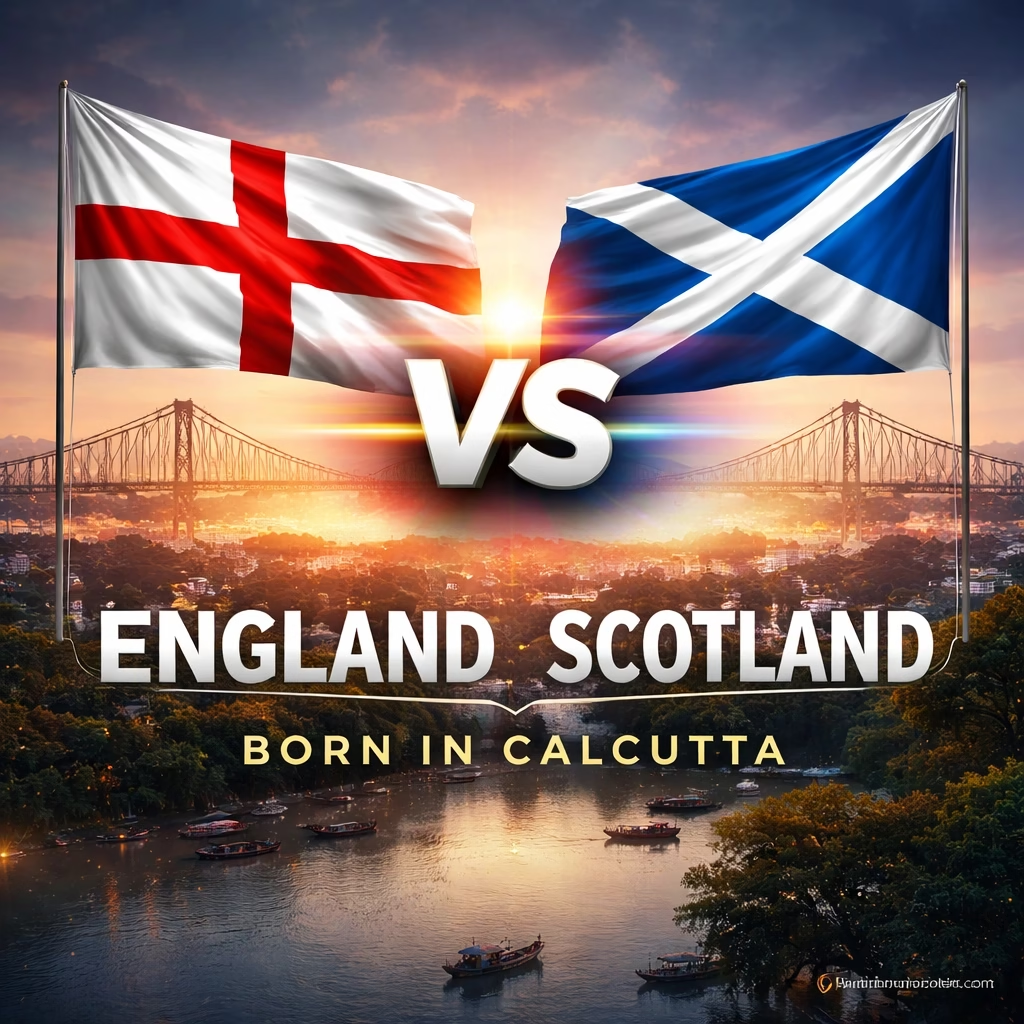
The next major fixture between England and Scotland will undoubtedly rekindle these allegiances, both traditional and uniquely forged. For those born in Calcutta, whether of British or Indian heritage, it will be another opportunity to reflect on their personal connection to a rivalry that began on a muddy pitch in Partick in 1872, yet whose echoes now reverberate across continents, shaping identities in ways the original combatants could never have imagined. The enduring legacy of Calcutta's colonial past and its modern global connections will continue to offer a fascinating dimension to one of football's oldest and most passionate contests.