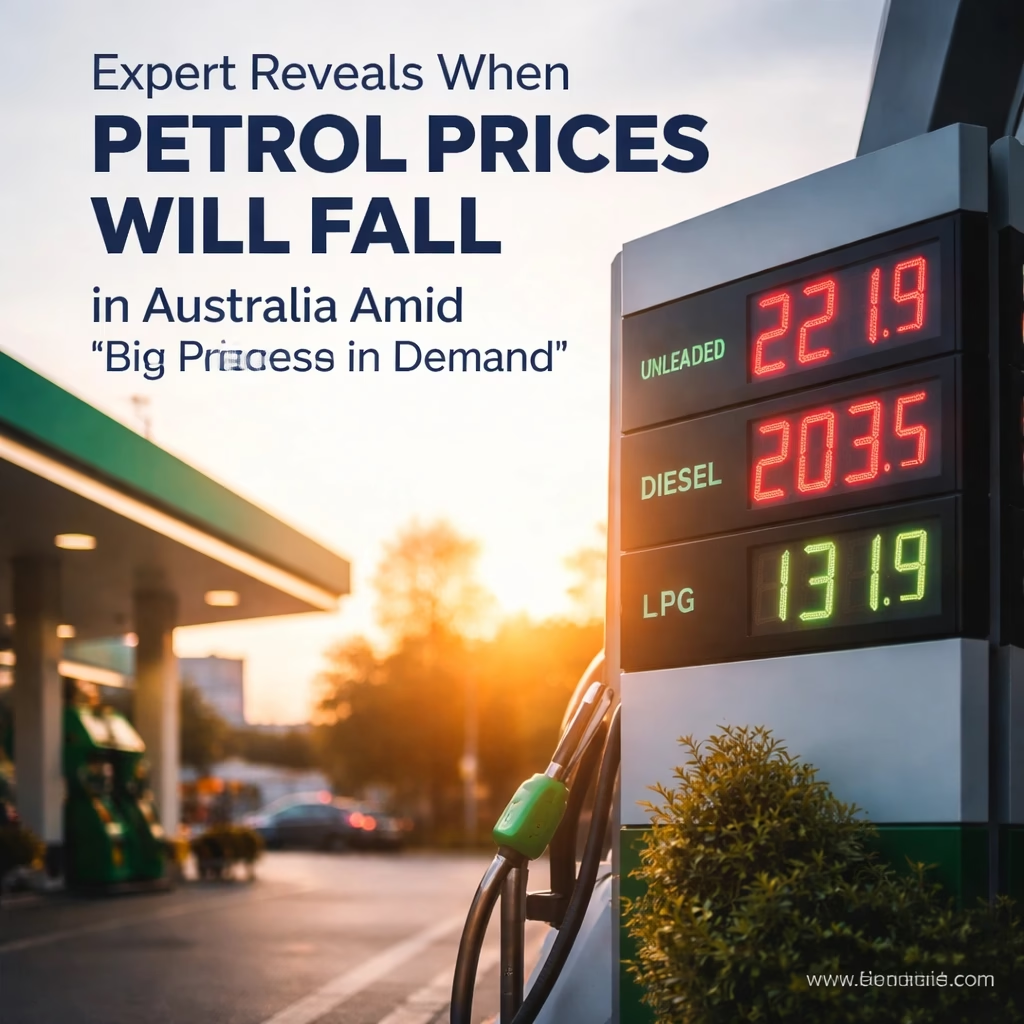
Australian motorists are enduring a sustained period of high petrol prices, with figures soaring across major capital cities and regional centres. As household budgets tighten, a leading energy expert has shed light on the complex factors influencing these costs and offered a crucial forecast on when drivers might finally see some relief at the bowser. The current surge is largely attributed to a significant increase in global demand coupled with persistent supply challenges.
Background: A Volatile History of Fuel Costs
The trajectory of Australian petrol prices has been marked by significant volatility over recent years, influenced by a confluence of international and domestic factors. Historically, prices have reacted sharply to global crude oil movements, geopolitical tensions, and the fluctuating value of the Australian dollar. Following the initial economic shock of the COVID-19 pandemic in early 2020, which saw crude oil prices plummet, a strong rebound in demand, particularly from late 2021 onwards, began to exert upward pressure.
Global Dynamics and Local Impact
Key global players, such as the Organization of the Petroleum Exporting Countries and its allies (OPEC+), wield substantial influence over supply. Their decisions on production quotas directly impact the international price of benchmark crudes like Brent and West Texas Intermediate (WTI). Australia, as a net importer of refined petroleum products, is highly susceptible to these global shifts. The Australian dollar's exchange rate against the US dollar also plays a critical role; a weaker AUD makes imported oil more expensive in local currency terms, even if global crude prices remain stable. Domestically, the federal fuel excise, state-based levies, and the competitive cycles observed in major metropolitan fuel markets further shape the final price consumers pay.
Key Developments: Drivers of the Current Surge
Recent months have witnessed a pronounced escalation in petrol prices, pushing averages well above the $2 per litre mark in many locations. This upward trend follows a period of relative stability, making the current spike particularly impactful for consumers.
Surging Demand and Supply Constraints
The primary catalyst for the current high prices is a substantial increase in global demand for oil. Post-pandemic economic recoveries, particularly in major economies, have led to a surge in travel and industrial activity. Simultaneously, supply has struggled to keep pace. OPEC+ has maintained a cautious approach to increasing production, citing market stability concerns. Furthermore, ongoing geopolitical tensions in key oil-producing regions have introduced supply uncertainties, contributing to a risk premium in crude oil prices. Refinery maintenance schedules and disruptions in various parts of the world have also tightened the supply of refined products, including petrol.

The Australian Dollar’s Role
The Australian dollar has experienced periods of weakness against the US dollar, exacerbating the cost of imported fuel. As crude oil is traded internationally in US dollars, a lower AUD means Australian importers pay more for the same barrel of oil. This currency effect adds a layer of inflationary pressure, directly translating to higher prices at the pump for Australian drivers. Consumer watchdog, the Australian Competition and Consumer Commission (ACCC), continuously monitors these market dynamics, highlighting the interplay between international crude prices, the AUD/USD exchange rate, and local wholesale and retail margins.
Impact: Widespread Economic Strain
The sustained high cost of petrol is having a tangible and widespread impact across the Australian economy, affecting various segments of society and business. This financial pressure contributes significantly to the broader cost-of-living crisis facing many households.
Household Budgets Under Pressure
For Australian families, petrol is a non-negotiable expense for commuting, school runs, and essential errands. The current high prices mean a larger portion of disposable income is being allocated to fuel, leaving less for other necessities or discretionary spending. This translates into increased financial stress, particularly for low-income households and those in regional areas where public transport options are limited, and driving distances are often greater. Many are reporting changes in their driving habits, including reducing non-essential travel and actively seeking out cheaper fuel stations.
More Read

Business Operations and Inflationary Ripple Effects
Businesses, especially those reliant on transport and logistics, are facing significantly increased operating costs. Trucking companies, delivery services, tradespeople, and agricultural producers are all absorbing higher fuel bills, which often get passed on to consumers in the form of higher prices for goods and services. This contributes to inflationary pressures across the economy, complicating the Reserve Bank of Australia's (RBA) efforts to manage inflation through interest rate adjustments. Small businesses, in particular, often have less capacity to absorb these rising costs, potentially impacting their viability and employment levels.
What Next: Expert Outlook on Price Relief
Amid the current challenges, motorists are keenly awaiting any signs of reprieve. An energy market expert suggests that while immediate sharp declines are unlikely, a gradual easing could commence under specific conditions, with a more substantial shift potentially materialising later in the year.
Factors Signalling Potential Price Falls
The expert indicates that a sustained fall in petrol prices hinges primarily on a rebalancing of global oil supply and demand. Key indicators to watch include:
Increased OPEC+ Production: A definitive decision by OPEC+ to significantly boost crude oil output would alleviate some supply constraints. However, the cartel has shown reluctance to flood the market, prioritising stability over aggressive expansion.
* Weakening Global Demand: A slowdown in global economic growth, potentially triggered by persistent high inflation or interest rate hikes in major economies, could dampen demand for oil. Recessions, while undesirable, historically lead to lower energy prices.
* Geopolitical Stability: A de-escalation of geopolitical tensions in oil-producing regions would reduce the "risk premium" currently built into crude oil prices.
* Stronger Australian Dollar: A sustained appreciation of the AUD against the USD would make imported fuel cheaper in local currency terms, directly benefiting Australian consumers.
Expert’s Forecast for Relief
According to the expert's analysis, a noticeable downward trend in Australian petrol prices is unlikely to begin before the latter half of the year, potentially Q4. This timeline allows for the anticipated impact of potential global economic cooling and any adjustments in OPEC+ policy to materialise. While prices are expected to remain elevated for the coming months, the expert predicts that average capital city prices could begin to fall back towards the $1.80-$1.90 per litre range by early next year, assuming the aforementioned conditions align favourably. Fluctuations will continue to be part of the regular fuel cycle, but the underlying trend could shift.
Long-Term Outlook and Consumer Strategies
In the long term, the transition towards electric vehicles (EVs) and other alternative transport solutions will gradually reduce Australia's reliance on fossil fuels, but this is a multi-decade shift. For the immediate future, consumers are advised to continue utilising fuel price comparison apps, taking advantage of the regular metropolitan fuel cycles, and considering fuel-efficient driving practices to mitigate the impact of ongoing high prices. The ACCC will continue its vigilance, ensuring market transparency and addressing any instances of unconscionable conduct by retailers.
More Read