Nigeria's Iron Shield: Locally-Built Armoured Vehicle Debuts, Signals New Era for Defence
Abuja, Nigeria – In a landmark event marking a significant stride towards national defence self-reliance, the Federal Government of Nigeria on Tuesday, October 24, 2023, unveiled a new indigenously manufactured armoured fighting vehicle. The ceremony, held at the Defence Industries Corporation of Nigeria (DICON) facility in Kaduna, showcased the nation's commitment to bolstering its security apparatus through local innovation and sustained partnerships with domestic military hardware manufacturers.
Background: The Drive for Local Defence Capabilities
Nigeria has historically faced significant security challenges, from insurgency to banditry, often relying on costly foreign imports for military hardware. This dependency highlighted an urgent need to develop a robust domestic defence industrial complex, reducing reliance on external suppliers and fostering national self-reliance.
The drive for local defence production has been a long-standing government priority, with initiatives to empower the Defence Industries Corporation of Nigeria (DICON), established in 1964. While previous efforts focused on small arms and refurbishment, the ambition to indigenously produce complex armoured vehicles remained a key objective. This unveiling marks the culmination of years of strategic planning, investment in research and development, and a deliberate policy shift towards fostering Nigeria’s own defence manufacturing capabilities.
This strategic pivot seeks to achieve self-sufficiency, reduce capital flight, and create a sustainable ecosystem. It aims to empower local engineers and technicians to contribute directly to national security, fostering a sense of pride and ownership in Nigeria’s defence sector.
More Read

Key Developments: The ‘Ikenga’ Unveiled and Partnership Commitments
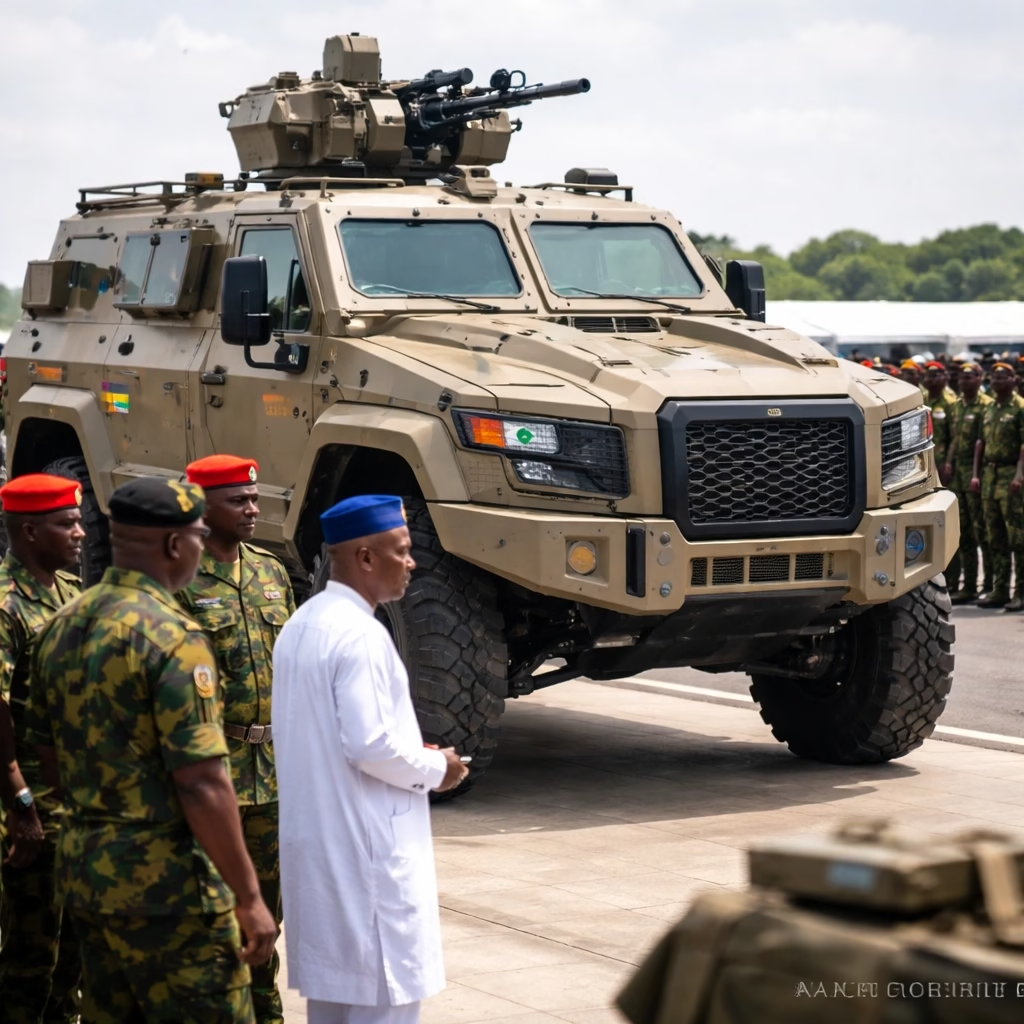
The centerpiece of the event was the official presentation of the new armoured fighting vehicle, named the “Ikenga,” symbolizing strength and achievement. President Bola Ahmed Tinubu, accompanied by the Minister of Defence, Abubakar Badaru, the Chief of Army Staff, Lt. Gen. Taoreed Lagbaja, and the CEO of the partnering local manufacturer, Proforce Limited, Mr. Adetokunbo Ogundeyin, presided over the ceremony.
The Ikenga is designed as a multi-role armoured personnel carrier (APC) suited for Nigeria’s diverse operational terrains. Its specifications include robust ballistic and mine blast protection (STANAG Level 2/3), an advanced communications suite, day/night vision systems, and a remote-controlled weapon station (RCWS) capable of mounting various armaments. The modular design allows for customization into variants like troop transport, command, medical evacuation, and reconnaissance.
Boasting a high-performance engine for superior mobility and tactical maneuverability, the Ikenga has a crew capacity of two and can transport up to ten fully equipped personnel. This capability is expected to significantly enhance the operational effectiveness of the Nigerian Armed Forces in counter-insurgency and anti-banditry operations.
More Read

President Tinubu lauded the achievement, reiterating the Federal Government’s unwavering commitment to a sustained partnership with local military hardware manufacturers. He emphasized that this unveiling marks “a new chapter where our defence needs are increasingly met by our own people, our own industries, and our own innovations.” The President assured manufacturers of government support through favourable policies, preferential procurement, dedicated funding, and technology transfer initiatives to accelerate the growth of the defence industrial base, moving beyond mere assembly to full-scale manufacturing and indigenous design.
Impact: Boosting Operational Capabilities and Economic Ripple Effects
The introduction of the Ikenga is poised to have a profound impact on national security and economic development. For the Nigerian Armed Forces, it represents a significant upgrade in operational capabilities. Troops deployed to volatile regions will gain enhanced protection against improvised explosive devices (IEDs) and small arms fire, potentially reducing casualty rates and boosting morale. The vehicle’s ruggedness and tactical flexibility will improve response times and effectiveness in combat operations.
Economically, this initiative provides a substantial boost for the local defence industry. Guaranteed demand for locally produced hardware will stimulate investment, create high-skilled jobs for engineers and technicians, and foster technology transfer. It will also reduce the nation’s foreign exchange expenditure on military imports, contributing to economic stability and self-reliance. This localized production chain will support ancillary industries, creating a significant multiplier effect across the economy.
Furthermore, the achievement elevates Nigeria’s standing in regional and international defence circles, positioning it as a leader in indigenous military technology within Africa. This self-sufficiency reduces vulnerability to international arms embargoes and supply chain disruptions, reinforcing national sovereignty. The project also serves as a powerful symbol of national pride and technological advancement, inspiring future generations in STEM fields.
What Next: Scaling Production and Future Innovations
Following the successful unveiling, immediate plans involve the mass production and deployment of the Ikenga. The Ministry of Defence, in collaboration with the Nigerian Army and manufacturing partners, will prioritize deployment to critical operational theatres, particularly in the North-East and North-West. Comprehensive training programs for military personnel on the vehicle’s operation, maintenance, and tactical deployment are also being rolled out.
The government has set ambitious targets for scaling up production, aiming for a significant number of units within the next two to three years. This expansion will require further investment in manufacturing infrastructure, skilled labour development, and a robust, locally-sourced supply chain.
More Read

Beyond armoured vehicles, the partnership is expected to foster the development of other critical military hardware, such as unmanned aerial vehicles (UAVs), patrol boats, and advanced communication systems. The long-term vision is to establish Nigeria as a regional hub for defence innovation and manufacturing.
Further legislative and policy frameworks, including research grants and tax incentives, are anticipated to bolster the nascent defence industrial base. The Ikenga’s debut signals Nigeria’s resolve to fortify its security through homegrown solutions and a strategic commitment to its local industrial capabilities.