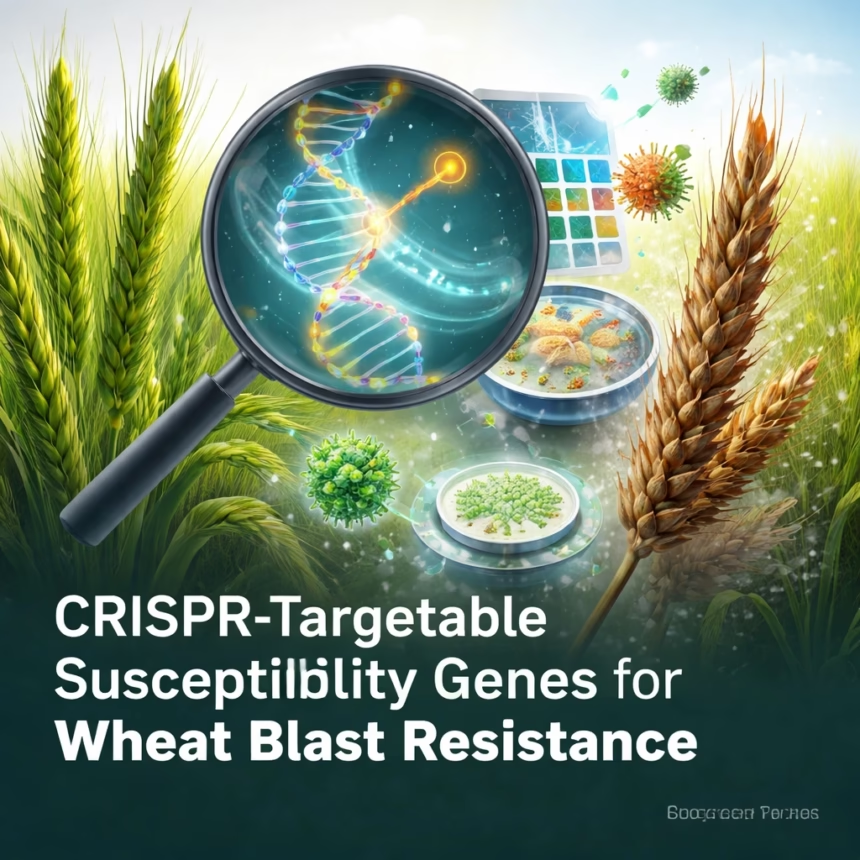
Groundbreaking research has pinpointed critical susceptibility genes in wheat, offering a revolutionary path to engineer durable resistance against the devastating wheat blast disease using advanced CRISPR gene-editing technology. This pivotal discovery, emerging from a multi-institutional collaboration, promises to transform agricultural practices and bolster food security in blast-affected regions worldwide.
Background: The Silent Scourge of Wheat Blast
Wheat blast, caused by the aggressive fungus *Magnaporthe oryzae* pathotype *Triticum* (MoT), poses an existential threat to global wheat production. First identified in Brazil in 1985, the disease rapidly spread across South America, devastating crops in countries like Bolivia, Paraguay, and Argentina. Its symptoms, including bleached spikelets and shriveled grains, can lead to complete crop failure in severe outbreaks.
A History of Devastation
For decades, the disease remained largely confined to South America. However, in a worrying development, wheat blast made its alarming debut in Bangladesh in 2016, marking its first appearance outside the Americas. This transcontinental leap underscored the pathogen's capacity for long-distance dispersal and its potential to threaten major wheat-producing regions in Asia, including India and China. More recently, in 2018, the disease was detected in Zambia, signaling its worrying spread into Africa and highlighting the urgent need for robust control strategies.
Limitations of Current Defenses
Traditional methods of combating wheat blast have proven insufficient. Fungicide applications, while effective, are costly, environmentally concerning, and require precise timing, which is often challenging for smallholder farmers. Conventional breeding for resistance has been hampered by the limited availability of effective resistance genes in wheat germplasm and the pathogen's rapid evolution, often overcoming new resistances within a few seasons. The disease's ability to infect the wheat head, making chemical control particularly difficult, further complicates management efforts.
Key Developments: Unveiling Genetic Weaknesses
A consortium of scientists from institutions including the International Maize and Wheat Improvement Center (CIMMYT), Kansas State University, and the John Innes Centre, recently published findings detailing a novel approach to tackling wheat blast. Their research combined "field pathogenomics" with "evolutionary conservation" analysis to identify crucial susceptibility genes within the wheat genome.
More Read

Field Pathogenomics and Evolutionary Conservation
Field pathogenomics involved analyzing the genetic makeup of wheat and the blast pathogen directly from infected fields in Bangladesh and Bolivia. This real-world data provided insights into the pathogen's virulence mechanisms and how wheat responds to infection under natural conditions. Simultaneously, evolutionary conservation analysis identified genes in wheat that have been highly conserved across different wheat varieties and even related plant species, suggesting their fundamental importance to the plant's biology. When such conserved genes are also found to be exploited by pathogens, they become prime candidates for targeted intervention.
Identifying Susceptibility Genes
The research specifically focused on identifying genes within wheat that, when functioning normally, *aid* the pathogen in causing disease. These are known as susceptibility genes (S-genes). Unlike resistance genes, which directly fight off pathogens, S-genes are often hijacked by pathogens to facilitate infection or nutrient uptake. The team successfully identified several key S-genes, including *TaDMR6* and *TaPMI*, which play critical roles in the plant's metabolism and defense responses, but paradoxically, also serve as targets for the blast fungus.
More Read

CRISPR-Targetable Solutions
The identification of these specific S-genes opens the door for precise gene editing using CRISPR-Cas9 technology. By making small, targeted modifications to these susceptibility genes, scientists aim to "switch off" or alter their function, thereby making the wheat plant less hospitable to the blast fungus without significantly impacting the plant's overall health or yield. This approach offers a distinct advantage over traditional methods, providing a highly specific and potentially durable form of resistance. The precision of CRISPR allows for minimal off-target effects and can be applied to elite wheat varieties, preserving their desirable agronomic traits.
Impact: A New Dawn for Wheat Farmers and Global Food Security
The implications of this discovery are far-reaching, promising relief for millions of farmers and greater stability for global food markets.
Protecting Farmer Livelihoods
For farmers in blast-prone regions, particularly smallholders in South Asia and South America, the introduction of CRISPR-edited blast-resistant wheat varieties could mean the difference between a successful harvest and complete crop loss. Reduced reliance on expensive fungicides will lower input costs, improve farmer profitability, and minimize environmental impact. This technology offers a sustainable solution to a problem that has historically pushed vulnerable communities into deeper poverty.
Stabilizing Food Supply and Prices
Wheat is a staple food for over a third of the world's population. Consistent and severe yield losses due to wheat blast contribute to food insecurity, price volatility, and can exacerbate humanitarian crises. By safeguarding wheat production, this research directly contributes to global food stability, ensuring more consistent availability and affordability of this essential grain. Countries like Bangladesh, where wheat consumption is rising and local production is critical, stand to benefit immensely from such advancements.
Advancing Agricultural Biotechnology
This breakthrough also serves as a powerful demonstration of the potential of modern biotechnology, particularly CRISPR, in addressing complex agricultural challenges. It sets a precedent for how a combination of field-based genomic analysis and evolutionary principles can rapidly accelerate the development of disease-resistant crops, potentially inspiring similar efforts for other devastating plant diseases affecting other staple crops.
What Next: From Lab to Field and Beyond
While the scientific breakthrough is significant, several critical steps remain before CRISPR-edited blast-resistant wheat varieties can reach farmers' fields.

Rigorous Field Trials
The immediate next phase involves extensive field trials in blast-endemic areas. These trials, expected to commence within the next 2-3 years, will rigorously evaluate the performance of the edited wheat varieties under various environmental conditions. Researchers will assess the durability of the resistance, yield stability, grain quality, and overall agronomic performance to ensure the new varieties meet farmers' needs. Initial trials are planned for research stations in Brazil and Bangladesh, followed by broader testing.
Regulatory Pathways and Public Acceptance
Navigating regulatory approval for genetically edited crops is a complex but crucial step. Different countries have varying regulations regarding CRISPR-edited organisms, often distinguishing them from conventionally bred crops or genetically modified organisms (GMOs). Researchers and policymakers will work to establish clear, science-based regulatory frameworks that facilitate the safe and timely deployment of these beneficial technologies. Public engagement and education will also be vital to foster acceptance and understanding of CRISPR technology.
Scaling Up and International Collaboration
Once approved, efforts will focus on scaling up seed production and distribution. This will require significant international collaboration among research institutions, seed companies, and government agricultural agencies to ensure wide access to the new varieties, especially for resource-poor farmers. Initiatives like the CGIAR research network and national agricultural research systems will play a pivotal role in this dissemination.
Long-Term Vision and Future Applications
Looking ahead, this research paves the way for developing multi-disease resistant wheat varieties by targeting additional susceptibility genes for other prevalent pathogens. The methodology established could also be adapted to other staple crops, such as rice or maize, which face their own unique disease challenges. The ultimate goal is to build a more resilient and sustainable global food system capable of feeding a growing population in the face of evolving threats and climate change.