Global Economic Storm Brewing? UN Chief Sounds Alarm After US Funding Freeze
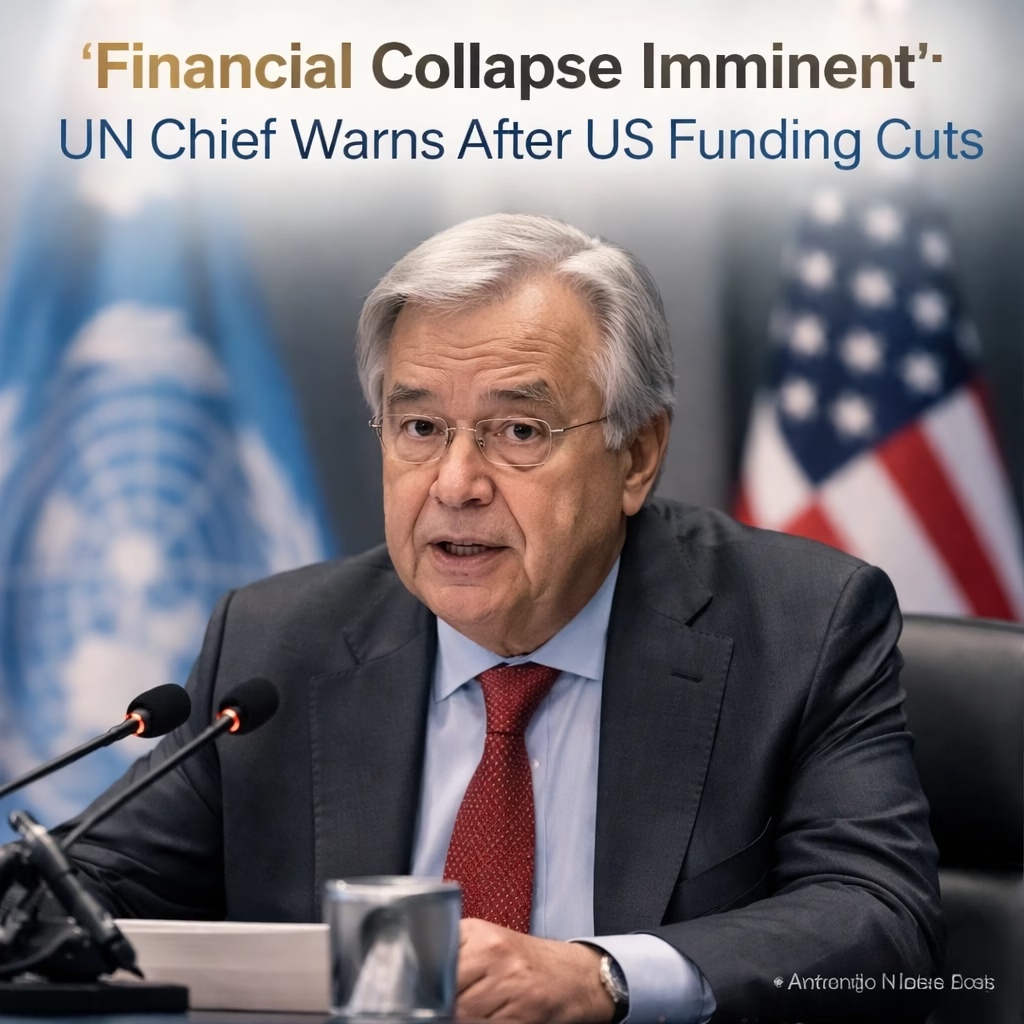
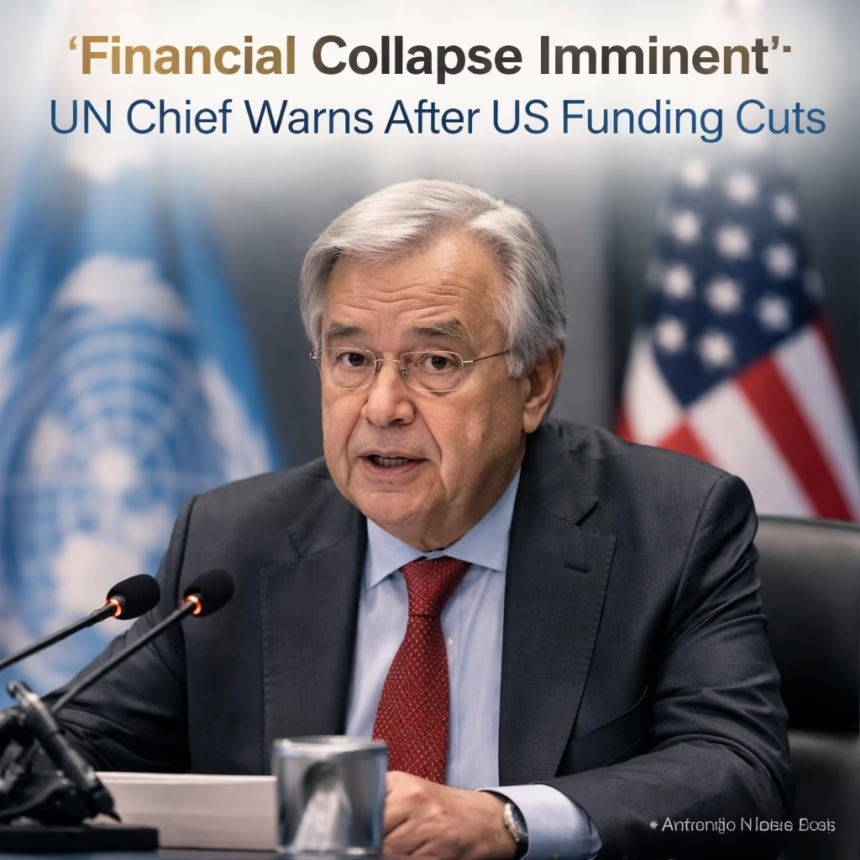
A looming global economic crisis is a serious concern, according to António Guterres, the United Nations Secretary-General. His warning follows significant cuts in funding from the United States to several key UN agencies, raising fears of widespread instability and humanitarian setbacks. The concerns were voiced during a speech delivered at the UN headquarters in New York on October 26, 2023.
Background
The United Nations plays a vital role in global development, humanitarian aid, and peacekeeping. Its work spans a wide range of areas, including poverty reduction, climate action, and conflict resolution. For decades, the UN has relied heavily on contributions from member states, with the US being the largest single donor. However, a shift in US foreign policy, particularly under the current administration, has led to a reduction in financial support for various international organizations.
This trend began in 2017 with cuts to the UN's peacekeeping budget and has continued with more recent reductions impacting agencies like UNICEF, the World Food Programme (WFP), and the UN Development Programme (UNDP). These cuts have been justified by the US government as a need to prioritize domestic spending and a reassessment of the UN's effectiveness. The current funding freeze, announced in late September 2023, represents the most substantial reduction yet.

Key Developments
The announcement of the funding freeze came after months of escalating tensions between the US and several UN agencies over policy disagreements. Specifically, concerns have been raised regarding the UN’s stance on certain geopolitical issues, including the Israeli-Palestinian conflict and China's human rights record. The US has also expressed dissatisfaction with the UN's bureaucratic inefficiencies and perceived lack of accountability.
The freeze directly impacts operations across multiple UN programs. For example, UNICEF, which focuses on child welfare and health globally, has reported a shortfall in funding that threatens its ability to deliver essential supplies and services to vulnerable children in countries like Yemen, Afghanistan, and several African nations. The WFP, responsible for combating hunger, has similarly announced scaled-back operations, particularly in regions experiencing conflict and food insecurity.
Impact
The consequences of reduced UN funding are far-reaching and disproportionately affect vulnerable populations. The cuts are expected to exacerbate existing humanitarian crises, hinder development progress, and undermine efforts to address climate change and global health challenges. Specifically, increased food insecurity, reduced access to healthcare, and a decline in educational opportunities are among the anticipated impacts.
More Read

Countries already grappling with economic instability and conflict are particularly at risk. The UN's role in providing humanitarian assistance and supporting sustainable development is crucial in these contexts. The freeze threatens to reverse years of progress in areas such as poverty reduction and disease control. Furthermore, reduced funding for peacekeeping operations could destabilize fragile regions and increase the risk of conflict.
Specific Regional Concerns
Sub-Saharan Africa faces a heightened risk of famine due to reduced WFP support. The ongoing conflict in Ukraine, already straining global food supplies, is compounded by the reduced capacity of the UN to respond to humanitarian needs. In the Middle East, the UN’s efforts to support refugees and address humanitarian crises in Syria and Yemen are severely hampered.
What Next?
The immediate focus is on mitigating the impact of the funding freeze on ongoing UN programs. UN officials are working to identify areas where resources can be reallocated and to seek alternative funding sources from other member states and private donors.
However, a long-term solution requires a resolution to the underlying tensions between the US and the UN. Negotiations are ongoing, but progress has been slow. The UN is advocating for a renewed commitment to multilateralism and a recognition of the vital role it plays in addressing global challenges. The next major milestone will be the UN General Assembly session in November 2023, where member states will have an opportunity to discuss the funding crisis and potentially propose solutions. The future of the UN's ability to effectively address global challenges hinges on the outcome of these discussions.
Potential Scenarios
If the funding freeze persists, the UN could face significant operational challenges, potentially leading to the suspension or cancellation of vital programs. This could trigger a cascade of negative consequences, exacerbating humanitarian crises and undermining global stability. However, a renewed commitment from the US and other major donors could provide a lifeline to the UN and allow it to continue its critical work.