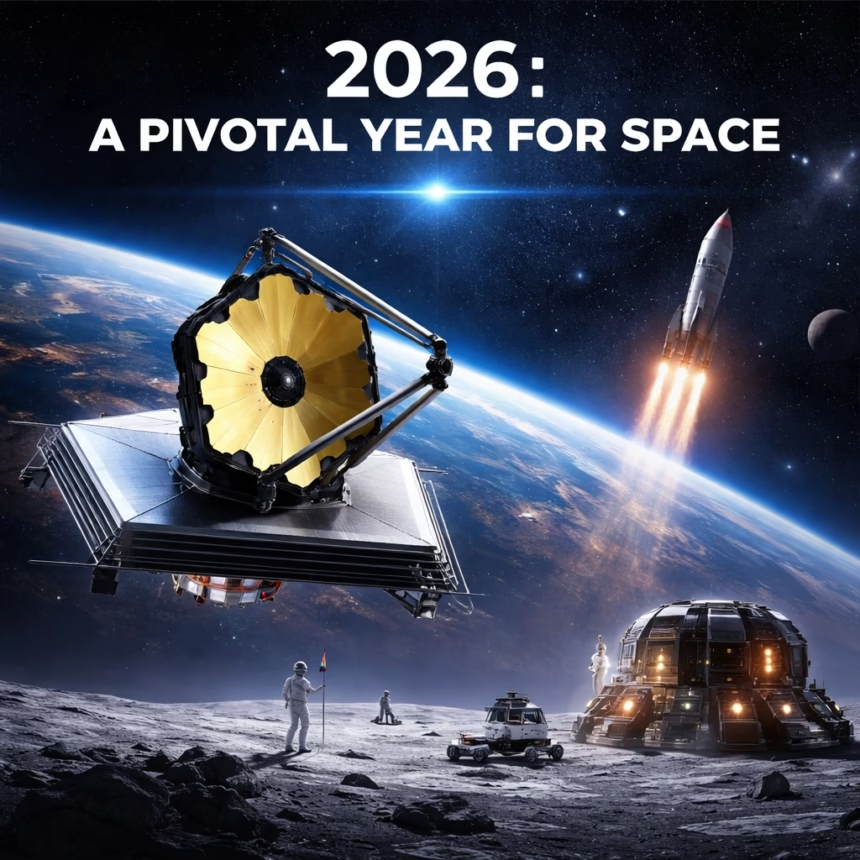
Cosmic Race: What's Launching in Space in 2026?
2026 promises a pivotal year for space exploration, with groundbreaking missions and ambitious lunar plans set to unfold across the globe. From the anticipated debut of the Nancy Grace Roman Space Telescope to renewed focus on lunar surface activities, the coming year marks a significant advancement in humanity's reach beyond Earth.
Building on the Past: A History of Space Exploration
The pursuit of space has evolved dramatically since the dawn of the Space Age in 1957 with the launch of Sputnik 1 by the Soviet Union. The Apollo program, culminating in the 1969 moon landing, solidified the United States' early dominance. Since then, international collaborations like the International Space Station (ISS), operational since 1998, have fostered unprecedented cooperation. More recently, private companies like SpaceX, Blue Origin, and Virgin Galactic have revolutionized access to space, lowering launch costs and enabling new ventures.
Game Changers: What’s New on the Horizon?
Several key developments are poised to reshape the space landscape in 2026. The Nancy Grace Roman Space Telescope, scheduled to launch in late 2026, will provide a wide-field view of the universe, studying dark energy, exoplanets, and galaxy evolution. NASA's Roman Space Telescope, named after the former NASA administrator, will use its advanced infrared capabilities to peer deeper into the cosmos than ever before. Meanwhile, NASA’s Artemis program aims to return humans to the Moon, with Artemis III planned for 2025, and subsequent missions focusing on establishing a sustainable lunar presence.
China's lunar ambitions remain strong. The Chang'e program, which has already successfully landed rovers on the far side of the Moon, is expected to continue with further robotic missions and eventually human lunar exploration in the 2030s. India’s Chandrayaan program also plans follow-up missions to explore the lunar south pole, a region believed to contain significant water ice deposits. Private companies are also ramping up lunar activity, developing technologies for resource extraction and lunar infrastructure.
More Read

The Roman Space Telescope: A Deep Dive
The Roman Space Telescope boasts a 6.5-meter primary mirror, significantly larger than the Hubble Space Telescope’s 2.4-meter mirror. This larger aperture enables it to observe fainter and more distant objects. Its primary scientific goals include mapping dark energy, discovering thousands of exoplanets, and studying the formation and evolution of galaxies.
Who Benefits? The Global Impact
The advancements in space exploration have broad implications for humanity. The Roman Space Telescope's discoveries could revolutionize our understanding of the universe and our place within it. Lunar exploration promises to unlock valuable resources, potentially including water ice, which could be used as propellant and life support. Furthermore, the technological innovations developed for space missions often find applications in terrestrial industries, ranging from medicine and materials science to communication and energy.
Beyond the scientific and technological benefits, space exploration fosters international collaboration and inspires future generations of scientists and engineers. The Artemis program, in particular, involves partnerships with numerous international space agencies, including the European Space Agency (ESA), the Japan Aerospace Exploration Agency (JAXA), and the Canadian Space Agency (CSA).
More Read

Reaching for the Stars: Future Milestones
Beyond 2026, several significant milestones are anticipated. The Artemis program aims to establish a sustained human presence on the Moon, with plans for a lunar base by the 2030s. Mars exploration remains a long-term goal, with NASA and other space agencies developing technologies for crewed missions to the Red Planet. Private companies are also actively pursuing Mars colonization initiatives.
The development of advanced propulsion systems, such as nuclear thermal propulsion, could significantly reduce travel times to Mars and beyond. Furthermore, research into asteroid mining could unlock vast resources and potentially revolutionize the space economy.
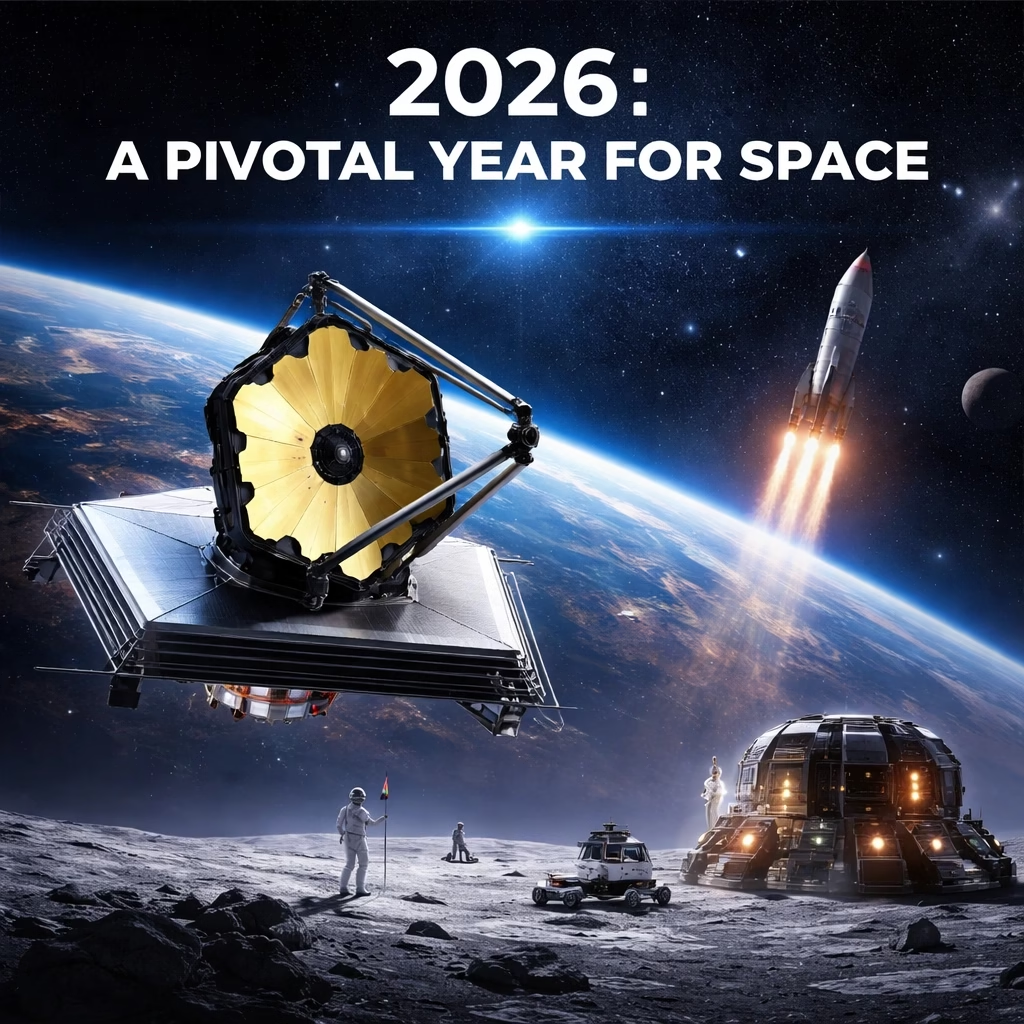
International Collaboration: A Key to Success
The future of space exploration hinges on international collaboration. The complexity and cost of ambitious missions require pooling resources and expertise. Agencies like NASA, ESA, JAXA, and CSA are working together on a variety of projects, from the Artemis program to the development of new space technologies. This collaborative spirit is essential for advancing our understanding of the universe and expanding humanity’s reach beyond Earth.