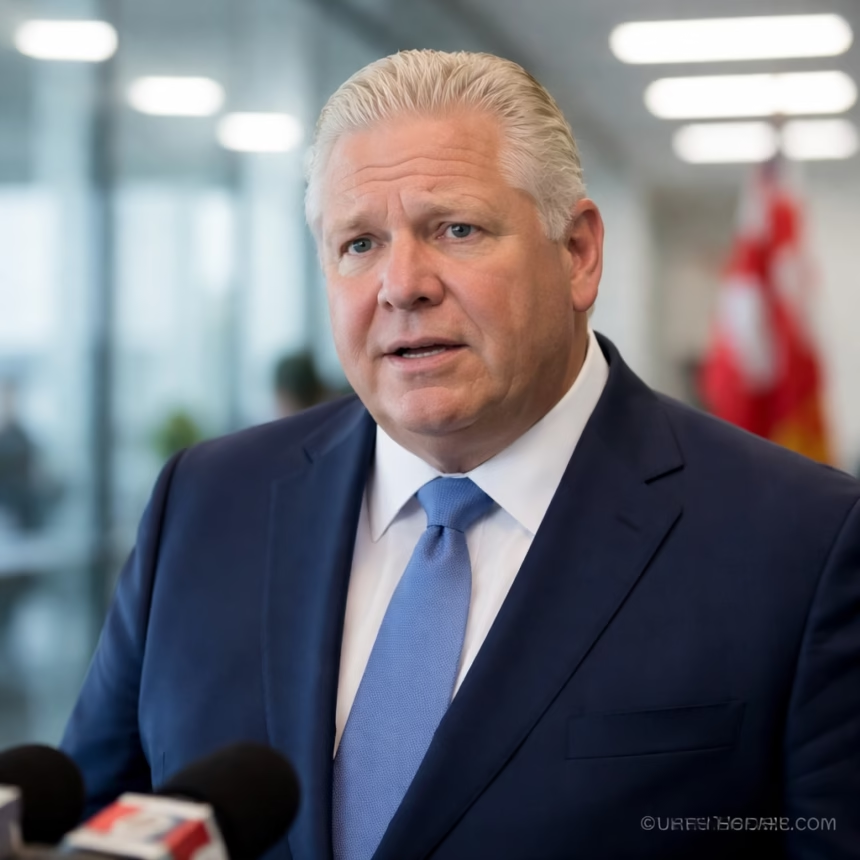
Jim Farley, the outspoken CEO of Ford Motor Company, recently ignited a fresh debate over Michigan's economic development strategy, publicly expressing his dismay regarding a significant Chinese electric vehicle (EV) battery plant deal within the state. His comments, delivered with palpable frustration, highlighted a perceived communication breakdown with state leadership, specifically stating he still had not spoken with a key official, identified as Carney. This public rebuke from one of Michigan's most iconic corporate leaders signals potential friction between the state's aggressive push for EV manufacturing and the interests of its legacy automotive giants.
Background: Michigan’s EV Ambitions Meet Global Realities
Michigan, historically the heartland of American automotive manufacturing, has been at the forefront of the national drive to transition towards electric vehicles. Governor Gretchen Whitmer's administration has actively pursued a strategy of attracting significant investments in EV and battery production, aiming to secure the state's economic future in a rapidly evolving industry. This proactive stance has seen Michigan leverage substantial state incentives through programs like the Strategic Outreach and Attraction Reserve (SOAR) fund, designed to lure large-scale industrial projects.
Ford Motor Company itself has been a crucial partner in this transition, committing billions of dollars to EV development and manufacturing across the United States. In Michigan, Ford announced a $3.5 billion investment in February 2023 for a new EV battery plant in Marshall, expected to create 2,500 jobs, with support from state incentives totaling over $1.7 billion. This investment is part of Ford's broader "Model e" strategy, aiming for vertical integration of its EV supply chain.
The specific deal drawing Farley's ire is the planned $2.36 billion EV battery component plant by Gotion High-Tech, a China-based company, slated for Green Charter Township near Big Rapids. Announced in October 2022, the project promises up to 2,350 jobs and has been backed by approximately $715 million in state incentives. From its inception, the Gotion deal has faced scrutiny, including local opposition over environmental concerns and national security worries stemming from Gotion's ties to the Chinese government. Despite these controversies, the project has steadily moved forward, securing necessary approvals and funding.
Key Developments: Farley’s Public Outcry and Communication Gap
Farley's recent comments, made during an industry event in late May, underscored a growing tension. He explicitly stated his frustration, remarking, "We're a huge investor in Michigan, and I still haven't spoken to Carney about the Gotion deal." This statement implies a significant disconnect, suggesting that Ford, a cornerstone of Michigan's economy and a major EV investor, felt bypassed or ignored in discussions surrounding a competing, state-backed project.
More Read

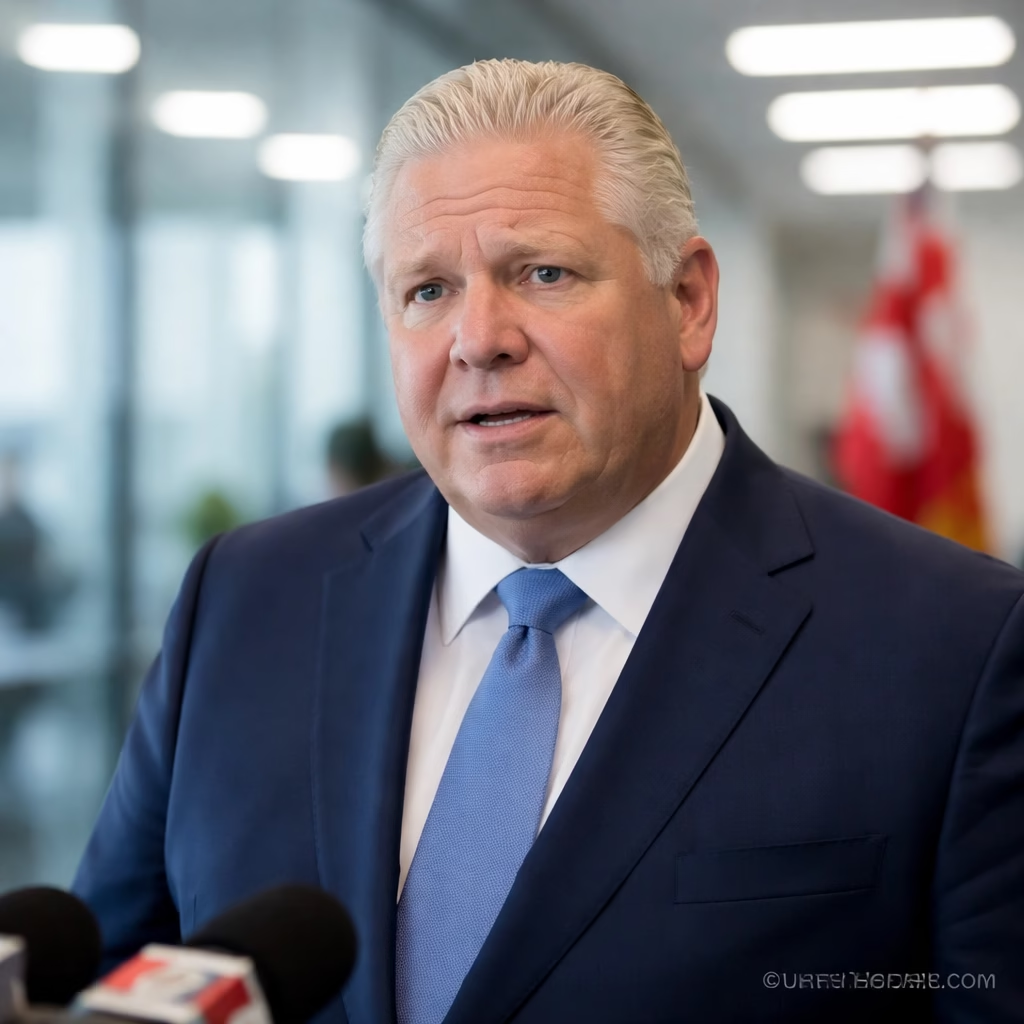
His concerns extend beyond mere communication. Farley articulated a broader unease about the competitive landscape created by such investments. While Ford is investing heavily in domestic battery production, the influx of foreign-backed facilities, particularly those from geopolitical rivals, raises questions about fair competition and the long-term health of the domestic supply chain. The CEO's remarks also implicitly touch upon the broader debate about U.S. industrial policy, particularly regarding foreign direct investment in critical technologies and its potential implications for national security and economic sovereignty.
Ford's own EV division, "Model e," has faced significant financial challenges, reporting substantial losses as the company navigates the expensive transition to electric vehicles. Against this backdrop, Farley's public criticism can be seen as a strategic move to ensure that state policies and incentives align with the interests of domestic manufacturers who are making substantial commitments to the state. His comments highlight the complex dance between state governments eager to attract investment and established local industries wary of new competition, especially when it comes with significant public subsidies.
More Read

Impact: Ripple Effects on State-Industry Relations and Beyond
Farley's pointed remarks are expected to have several significant impacts:
Strain on State-Industry Relations
The most immediate effect is a potential strain on the relationship between Ford and the Michigan state government. Ford is not just a company in Michigan; it is deeply embedded in the state's identity and economy. A public declaration of feeling sidelined by the state's chief executive of its largest employer could lead to a reevaluation of future collaboration and investment decisions within Michigan.
Scrutiny of Michigan’s Economic Development Strategy
The controversy will likely intensify scrutiny of Michigan's approach to economic development, particularly its use of the SOAR fund and its criteria for attracting foreign investment. Questions may arise about the balance between attracting new, diverse industries and supporting the growth of existing, legacy companies. It also raises questions about the transparency and inclusiveness of the decision-making process for major incentive packages.
Implications for the U.S. EV Supply Chain
Beyond Michigan, Farley's comments resonate with broader national discussions about the U.S. EV supply chain. As the nation aims to reduce reliance on foreign components, particularly from China, state-level decisions to heavily incentivize Chinese-backed manufacturing plants become increasingly contentious. This could fuel debates at the federal level about national industrial policy and guidelines for state economic incentives.
Local Community Dynamics
For communities like Green Charter Township, where the Gotion plant is planned, Farley's comments add another layer of complexity to an already contentious project. While the promise of jobs is significant, the concerns raised by a major domestic automaker could embolden local opposition and further polarize public opinion.
What Next: Seeking Dialogue and Policy Adjustments
The immediate aftermath of Farley's comments will likely center on the prospect of direct dialogue. It is anticipated that there will be increased pressure for a meeting between Ford's leadership and Governor Whitmer's office, potentially involving Carney, to address the communication breakdown and Ford's concerns. Such a meeting would be crucial for mending fences and clarifying the state's strategic vision.
More Read

Looking ahead, Michigan's economic development agencies may face calls for greater transparency and a more inclusive engagement process with key stakeholders, including established Michigan-based companies, when considering large-scale foreign investments. There could be a reevaluation of how incentives are structured to ensure they do not inadvertently create competitive disadvantages for domestic players or compromise national security interests.
For Ford, the path forward involves continuing its aggressive EV investment strategy while navigating these complex political and economic landscapes. The company will likely continue to advocate for policies that support domestic manufacturing and a robust, secure U.S. supply chain. The Gotion project, despite the controversy, is expected to proceed with its development timeline, but the broader conversation it has sparked will undoubtedly influence future EV manufacturing decisions in Michigan and across the nation.