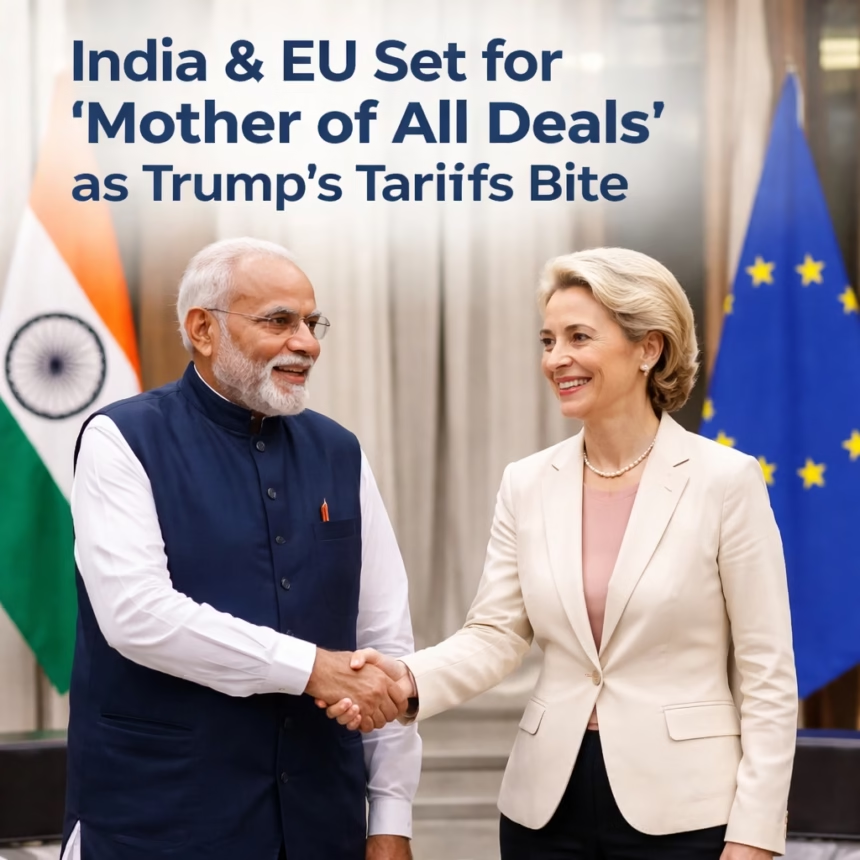
India-EU Trade Deal: A Game Changer?
India and the European Union are on the cusp of finalizing a comprehensive trade deal, potentially reshaping global economic dynamics. Negotiations have intensified in recent months, aiming to boost commerce and strengthen strategic ties between the two major economic blocs. The agreement, anticipated by many, could be formally inked by the end of 2024.
Background: A Long Road to Partnership
Discussions regarding a free trade agreement (FTA) between India and the EU began in 2009, but progress was slow due to various hurdles. Initial talks stalled amid concerns over agricultural subsidies, intellectual property rights, and market access. Both sides have, however, consistently expressed the potential benefits of a closer economic relationship, recognizing the significant market opportunities each offers.
The UK's departure from the European Union in 2020 spurred renewed interest. The EU sought to diversify its trade partners, and India presented itself as a significant alternative. Following Brexit, the EU has prioritized strengthening trade ties with countries outside the bloc, including India, Australia, and Japan.
Key Developments: Breaking the Logjam
Significant breakthroughs occurred in late 2023 and early 2024. Key sticking points, particularly related to dairy and automotive sectors, saw considerable progress. India agreed to reduce tariffs on a wide range of EU goods, while the EU secured improved access to the Indian market for its agricultural products and services.

A crucial step was the agreement on rules of origin, which determine the origin of goods to qualify for preferential tariff treatment. This was a complex negotiation, but a consensus was reached, paving the way for a final agreement. Recent rounds of talks, involving high-level officials from both sides, have focused on finalizing the details of specific chapters within the agreement and addressing remaining technical issues.
Impact: Winners and Considerations
For India
The deal is expected to boost Indian exports, particularly in sectors like pharmaceuticals, textiles, and IT services. Increased access to the EU market could lead to significant economic growth and job creation. Indian businesses will benefit from reduced tariffs and streamlined customs procedures. However, some sectors, like dairy, may face increased competition from EU imports.

More Read

For the EU
The FTA will provide EU companies with greater access to the large and rapidly growing Indian market. This will benefit sectors such as automobiles, machinery, chemicals, and food products. The deal also strengthens the EU’s strategic partnership with India, a key player in the global economy. EU farmers might face challenges from cheaper Indian agricultural products.
Global Implications
The deal between India and the EU comes at a time when global trade is facing headwinds. The United States’ imposition of tariffs on steel and aluminum imports has created uncertainty and disrupted supply chains. The India-EU agreement signals a commitment to multilateral trade and offers an alternative to protectionist policies. It also provides a counterweight to China’s growing economic influence.
What Next: Towards Implementation
Following the finalization of the agreement, it will need to be ratified by both the European Union member states and the Indian Parliament. The ratification process typically involves parliamentary debates and votes. Once ratified, the FTA is expected to come into effect within a year.
Implementation will involve the gradual phasing out of tariffs and the establishment of new rules and procedures for trade between the two blocs. Ongoing dialogue and cooperation will be necessary to address any challenges that may arise during the implementation phase. Both sides have committed to regular reviews of the agreement to ensure its effectiveness and relevance.
Timeline
Final agreement anticipated: End of 2024
Ratification process: 2025

FTA implementation: 2026 onwards