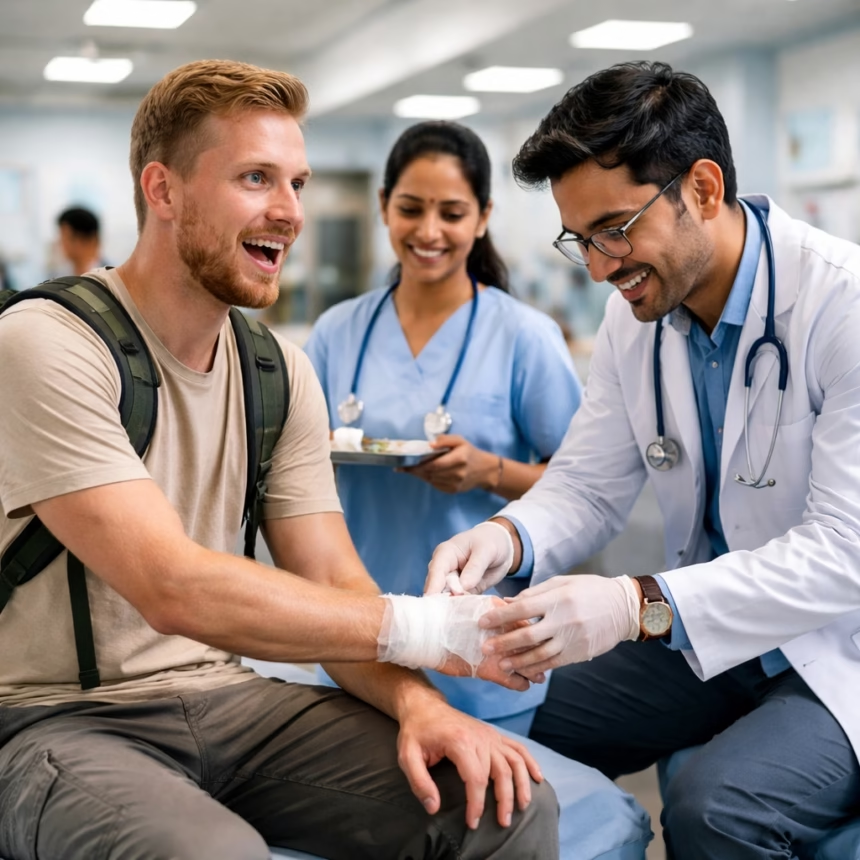
A German tourist visiting Surat, Gujarat, experienced an unexpected turn of events earlier this week when a dog bite incident led to completely free medical treatment at a local government hospital. The surprising encounter has challenged her preconceived notions about healthcare access for international visitors in India.
Background: An Unexpected Encounter in Surat
The Incident in the Old City
Ms. Anja Schmidt, 34, from Berlin, was exploring the historic lanes and vibrant markets of Surat’s old city on Tuesday evening, around 7:30 PM, when her leisurely stroll took an abrupt turn. While admiring some intricate textile work near the Chunawala Street area, a stray dog unexpectedly bit her on the left calf. The wound, though not deep, caused immediate concern due to the inherent risks associated with animal bites, particularly the potential for rabies.
Initial Fears and Hospital Visit
Schmidt, accustomed to the structured and often costly healthcare systems in Europe, initially braced herself for a substantial medical bill. Her primary concern was prompt and effective treatment, but the financial aspect weighed heavily, especially as a foreign national without local health insurance. Following the advice of a helpful local shopkeeper, she was directed to the nearest government medical facility rather than a private clinic, a decision that would soon lead to her remarkable discovery.
India’s Healthcare System: A Dual Landscape
India operates a dual healthcare system, comprising both public and private sectors. The public sector, funded by the government, aims to provide accessible and often free medical services to its citizens, particularly the economically vulnerable. However, it often grapples with perceptions of overcrowding and resource constraints. The private sector, while offering advanced facilities and specialized care, comes with significant costs. For many international visitors, the default assumption is that private healthcare is the only viable option, or that public facilities would not cater to non-citizens without charge.
More Read

Surat’s Public Health Infrastructure
The facility Ms. Schmidt was directed to was the New Civil Hospital, Surat, one of the largest government-run hospitals in South Gujarat. Established decades ago, it serves a vast population, providing a wide range of services from emergency care and general medicine to specialized surgeries and public health programs. The hospital boasts a significant bed capacity and a dedicated team of doctors, nurses, and support staff, playing a critical role in the region’s public health safety net.
Key Developments: The Revelation of Free Treatment
The Moment of Realization
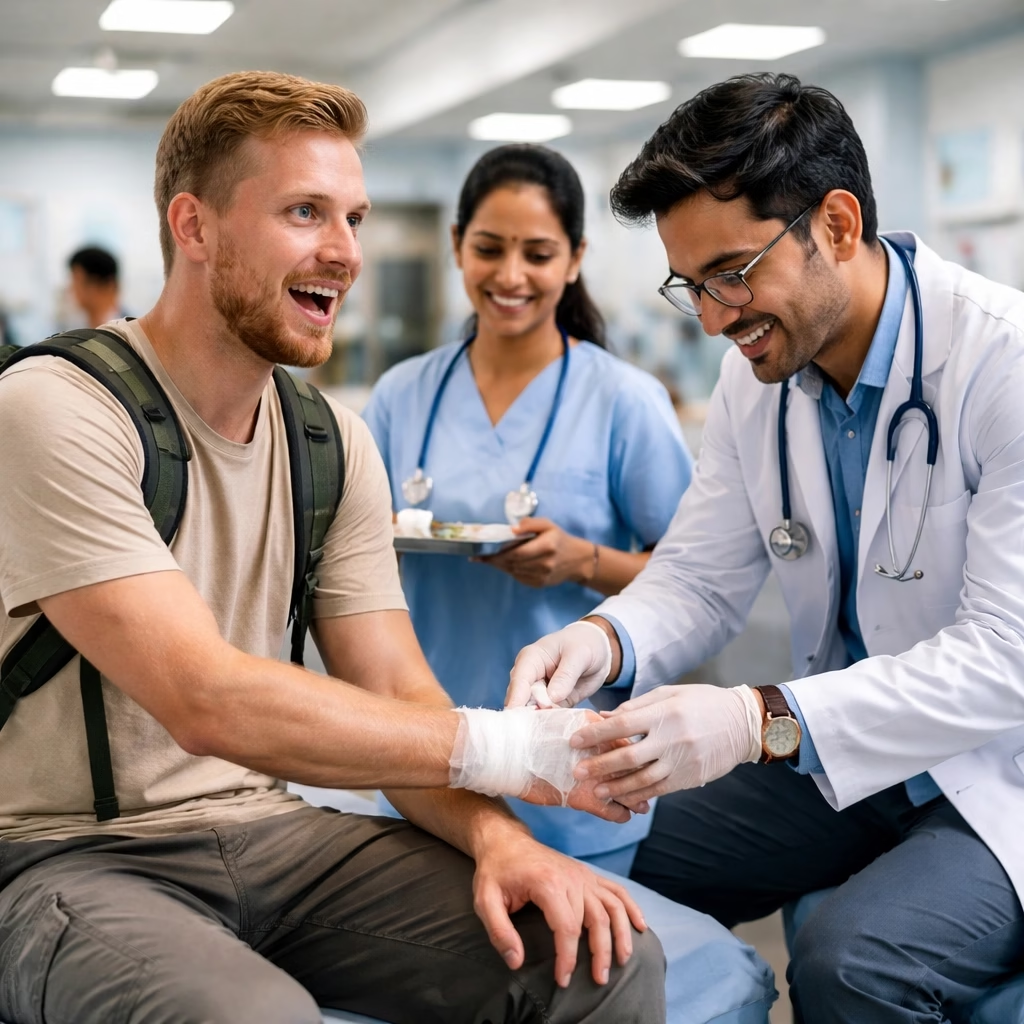
Upon arrival at the New Civil Hospital’s emergency department, Ms. Schmidt was promptly attended to. After initial assessment, thorough wound cleaning, and a tetanus shot, the medical staff began preparing for the crucial anti-rabies vaccination series. It was at this point, while anticipating instructions for payment, that she received the surprising news. “I kept asking if there was a mistake, or if I needed to pay at a different counter,” Schmidt recounted, visibly surprised. “They just smiled and said, ‘No, madam, it’s free. This is a government hospital.'” The revelation that all necessary treatments, including the essential vaccine doses and follow-up schedule, would be provided completely free of charge, left her astonished.
Government Initiatives in Public Health
This incident highlights the broader commitment of the Indian government to public health access. Over the years, various state and central government initiatives have aimed to strengthen public healthcare infrastructure and ensure essential services are free or heavily subsidized. Programs like the National Health Mission (NHM) and specific state-level schemes focus on providing preventive, promotive, and curative healthcare services. While these are primarily geared towards citizens, emergency care and treatments for public health concerns like rabies are often universally accessible without charge, reflecting a humanitarian approach to medical emergencies.
More Read
Challenging Perceptions
Ms. Schmidt’s experience directly challenges common stereotypes about public healthcare in developing nations. For many international travelers, the expectation is that such facilities might be rudimentary or inaccessible to foreigners without payment. Her encounter with professional, efficient, and entirely free service at a public hospital in Surat offers a compelling counter-narrative, showcasing the dedication and capabilities within India’s public health system.
Impact: A Shift in Perspective
The Tourist’s Profound Gratitude
Ms. Schmidt’s experience has profoundly shifted her perception of India’s public services and the kindness of its people. “In Germany, even with comprehensive health insurance, a visit to the emergency room can involve co-pays, deductibles, and a significant amount of paperwork. To receive such comprehensive and professional care, without any cost, as a foreigner, is truly astonishing,” she remarked, expressing deep gratitude for the hospital staff’s professionalism, empathy, and the unexpected generosity of the system. She noted the stark contrast to her own country where similar treatment would incur substantial costs, potentially running into hundreds of Euros.
Pride Among Local Staff and Community
The incident has also been a source of quiet pride among the hospital staff and the local community. Dr. Rakesh Patel, the attending physician, commented, “Our primary goal is to provide care to anyone in need, regardless of their nationality or ability to pay. It’s part of our ethos in public service.” Such stories reinforce the value and dedication of medical professionals working within the public sector, often under challenging conditions, and can boost morale. For the local community, it underscores the reliability and accessibility of their own healthcare institutions.
Enhancing India’s Global Image
Positive experiences like Ms. Schmidt’s can significantly influence India’s image on the global stage. Beyond its cultural heritage and economic dynamism, such incidents highlight the country’s humanitarian values and the often-unsung strengths of its public services. In an era where travel narratives are heavily influenced by personal experiences shared online, this story could serve as a powerful testament to the unexpected positives of visiting India, potentially attracting more tourists who might otherwise be wary of potential health emergencies. It counters narratives that solely focus on challenges, presenting a more nuanced and positive view.
Economic Implications for Travelers
For international travelers, unexpected medical emergencies can lead to significant financial burdens, often necessitating expensive travel insurance. Ms. Schmidt’s experience demonstrates that in certain emergency situations, particularly those involving public health concerns like rabies, government hospitals in India can provide a vital, free safety net. This could reduce anxiety for budget-conscious travelers and those exploring off-the-beaten-path destinations where private facilities might be scarce.
What Next: Ongoing Care and Broader Implications
Continuing the Treatment Protocol
Ms. Schmidt has already received her initial doses of the anti-rabies vaccine and tetanus shot. She is scheduled for subsequent doses as per the standard protocol for dog bites. While she plans to continue her travels within India, she intends to complete her vaccination series at other government hospitals along her route, confident now in the system’s ability to provide consistent and free care. The hospital staff in Surat provided her with all necessary documentation and advice for seamless follow-up.
More Read

Advocacy for Public Health Investment
This incident serves as a compelling case study for advocates pushing for continued and increased investment in public health infrastructure globally. It demonstrates that even with limited resources, a committed public health system can deliver critical, life-saving services effectively and equitably. The success story from Surat could be used to highlight the tangible benefits of robust public healthcare for both citizens and visitors.
Potential for Recognition and Policy Review
While standard procedure for government hospitals, the positive international attention garnered by this event could lead to recognition for the New Civil Hospital, Surat, and its staff. It might also prompt a broader review or public communication strategy regarding the availability of emergency medical services for international visitors in India, clarifying policies and reassuring travelers.
Future Tourism Benefits
The positive word-of-mouth generated by Ms. Schmidt’s experience is invaluable. Her story, shared with friends, family, and potentially a wider audience through social media or travel forums, could foster greater trust and confidence among potential tourists considering India. Such personal anecdotes often resonate more deeply than official tourism campaigns, portraying India not just as a destination of cultural richness, but also one capable of providing compassionate and effective public services in times of need.