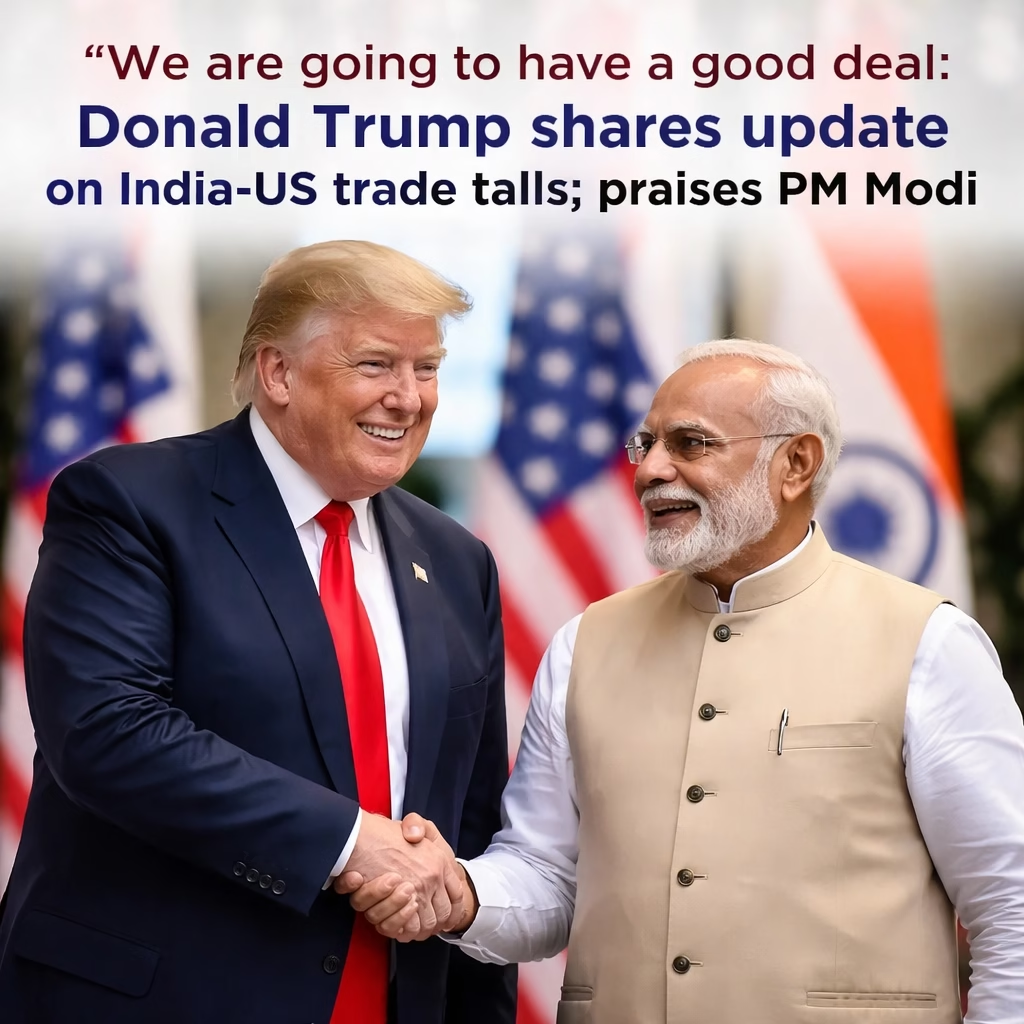
Former President Donald Trump has expressed strong optimism regarding future trade relations between the United States and India, signaling an impending "good deal." His comments, made recently at a campaign event, included significant praise for Indian Prime Minister Narendra Modi, highlighting a potential resurgence in high-level trade discussions between the two global powers. The remarks reignite focus on a relationship that has seen both significant cooperation and persistent trade frictions.
Background: A Complex Trade Tapestry
The trade relationship between the United States and India is multifaceted, characterized by periods of robust growth, strategic alignment, and occasional disputes. Historically, both nations have sought to deepen economic ties, recognizing the strategic importance of a strong bilateral partnership. However, specific trade barriers and policy divergences have often presented challenges.
Early Engagements and Stalled Progress
During Trump's previous presidency, a major focus was placed on rebalancing trade relationships globally. With India, discussions aimed at forging a comprehensive trade agreement or at least a "mini-deal" were prominent. A high point was Trump's state visit to India in February 2020, where despite a warm reception and significant diplomatic engagement, a limited trade package remained elusive. Key sticking points included tariffs on agricultural products, medical devices, and digital trade regulations.
GSP Withdrawal and Retaliatory Tariffs
A significant development in 2019 saw the United States revoke India's eligibility for the Generalized System of Preferences (GSP) program. This program had allowed duty-free entry for certain Indian goods into the U.S. market. The Trump administration cited India's failure to provide "equitable and reasonable access" to its markets in various sectors. In response, India imposed retaliatory tariffs on 28 U.S. products, including almonds, apples, and walnuts, further complicating trade negotiations.
Growing Bilateral Trade Volume
Despite these frictions, bilateral trade between the U.S. and India has continued to expand. In 2022-23, bilateral goods trade reached an impressive $128.8 billion, making the U.S. India's largest trading partner. Key sectors driving this growth include energy, defense equipment, pharmaceuticals, and information technology services. The U.S. has emerged as a major supplier of crude oil and liquefied natural gas to India, while India's pharmaceutical exports to the U.S. remain substantial.

Strategic Imperatives Beyond Trade
Beyond purely economic considerations, the U.S.-India relationship holds significant strategic weight. Both nations are key partners in the Indo-Pacific region, collaborating on initiatives like the Quad (Quadrilateral Security Dialogue) alongside Japan and Australia. This broader strategic alignment often provides impetus for resolving trade issues, viewing economic cooperation as a pillar of geopolitical stability.
Key Developments: Trump’s Renewed Optimism
Donald Trump's recent comments inject a fresh wave of optimism into the future of U.S.-India trade relations, particularly in the context of his potential return to the presidency. His statements underscore a continued personal engagement with the India-U.S. dynamic and a clear vision for a more favorable trade balance.
Trump’s Public Endorsement of PM Modi
During his recent remarks, Trump specifically lauded Prime Minister Narendra Modi, describing him as a "fantastic leader" and a "friend." This personal endorsement echoes the camaraderie observed during his previous term and suggests a foundation of mutual respect that could facilitate future negotiations. Such public praise from a former, and potentially future, U.S. president is significant, setting a positive tone for diplomatic and economic interactions.
More Read

Anticipation of a “Good Deal”
Trump's assertion that "we are going to have a good deal" implies a confidence in achieving terms that he considers beneficial to the United States. While specifics were not detailed, historically, his administration prioritized reducing trade deficits and securing greater market access for American goods and services. A "good deal" from his perspective would likely involve India lowering tariffs on U.S. products, addressing non-tariff barriers, and potentially opening up more sectors to U.S. investment.
Current Administration’s Efforts
Even under the Biden administration, efforts to resolve lingering trade issues have continued. U.S. Trade Representative Katherine Tai and Indian Commerce Minister Piyush Goyal have engaged in multiple rounds of discussions through the U.S.-India Trade Policy Forum. These talks have aimed at finding common ground on issues such as market access for agricultural products, digital trade, and intellectual property rights. While progress has been incremental, the foundation for further engagement remains.
Potential Focus Areas for Renegotiation
Should a new round of intense negotiations commence, several areas are likely to be central. These include:
Agricultural Market Access: U.S. demands for reduced tariffs on products like almonds, apples, and poultry.
Digital Trade: India's evolving data localization policies and e-commerce regulations, which have been a concern for U.S. tech companies.
Industrial Tariffs: India's tariffs on Harley-Davidson motorcycles and other manufactured goods, which Trump previously highlighted.
Intellectual Property Rights: Strengthening IP protection in India, particularly for pharmaceuticals and technology.
Services Trade: Easing visa restrictions for skilled Indian professionals and greater access for U.S. service providers in India.
Impact: Broad Repercussions for Economies and Geopolitics
A successful "good deal" between the U.S. and India would have far-reaching implications, affecting various economic sectors, businesses, and the broader geopolitical landscape.
Economic Boost and Sectoral Gains
A comprehensive trade agreement could significantly boost bilateral trade volumes beyond current levels. For the U.S., it could mean increased exports of agricultural products, advanced technology, and defense equipment. For India, it might lead to greater access to U.S. markets for its textiles, pharmaceuticals, and IT services.

Agriculture: U.S. farmers could see new opportunities in the vast Indian market, while Indian consumers might benefit from a wider variety of imported goods.
Manufacturing: Reduced tariffs could stimulate cross-border investment and create new supply chain efficiencies.
Technology and Services: Harmonized digital trade rules could benefit tech giants and startups alike, fostering innovation and job creation in both countries.
Strengthening Strategic Partnership
Economically robust ties often serve as a bedrock for deeper strategic cooperation. A positive trade outcome would reinforce the U.S.-India strategic partnership, particularly in the context of counterbalancing rising geopolitical influences in the Indo-Pacific. It would signal a shared commitment to an open, rules-based international order.
Implications for Businesses and Consumers
Businesses on both sides stand to gain from reduced trade barriers, leading to lower costs of doing business and expanded market access. U.S. companies like Apple and Amazon, already investing heavily in India, could see an even more favorable operating environment. Indian businesses could find it easier to export to the U.S. or attract American investment. For consumers, this could translate into a greater variety of goods at competitive prices.
Global Trade Dynamics
A significant U.S.-India trade deal could also influence global trade dynamics, potentially encouraging other nations to re-evaluate their trade policies with these two economic giants. It could set precedents for future bilateral agreements and demonstrate the viability of tailored trade solutions outside of multilateral frameworks.
What Next: Path to a Potential Agreement
The path to a comprehensive "good deal" between the United States and India remains complex, requiring sustained political will and detailed technical negotiations.
Resumption of High-Level Dialogues
Should Donald Trump return to the White House, it is highly probable that high-level trade dialogues would be swiftly re-initiated, potentially with a renewed sense of urgency. The U.S. Trade Representative's office and India's Ministry of Commerce and Industry would be the primary negotiating bodies. These discussions would likely build upon previous rounds, addressing unresolved issues with a fresh perspective.
Key Players and Negotiating Teams
The USTR, led by its chief negotiator, would articulate U.S. demands and offers. On the Indian side, the Commerce Minister and senior bureaucrats would lead the charge, balancing domestic industry concerns with the strategic benefits of a deal. Industry stakeholders and lobbying groups from both nations would also play a significant role in shaping negotiating positions.
Potential Timelines and Hurdles
Negotiating a comprehensive trade agreement is typically a lengthy process, often spanning several years. While Trump's rhetoric suggests a desire for a quicker resolution, the intricacies of market access, regulatory harmonization, and legal frameworks demand careful consideration.
Remaining hurdles include:
Domestic Sensitivities: Protecting domestic industries (e.g., agriculture in India, manufacturing in the U.S.) remains a key concern for both governments.
Regulatory Differences: Bridging gaps in standards, certifications, and intellectual property regimes.
Political Cycles: The electoral cycles in both countries can influence the pace and direction of negotiations.
Future Outlook for U.S.-India Relations
Irrespective of specific trade outcomes, the U.S.-India relationship is poised for continued growth, driven by shared democratic values, strategic convergences, and economic complementarities. Trump's optimistic pronouncements, coupled with PM Modi's consistent emphasis on strengthening ties with the U.S., suggest a future where economic cooperation remains a cornerstone of this critical bilateral partnership. A "good deal" would not only signify a major economic achievement but also a powerful symbol of enduring friendship and shared ambition on the global stage.