Food Security Crisis: Government Steps In Amidst Rising Hunger
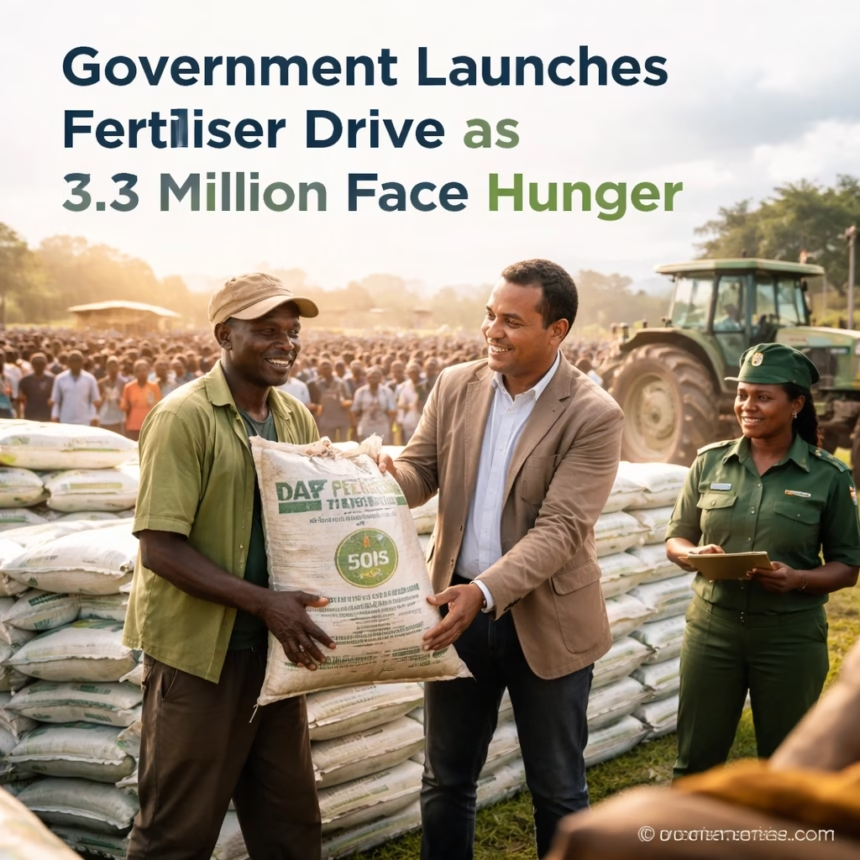
Nairobi, Kenya – The Kenyan government has announced a major fertilizer initiative in a bid to combat rising food insecurity affecting an estimated 3.3 million people across the country. The program aims to boost agricultural production following a prolonged drought and rising global food prices.
Background: A Growing Food Security Challenge
Kenya has experienced increasing challenges to food security in recent years. Recurring droughts, exacerbated by climate change, have significantly impacted crop yields. The situation worsened in 2022, with widespread crop failures reported in several regions. The Kenya National Bureau of Statistics (KNBS) estimates that over 3.3 million Kenyans are currently facing hunger, a stark increase from previous years. The government has been monitoring the situation closely, recognizing the urgent need for intervention.
Past government initiatives have focused on subsidized fertilizer programs, but these efforts have faced challenges with distribution and affordability for smallholder farmers. Concerns have also been raised about the quality of some fertilizers available in the market, impacting their effectiveness. The current drive represents a renewed and more comprehensive approach to addressing the root causes of food insecurity.
Key Developments: A Multi-pronged Approach
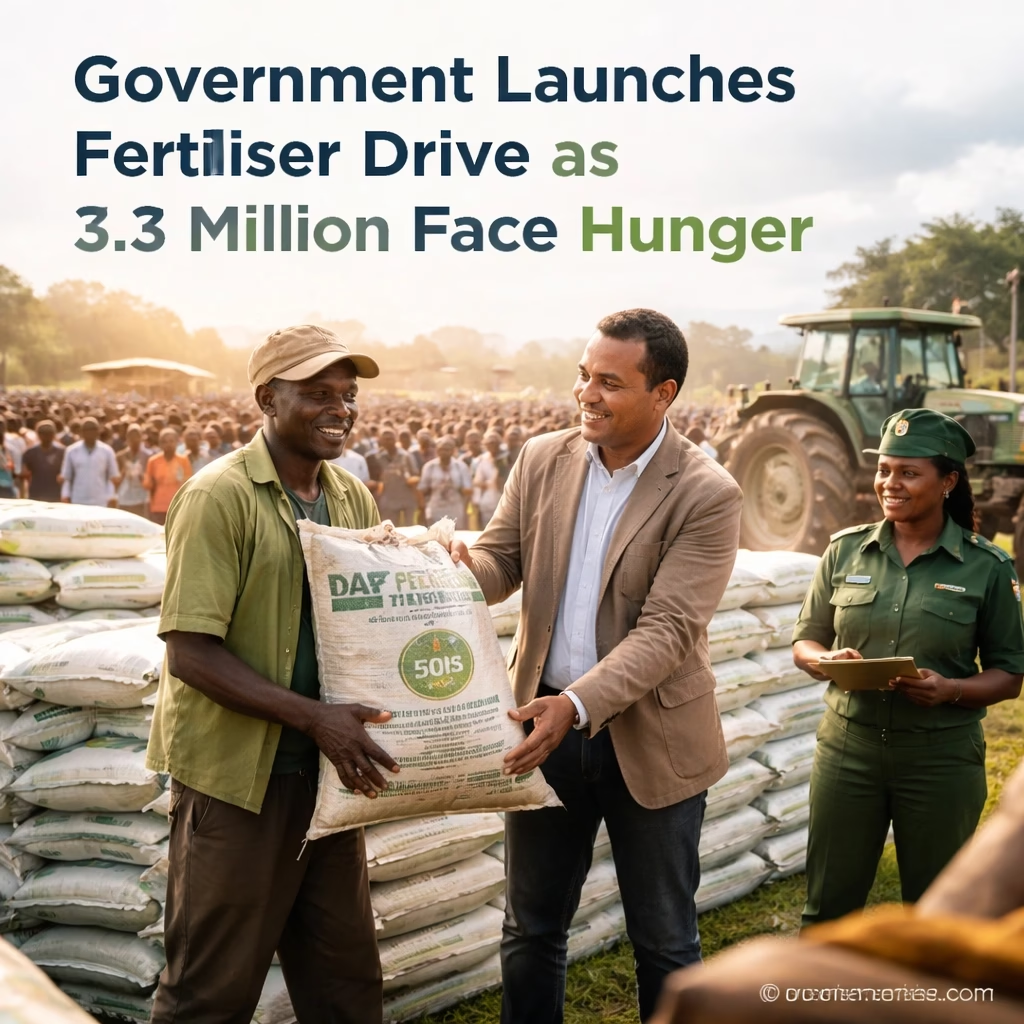
The newly launched fertilizer drive incorporates several key changes. The government, in collaboration with the Ministry of Agriculture and Livestock Development, is distributing subsidized fertilizer directly to farmers in drought-stricken areas. The initiative prioritizes maize, beans, and vegetables – staple crops crucial for food security. The program utilizes a digital tracking system to ensure transparency and accountability in fertilizer distribution, aiming to minimize corruption and ensure equitable access.
Furthermore, the government is partnering with agricultural cooperatives and local distributors to improve the efficiency of the supply chain. Efforts are being made to source high-quality fertilizer from both local and international suppliers, with a focus on nutrient-rich options. A key component is farmer education and training on best agricultural practices, including efficient fertilizer application techniques.
Impact: Vulnerable Communities at Risk
The impact of the food insecurity crisis is disproportionately felt by vulnerable communities, particularly in arid and semi-arid lands (ASALs) in counties like Turkana, Marsabit, and Mandera. These regions are highly dependent on rain-fed agriculture and are particularly susceptible to drought. The 3.3 million affected individuals include a significant number of women and children who are most vulnerable to malnutrition and food-related health problems.

Beyond direct food shortages, the crisis is also impacting livelihoods. Farmers are facing reduced income due to crop failures, leading to increased poverty and economic hardship. The rising cost of food is placing a significant strain on household budgets, forcing families to make difficult choices about their food consumption. The government is working with humanitarian organizations to provide food assistance to the most severely affected populations.
Geographic Distribution of Impact
According to the Food and Agriculture Organization (FAO), the counties of Kitui, Machakos, Makueni, Tharaka Nithi and Embu are experiencing the most severe food insecurity. These regions have seen a significant decline in maize production this year, contributing to the overall crisis.
What Next: Long-Term Solutions
The fertilizer drive is intended to provide immediate relief, but the government emphasizes the need for long-term solutions to address the underlying causes of food insecurity. These include investing in irrigation infrastructure, promoting climate-smart agriculture, and strengthening early warning systems to anticipate and mitigate the impact of droughts.
The government plans to conduct regular monitoring and evaluation of the fertilizer program to assess its effectiveness and make necessary adjustments. Future plans include expanding the program to include other crops and implementing policies to improve market access for smallholder farmers. The aim is to build a more resilient and sustainable agricultural sector that can withstand future shocks.
Timeline for Program Completion
The initial phase of the fertilizer distribution program is expected to be completed by December 2023. The government intends to roll out the program nationwide over the next two years, with ongoing monitoring and evaluation to ensure its success.