Arctic Tensions: Greenland's Path Forward
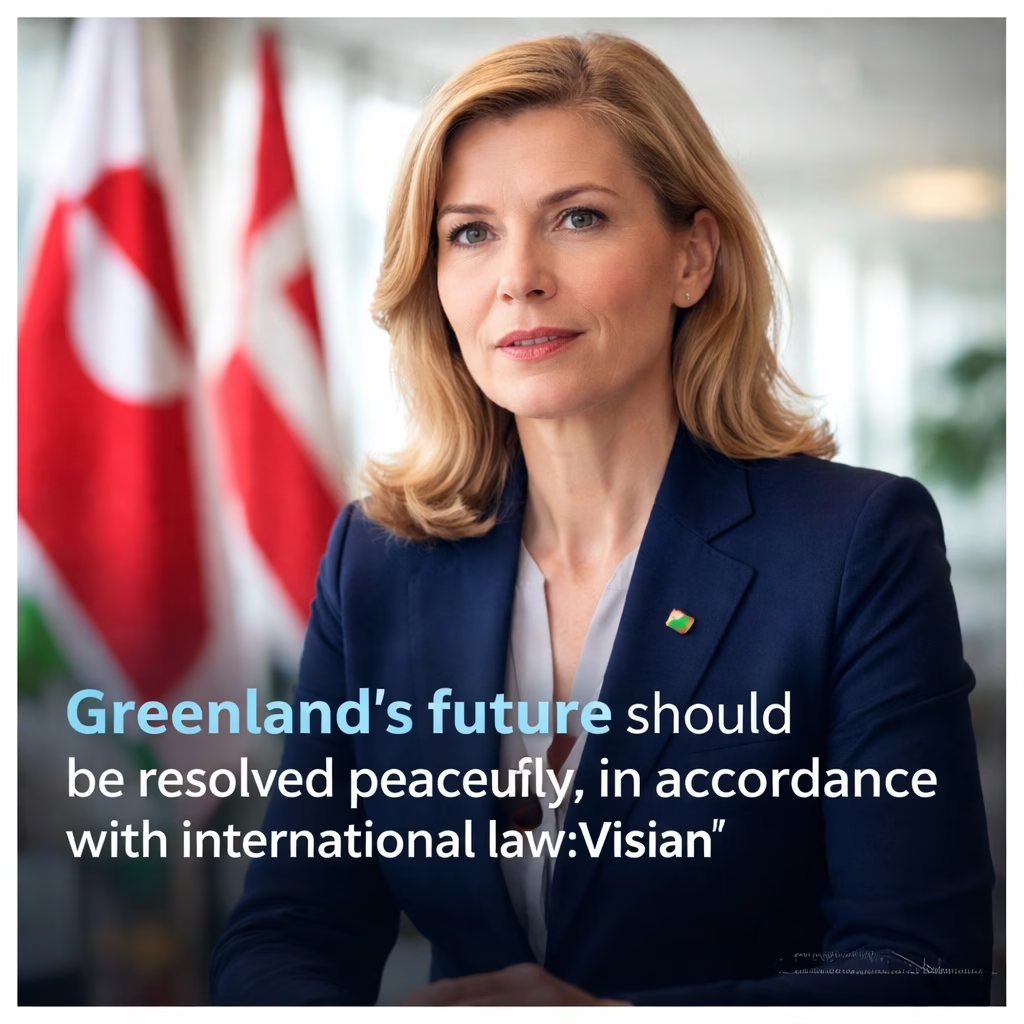
Nuuk, Greenland – Discussions surrounding Greenland's future governance are intensifying, with calls for a peaceful resolution grounded in international law gaining momentum. Vivian, a prominent international legal scholar, recently voiced strong support for this approach, emphasizing the importance of respecting the will of the Greenlandic people and upholding established legal frameworks.
Background
Greenland, an autonomous territory within the Kingdom of Denmark since 1953, has a long history of navigating its relationship with Denmark. The territory, encompassing approximately 2,166,086 square kilometers (836,330 square miles), is largely covered by an ice sheet. Previous attempts at greater autonomy have occurred, notably with the Self-Governance Act of 1979, which granted Greenland significant control over domestic affairs, excluding foreign policy and defense. For decades, the debate has centered on the extent of Greenland's sovereignty and its potential for full independence.
The concept of Greenlandic independence has resurfaced periodically. Referendums on the issue were held in 1979 and 2008, both resulting in strong votes for remaining within the Kingdom of Denmark. However, recent political shifts and growing discussions about self-determination have reignited the conversation.
More Read

Key Developments
In recent years, Greenland has seen a growing emphasis on cultural identity and self-determination. The current government, led by Prime Minister Múte Bourup Egede since 2019, has prioritized strengthening Greenlandic language, culture, and institutions. Egede has repeatedly stated the importance of respecting the wishes of the Greenlandic people regarding their future.
Furthermore, geopolitical considerations have added complexity to the situation. Increased interest in Greenland's resources, including minerals and potential shipping routes due to climate change, has attracted international attention. This has led to heightened discussions, and at times, tensions, regarding economic development and resource management.
The 2021 Greenlandic general election saw a shift in political power, with the Social Democrats, led by Egede, maintaining a majority. This stability has allowed for a more focused approach on domestic issues and a cautious approach to any significant changes in the relationship with Denmark.

Impact
The future governance of Greenland has far-reaching implications for various stakeholders. The Greenlandic people themselves are directly affected, as their political and economic future hangs in the balance. The outcome will determine their ability to control their own destiny and manage their resources sustainably.
Denmark, as the Kingdom of Greenland, has a significant interest in maintaining stability and upholding its legal obligations. Any sudden or unilateral changes could destabilize the region and create legal challenges. Furthermore, Greenland’s future impacts international relations, particularly concerning Arctic governance and resource management. Countries like the United States, Canada, Russia, and European nations have stakes in the region’s stability and development.
International companies eyeing Greenland's resources are also affected. The level of political stability and clarity regarding legal frameworks will influence their investment decisions and operational strategies.
What Next
Ongoing Dialogue
The immediate future involves continued dialogue between the Greenlandic government and the Danish government. These discussions are expected to focus on strengthening the existing framework of autonomy and addressing key issues such as resource management, infrastructure development, and social welfare.
Potential Referendum
While no immediate referendum is planned, the possibility of future referendums on the issue of independence cannot be ruled out. The timing and conditions for such a referendum would likely depend on the evolving political landscape and the outcome of ongoing negotiations.
International Cooperation
International cooperation will be crucial in shaping Greenland’s future. This includes collaboration on environmental protection, climate change mitigation, and sustainable resource management. The Arctic Council, with its 24 member states and observer organizations, plays a vital role in fostering such cooperation.
More Read

Vivian, in her recent statement, emphasized the importance of adhering to international law throughout the process. “Any future decisions regarding Greenland’s governance must be made with respect for international law and the will of the Greenlandic people,” she stated. “A peaceful and legally sound resolution is essential for ensuring stability and prosperity in the Arctic region.”