Decades-Old Mystery Reignited: Israel's Covert Graveyard Search in Lebanon for Missing Airman
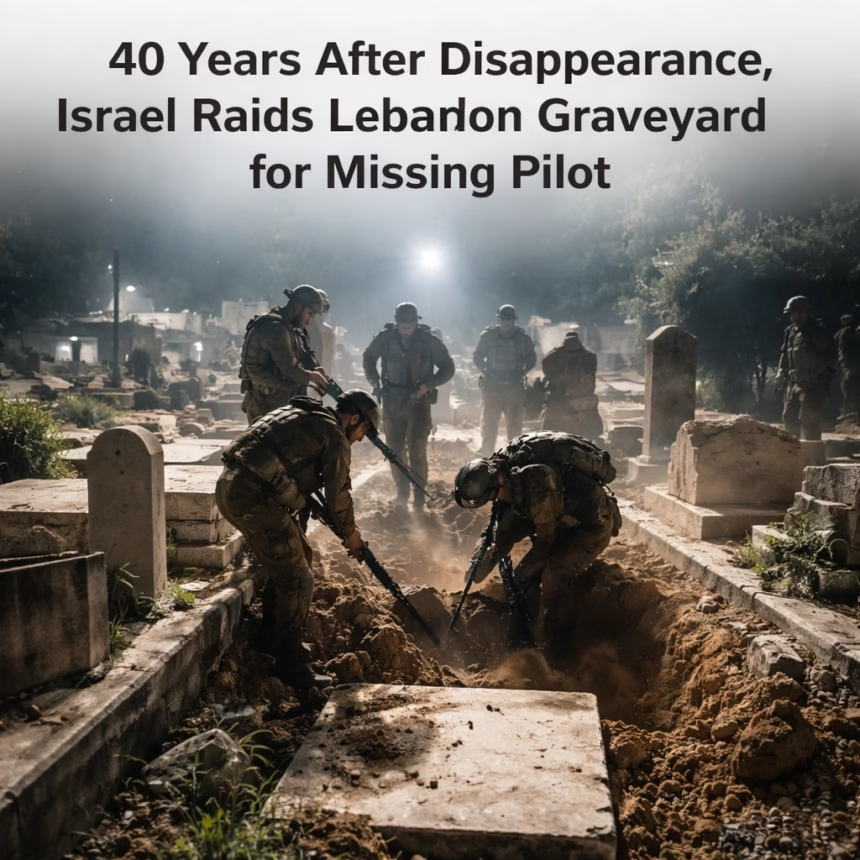
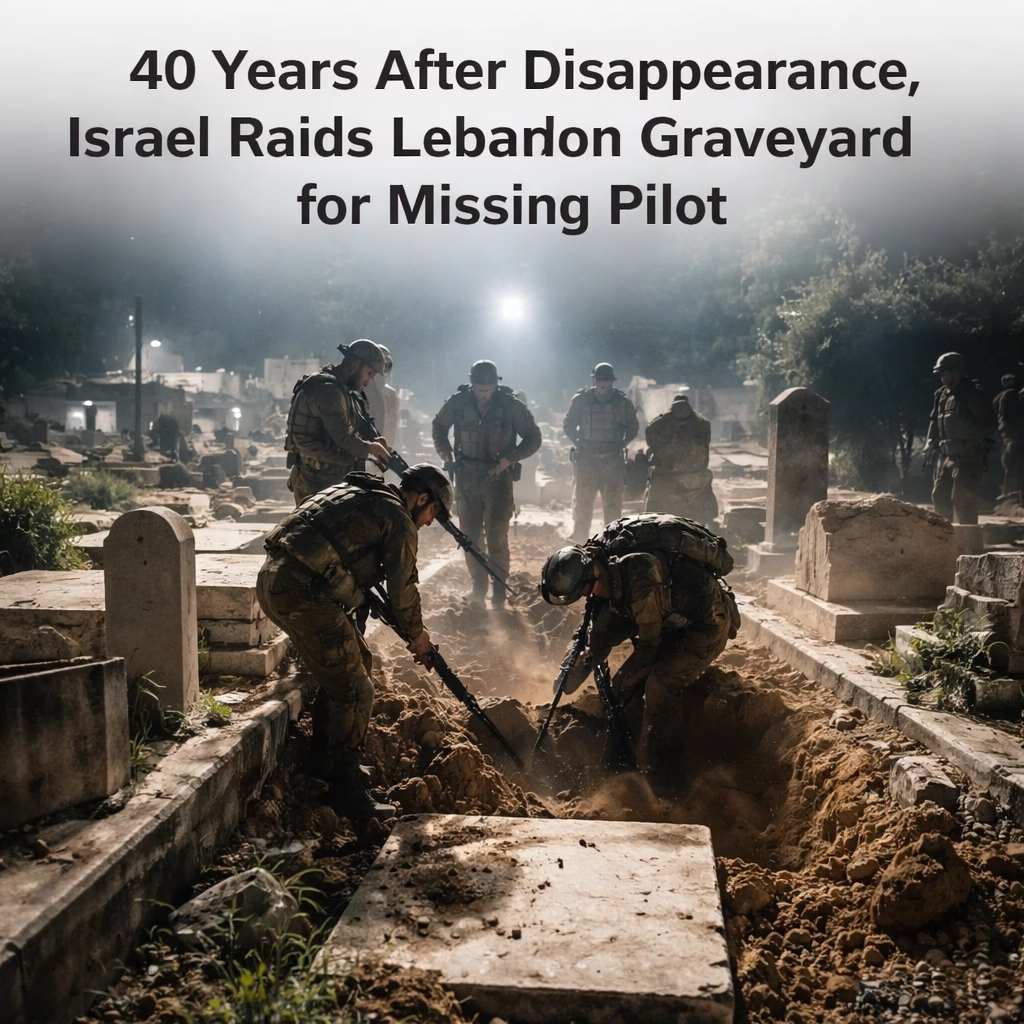
Forty years after his disappearance, the enduring mystery surrounding Israeli Air Force navigator Ron Arad has taken a dramatic turn. Recent intelligence-led operations, reportedly conducted by Israeli forces, involved a clandestine search within a cemetery in Lebanon. The highly sensitive mission aimed to uncover potential remains or new clues regarding Arad's fate, a case that has haunted Israel for generations.
Background: The Unending Quest for Ron Arad
Ron Arad, then a 28-year-old navigator, vanished on October 16, 1986. His F-4 Phantom jet was struck by an anti-aircraft missile during an Israeli bombing raid over South Lebanon. While his pilot was rescued, Arad was captured by the Amal Movement, a Lebanese Shiite militia.
Initial negotiations for his release commenced, involving intermediaries and prisoner exchanges. Arad was last known to be alive in 1988, having sent several letters and a video recording. However, communication abruptly ceased, and subsequent intelligence suggested he may have been transferred from Amal to Hezbollah, or even to Iranian or Syrian custody.
More Read

For Israel, Arad's case became a profound national trauma and a symbol of its commitment to "leaving no soldier behind." Successive Israeli governments have invested immense resources into intelligence gathering, covert operations, and diplomatic efforts to ascertain his fate or recover his remains. His image, alongside the phrase "Ron Arad, We haven't forgotten," has been a persistent presence in Israeli public life.
Over the decades, numerous intelligence reports surfaced, often conflicting. Some suggested Arad died in Lebanon due to illness or injury in the early 1990s. Others posited he was held in Iran or Syria for years before his eventual demise. Despite extensive efforts, including prisoner swaps where information on Arad was a key demand (such as the 2004 exchange with Hezbollah for Elhanan Tannenbaum and the remains of three soldiers, or the 2008 exchange for Eldad Regev and Ehud Goldwasser), no definitive answers or remains ever materialized.
Key Developments: The Covert Cemetery Operation
In recent months, a significant new development unfolded. Acting on what Israeli intelligence deemed a credible new lead, a covert operation was reportedly launched deep inside Lebanese territory. The objective was a specific cemetery in a designated region of Lebanon, where intelligence suggested Arad's remains might have been interred.
More Read

The mission was executed with extreme secrecy, involving specialized units and intelligence assets. Details remain scarce, but reports indicate the operation involved the clandestine entry into the cemetery, the identification of specific burial plots, and forensic examination of the sites. The underlying intelligence reportedly pointed to a specific grave or graves where Arad's body, or parts of it, might have been moved years after his initial disappearance.
While official Israeli sources have largely remained tight-lipped about the specifics, confirming only that a significant effort was made to locate Arad, they have not confirmed the discovery of any remains. This suggests the operation, while meticulously planned and executed, did not yield the conclusive breakthrough the nation desperately sought.
The operation did not go unnoticed by Lebanese authorities and militant groups. Hezbollah, which maintains a strong presence in southern Lebanon, condemned the alleged Israeli incursion as a blatant violation of Lebanese sovereignty and a desecration of sacred ground. Lebanese officials echoed these sentiments, highlighting the ongoing tensions between the two nations, which technically remain in a state of war.
Impact: Renewed Hope, Lingering Pain, and Geopolitical Fallout
The latest operation, despite its inconclusive outcome, has had a profound impact on various stakeholders.
Arad Family and Israeli Public
For Ron Arad’s family, the news of the covert search reignited a familiar cycle of hope and anguish. Decades of uncertainty have taken an immense toll, and every new lead, however small, brings both the possibility of closure and the pain of renewed disappointment. The Israeli public, deeply invested in the fate of its missing soldiers, once again witnessed the nation’s unwavering commitment, even four decades later.
Lebanese Sovereignty and Regional Tensions
In Lebanon, the alleged Israeli operation sparked outrage and condemnation. Lebanese officials and Hezbollah leaders denounced the incursion as an act of aggression and a violation of national sovereignty. This incident underscores the fragile security situation along the Israel-Lebanon border and highlights the potential for escalation, even when operations are framed as humanitarian. It also serves as a potent reminder of the unresolved conflicts and the ongoing proxy struggles involving Iran in the region.
More Read

Intelligence Community
For intelligence agencies, the operation represents the relentless pursuit of information and the lengths to which states will go to resolve national mysteries. While the immediate objective may not have been met, the operation itself likely yielded new intelligence, refined existing data, and tested operational capabilities in a highly hostile environment.
What Next: The Enduring Quest for Closure
The search for Ron Arad is far from over. Despite the lack of a definitive breakthrough in the recent cemetery operation, Israeli intelligence agencies will undoubtedly continue to analyze any new information, however fragmented. The commitment to bringing Arad home, or at least understanding his final fate, remains a national imperative.
Future operations, both overt and covert, cannot be ruled out. The incident also serves as a stark reminder of the humanitarian dimension of long-standing conflicts and the enduring human cost. While diplomatic channels between Israel and Lebanon remain virtually non-existent, intermediaries may continue to play a role in any future attempts to glean information.
Until definitive answers are found, the case of Ron Arad will continue to be a poignant symbol of the human cost of conflict, the relentless pursuit of truth, and the enduring quest for closure that defines both a family and a nation.