Hope on the Horizon? Guinea-Bissau Eases Grip on Political Rivals
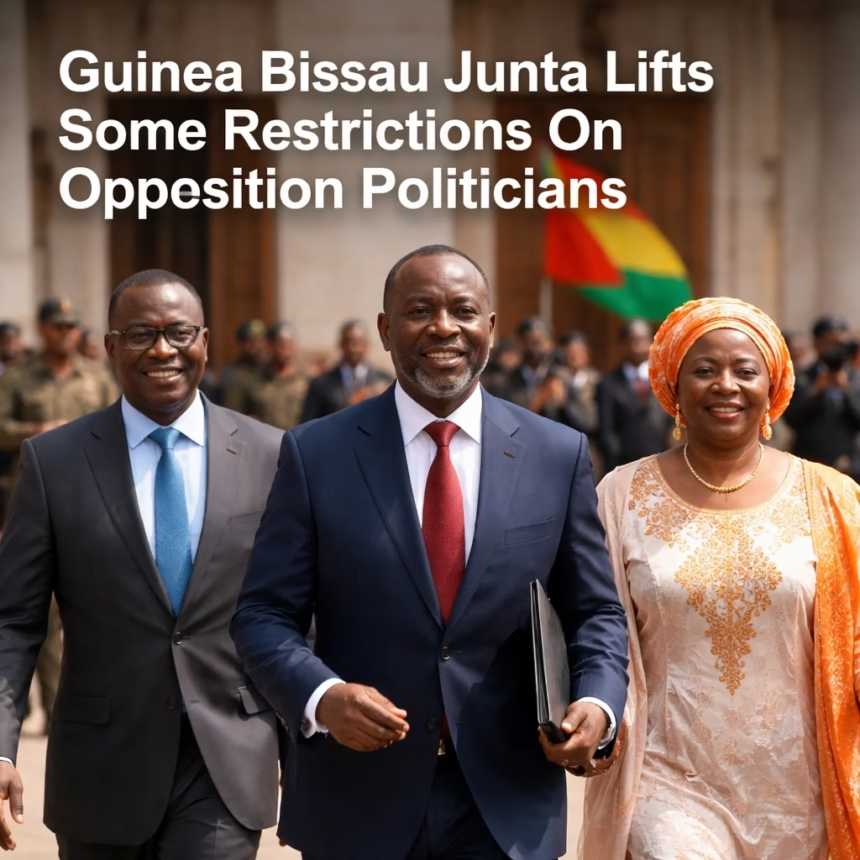
After years of restrictions, the junta ruling Guinea-Bissau has announced a series of measures easing limitations on opposition politicians, sparking cautious optimism in the nation. The changes, announced on November 20, 2023, represent a potential shift in the country's political landscape following a 2022 military takeover.
Background
Guinea-Bissau has a turbulent political history, marked by numerous coups and periods of instability since gaining independence in 1974. The country's fragile democracy has been consistently undermined by political infighting, corruption, and a history of military involvement in politics. The 2022 coup, led by General Brakasse, ousted President Umaro Sissoco Embaló, further destabilizing the nation and leading to international condemnation.
Following the coup on February 7, 2022, the military junta, known as the Committee for the Transition and Restoration of Institutions (CTRI), imposed restrictions on political activities, including limiting the movement and public appearances of opposition leaders. These restrictions fueled concerns about the erosion of democratic principles and the future of Guinea-Bissau's political system.
Key Developments
The recent changes announced on November 20th are the most significant in nearly two years. The CTRI has lifted travel restrictions on several prominent opposition figures, including former President Embaló and the leader of the PAIGC (African Party for the Independence of Guinea and Cape Verde), Rui Duarte de Barros. These leaders can now move freely within the country.
More Read

Furthermore, the junta has announced the reopening of political parties and the possibility of holding elections, although the timeline remains unclear. The announcement also included a promise to allow opposition parties to organize public meetings and rallies, a right previously curtailed by the military regime.
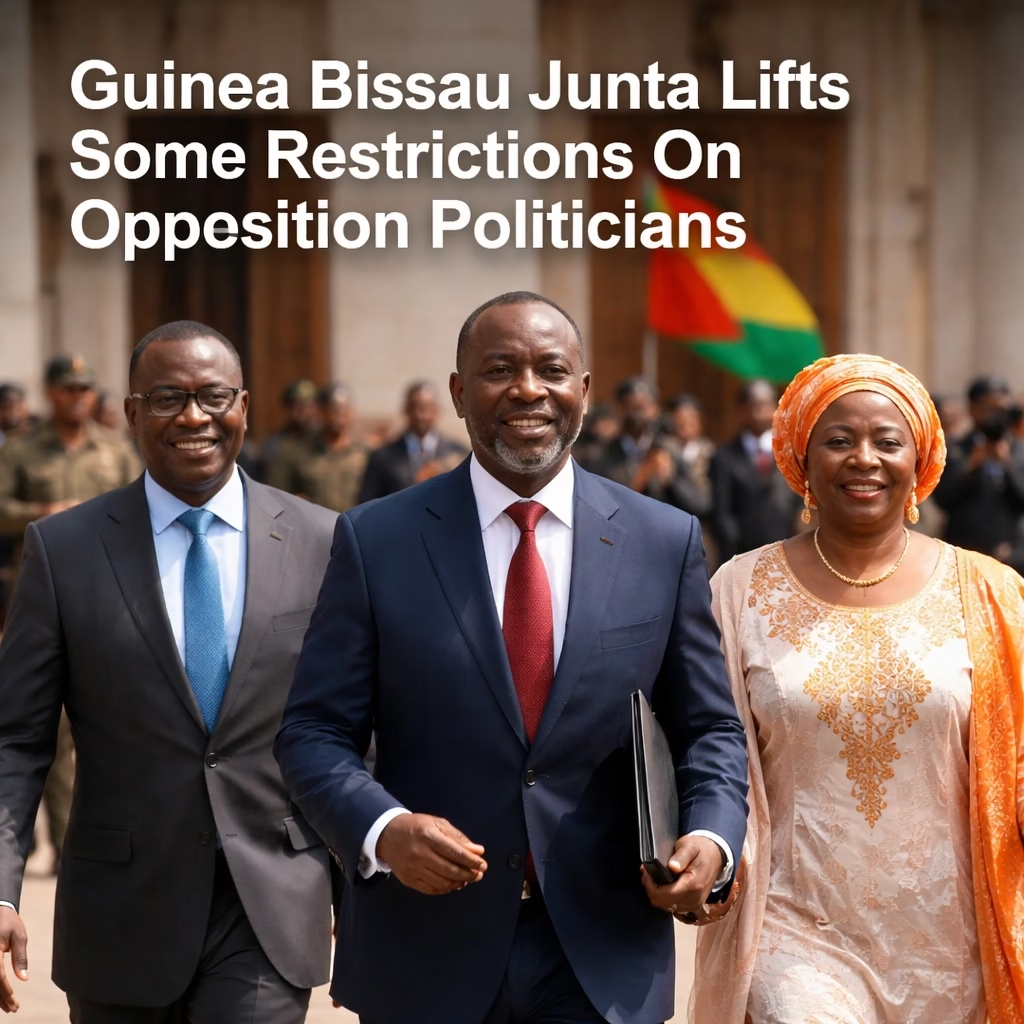
Specific details of the lifted restrictions include the removal of requirements for opposition politicians to obtain prior approval from the CTRI for any public appearance. Previously, this approval was often denied, effectively silencing dissent.

Impact
The easing of restrictions is expected to have a significant impact on the political landscape of Guinea-Bissau. Opposition parties, previously operating under severe limitations, now have the opportunity to re-engage with the public and mobilize support.
Former President Embaló, who has been under house arrest since the coup, is expected to play a more active role in the political process. His release and the lifting of travel restrictions represent a crucial step toward restoring democratic norms and institutions.
However, the impact will also depend on the willingness of the CTRI to fully commit to a peaceful and inclusive transition. Continued restrictions or attempts to undermine the political process could derail the progress made thus far.
What Next
The immediate focus is on the practical implementation of the announced changes. Opposition parties are expected to begin reorganizing and planning for future political activities. The CTRI has stated its intention to consult with various stakeholders, including political parties and civil society organizations, before announcing a timeline for elections.
Potential Election Timeline
While no firm date has been set, analysts estimate that elections could potentially be held in late 2024 or early 2025. However, this timeline is contingent on the CTRI fulfilling its commitments to political reform and creating a level playing field for all parties.
Challenges Ahead
Significant challenges remain. Addressing corruption, strengthening democratic institutions, and ensuring the security of political actors are crucial steps in building a stable and prosperous Guinea-Bissau. The CTRI's commitment to these reforms will be a key determinant of the country's future.
More Read

International observers are closely monitoring the situation, with the African Union and the Economic Community of West African States (ECOWAS) urging the junta to uphold democratic principles and facilitate a peaceful transition. The EU has also expressed support for a return to constitutional order.