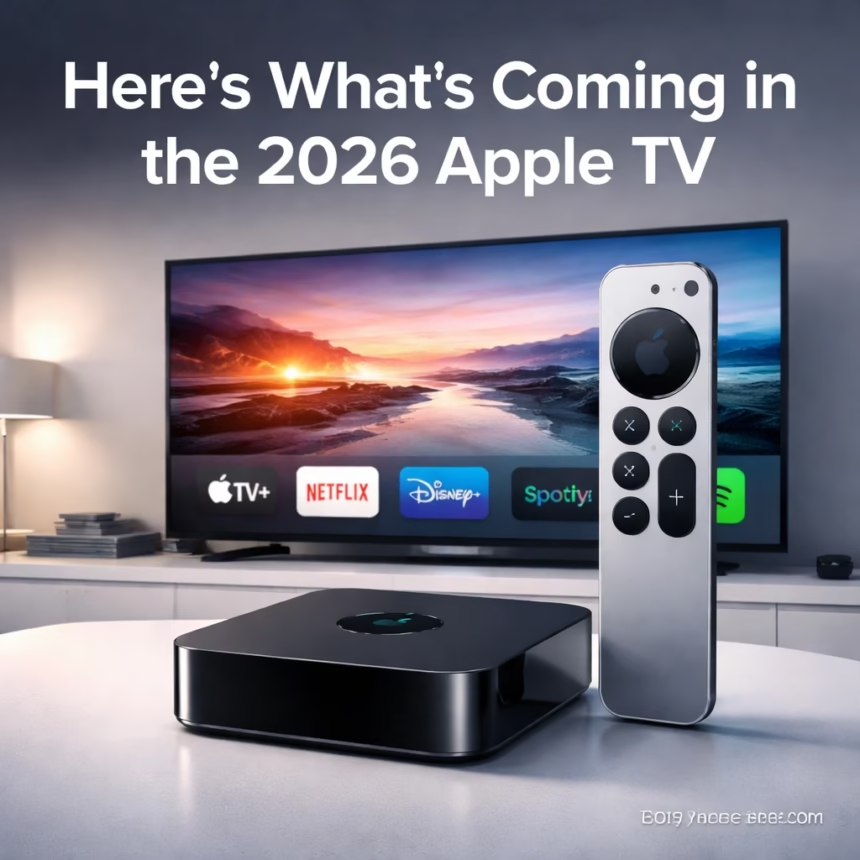
Apple is reportedly charting a bold new course for its home entertainment device, with the highly anticipated 2026 Apple TV poised to redefine the living room experience. Industry insiders and supply chain whispers suggest a significant overhaul, moving beyond a mere streaming box to integrate advanced computing, augmented reality, and comprehensive smart home capabilities. This strategic evolution aims to solidify Apple's presence at the heart of the modern household.
Background: Apple TV’s Journey to the Living Room Core
The Apple TV, first introduced in 2007, began as a niche device for iTunes content. Over the years, it has evolved through multiple iterations, transforming into a robust streaming platform powered by tvOS, offering access to a vast ecosystem of apps, games, and services like Apple TV+, Apple Arcade, and Apple Fitness+. Despite its capabilities, the device has often been seen as a premium, yet incremental, upgrade in a competitive market dominated by Roku, Amazon Fire TV, and Google TV. Apple's broader strategy has consistently aimed for deeper integration within its hardware and software ecosystem, often using the Apple TV as a hub for HomeKit and AirPlay. The current generation, featuring the A15 Bionic chip, was released in late 2022, marking a typical two-year refresh cycle. However, the 2026 model is rumored to break this pattern with a more transformative leap, reflecting Apple's increasing focus on spatial computing and artificial intelligence across its product lines, notably influenced by the Apple Vision Pro.
Key Developments: A Glimpse into the Future of Home Entertainment
The 2026 Apple TV is expected to be more than just a media player; it's envisioned as a central processing unit for the entire home, blurring lines between entertainment, communication, and smart home management.
Revolutionary Processing Power and AI Integration
At its core, the next-generation Apple TV is anticipated to feature a significantly upgraded Apple Silicon chip, potentially an A18 or A19 Bionic variant, specifically optimized for living room tasks. This enhanced processing power will not only deliver unparalleled streaming performance and gaming fidelity but also drive advanced on-device artificial intelligence capabilities. Expect a more intuitive Siri, capable of understanding complex contextual commands, proactive suggestions based on viewing habits, and seamless integration with other Apple devices. The neural engine will likely power real-time video enhancements, upscaling, and personalized content curation.
Enhanced tvOS and User Experience
tvOS is expected to undergo a major redesign, potentially incorporating elements from visionOS to offer a more immersive and spatially aware user interface. Multi-user profiles with personalized home screens, recommendations, and even parental controls will likely be more robust and easier to manage. Gesture controls, possibly leveraging an integrated camera, could offer new ways to navigate content without a remote. Deeper integration with Apple's Fitness+ will allow for more interactive workouts, using the TV's camera for real-time form feedback and progress tracking.

Augmented Reality and Spatial Computing Hub
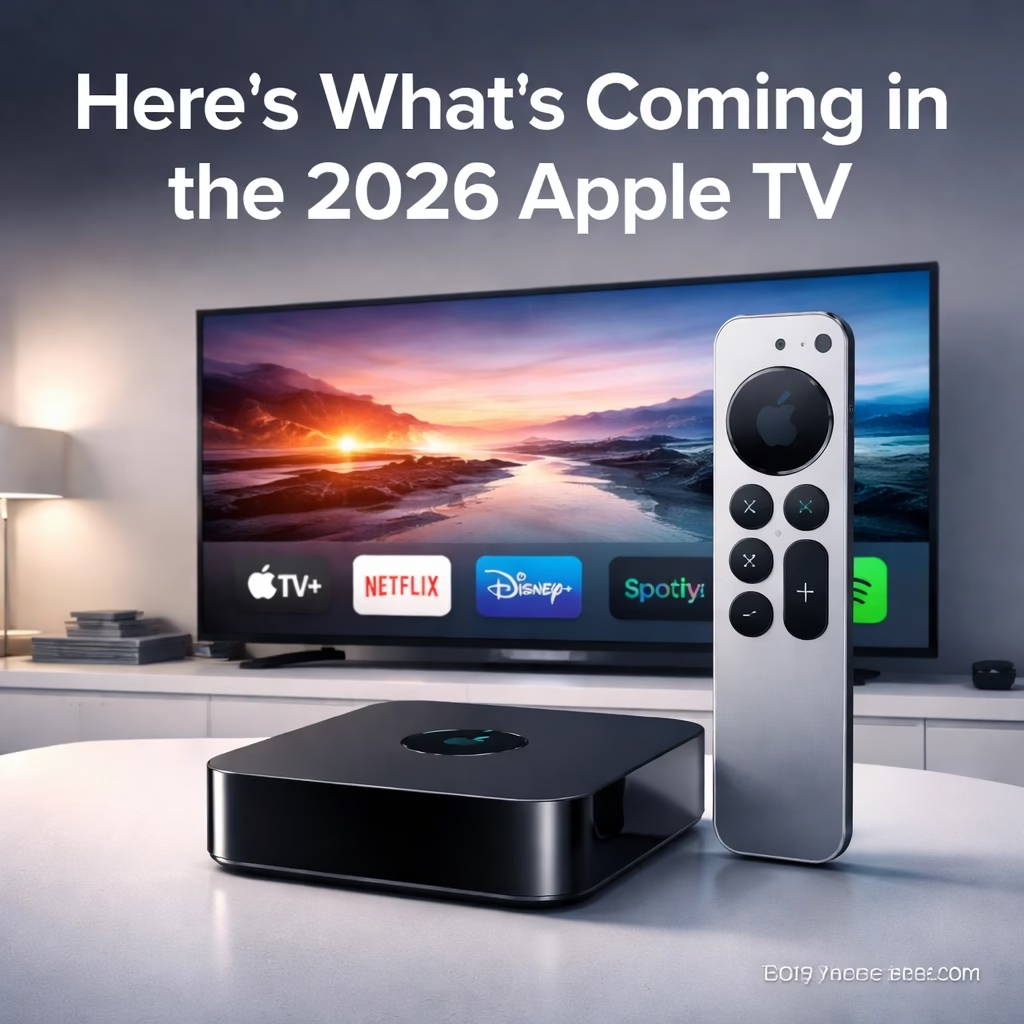
One of the most radical rumored features is the Apple TV's role as a rudimentary augmented reality (AR) hub. While it won't project holograms like a dedicated AR headset, it could process AR experiences for iPhone or Vision Pro users, enabling shared viewing of AR content on the TV screen or overlaying digital information onto live broadcasts. Imagine watching a sports game with real-time player stats and AR graphics projected onto your coffee table, viewable through your iPhone or Vision Pro, all powered by the Apple TV. This could also extend to interactive educational content and virtual try-on experiences for online shopping.
Gaming Beyond the Console
Apple Arcade will receive a substantial boost. With a powerful GPU and potential cloud gaming integration, the 2026 Apple TV aims to compete more directly with traditional gaming consoles. Expect support for higher frame rates, ray tracing, and more graphically intensive titles. New controller options, perhaps even haptic feedback-enabled devices or integration with third-party controllers, will elevate the gaming experience. The device could also serve as a central hub for multi-player games across different Apple devices, including iPhones, iPads, and even Vision Pro.

Advanced Connectivity and Smart Home Control
The new Apple TV will likely feature cutting-edge connectivity, including Wi-Fi 7 for ultra-low latency streaming and Matter-compliant Thread networking for robust smart home device control. It is expected to become the ultimate HomeKit hub, capable of managing hundreds of devices with greater reliability and speed. Enhanced UWB (Ultra-Wideband) technology could enable precise spatial awareness for devices, allowing for automatic lighting adjustments as you enter a room or personalized content delivery based on who is present. The device could also integrate with home security systems, offering real-time camera feeds and alarm management directly on the TV screen.
Immersive Audio and Video Standards
While 8K resolution remains a niche market, the 2026 Apple TV will likely be future-proofed with 8K output capabilities. More immediately impactful will be advancements in HDR (High Dynamic Range) support, potentially including enhanced Dolby Vision IQ or a proprietary Apple HDR standard that dynamically optimizes content. Spatial Audio, already a hallmark of Apple's ecosystem, will be further refined, offering a more immersive soundstage through connected HomePods or compatible sound systems, potentially even analyzing room acoustics for optimal sound delivery.
A New Form Factor?
Rumors suggest Apple might explore a departure from the traditional "black box" form factor. While a full-fledged Apple-branded television set remains speculative, concepts include a more integrated soundbar-like device that incorporates the Apple TV's intelligence, or a modular system that can be expanded with accessories like cameras or enhanced speakers. This could allow for a more discreet and aesthetically pleasing integration into modern living spaces.
Impact: Reshaping the Digital Home Landscape
The arrival of the 2026 Apple TV could send ripples across several industries.
For Consumers
Users can anticipate a more integrated, intuitive, and powerful home entertainment and control experience. The lines between streaming, gaming, communication, and smart home management will blur, offering unparalleled convenience and personalization. However, this premium experience will likely come with a premium price tag, potentially making it a significant investment.
For Competitors
Roku, Amazon, and Google will face renewed pressure to innovate beyond basic streaming and smart assistant integration. Gaming console manufacturers like Sony, Microsoft, and Nintendo might see Apple Arcade, powered by the new Apple TV, as a more direct competitor for casual and even mid-tier gaming. Smart home device manufacturers will need to ensure robust Matter and HomeKit compatibility to remain relevant within the Apple ecosystem.
More Read

For Developers
The enhanced processing power, AR capabilities, and deeper smart home integration will open new avenues for developers. Expect new APIs for tvOS, enabling more complex applications, immersive games, and innovative smart home solutions that leverage the TV's central role.
What Next: Anticipated Milestones and Release
While Apple maintains its characteristic secrecy, the timeline for the 2026 Apple TV is beginning to take shape. Development is likely well underway, with internal testing and supply chain preparations intensifying over the next 12-18 months.
WWDC 2025 or Early 2026 Unveil
A major software preview, potentially including a new tvOS version and hints at hardware capabilities, could surface at Apple's Worldwide Developers Conference (WWDC) in June 2025. A full hardware reveal and detailed feature breakdown are more likely to occur at a dedicated media event in late 2025 or early 2026, aligning with Apple's typical product launch cycles for significant new categories or major revisions.
Pre-orders and Market Availability
Following the official announcement, pre-orders would likely commence within weeks, with general market availability expected in the spring or fall of 2026 across major global markets, including North America, Europe, and Asia-Pacific. Initial stock could be limited due to demand and the complexity of new manufacturing processes.
Long-Term Vision
The 2026 Apple TV represents a crucial step in Apple's long-term strategy to establish itself as the dominant platform for spatial computing and artificial intelligence in the home. It signals a move towards a more ambient, intelligent home environment where technology seamlessly integrates into daily life, anticipating needs and simplifying interactions. This device is not just about watching TV; it's about experiencing the future of the connected home.