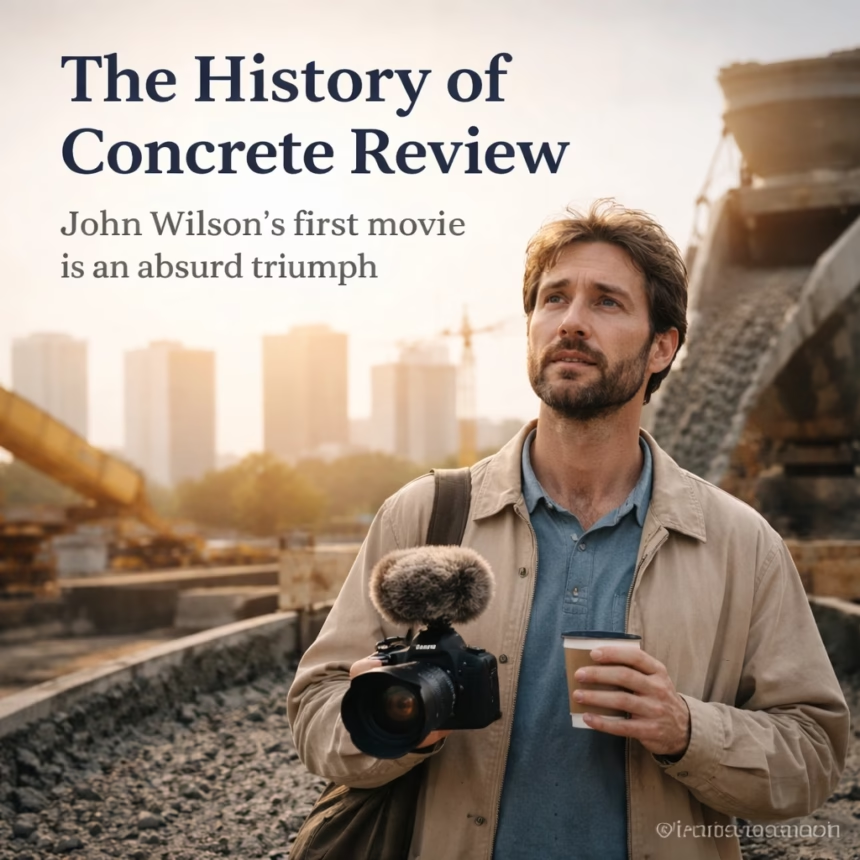
Park City, Utah – Filmmaker John Wilson, known for his distinctive observational style, has captivated audiences and critics alike with his debut feature film, "The History of Concrete." Premiering to widespread acclaim at the 2024 Sundance Film Festival in mid-January, the documentary has been hailed as an unexpected, absurd, and profoundly insightful triumph, firmly establishing Wilson as a unique voice in contemporary cinema.
Background: From Cult Shorts to Feature Film
John Wilson first garnered a dedicated cult following through his HBO documentary series, "How To with John Wilson." This series, celebrated for its neurotic narration, meticulous observational footage of New York City life, and an uncanny ability to unearth profound meaning in the mundane, explored seemingly trivial topics such as "How To Make Small Talk" or "How To Find a Parking Spot." Wilson's signature blend of humor, existential inquiry, and a disarmingly sincere perspective quickly set him apart.
The transition from short-form episodic content to a feature-length cinematic experience was a highly anticipated move for his growing fanbase. However, the choice of "The History of Concrete" as his inaugural feature subject surprised many, initially appearing to be an unusually dry topic even for Wilson's penchant for the overlooked. Production for the film reportedly spanned over three years, during which Wilson expanded his filming locations far beyond his familiar New York confines. His journey took him from the ancient ruins of the Roman Forum to sprawling modern construction sites in bustling Dubai, indicating a significant broadening of his scope and ambition.
Key Developments: An Unconventional Narrative Unveiled
"The History of Concrete" defies traditional documentary structures. Instead of a linear historical account, Wilson weaves together a tapestry of seemingly disparate threads, creating a compelling and often hilarious exploration of the ubiquitous building material. The film delves into archaeological discoveries revealing the secrets of ancient Roman concrete, features interviews with an eclectic cast of eccentric concrete enthusiasts, and offers philosophical musings on themes of permanence, decay, and human endeavor. All these elements are interspersed with a detailed, almost meditative, look at the industrial processes involved in modern concrete mixing and application.
Wilson's signature voice-over serves as the film's guiding thread, leading viewers through a labyrinth of factual tidbits, personal anecdotes, and poignant existential questions. The film is replete with his characteristic close-ups of forgotten objects, candid street interviews with unsuspecting passersby, and a disarming sincerity that consistently undercuts and elevates the inherent absurdity of the premise.

Memorable Sequences and Visual Storytelling
Among the film's many memorable sequences is a segment where Wilson, with characteristic earnestness, attempts to recreate ancient Roman concrete in his cramped Brooklyn apartment, leading to a predictably comedic and messy disaster. Another highlights a heartfelt interview with a retired cement truck driver in rural Ohio, who reflects on the thousands of tons of concrete he has poured over his career, equating his labor to quite literally building the foundations of civilization.
The documentary also takes a surprising, yet organic, turn into the environmental impact of concrete production. This complex issue is presented not through preachy lectures but as a natural extension of Wilson's observational curiosity, offering a nuanced perspective. A particularly captivating sequence tracks the journey of a single bag of cement, from its manufacturing plant in Pennsylvania to its eventual use in a seemingly minor sidewalk repair project in Queens, New York. The cinematography, often handheld and possessing a spontaneous, almost guerrilla-style aesthetic, manages to capture both the majestic grandeur of ancient structures and the gritty, everyday reality of urban development, effectively transforming concrete itself into a compelling character within the narrative.
More Read

Impact: Redefining Documentary and Elevating the Mundane
The premiere of "The History of Concrete" at Sundance ignited a firestorm of critical acclaim. Reviewers lauded the film for its unparalleled originality, its sharp humor, and its unexpected emotional resonance. Many critics highlighted Wilson's singular ability to transform an ostensibly dry and overlooked subject into a captivating, thought-provoking, and deeply human cinematic experience. *The Hollywood Reporter* praised it as "a masterclass in finding the universal in the utterly specific," while *IndieWire* celebrated its "unflinching, yet deeply empathetic gaze that humanizes the inanimate."
Audience reception mirrored the critical enthusiasm, with screenings met by enthusiastic applause, frequent bursts of laughter, and palpable engagement. Viewers found themselves unexpectedly moved by the film's deeper exploration of human ingenuity, the concept of impermanence, and the often-unseen labor that physically and metaphorically shapes our modern world.
Within the film industry, "The History of Concrete" is already being discussed as a potential game-changer, poised to redefine the boundaries of what constitutes a documentary. It pushes beyond traditional narrative structures and conventional subject matter, reinforcing the power of a truly unique authorial voice in non-fiction filmmaking. The film solidifies John Wilson's reputation as a singular talent, elevating him from a respected cult figure to a significant cinematic voice capable of delivering profound and impactful feature-length works. His distinctive brand of observational humor and existential inquiry has found its perfect large-screen canvas.
What Next: Distribution, Festivals, and Future Explorations
In the immediate aftermath of its triumphant Sundance premiere, "The History of Concrete" swiftly secured a major distribution deal. A24, the renowned independent entertainment company, reportedly acquired worldwide rights, a move that signals significant confidence in the film's broad appeal and its potential to resonate with a global audience.
The film is now slated for appearances at several other prominent international film festivals throughout the year, including SXSW, Tribeca, and potentially more prestigious events such as Cannes or the Toronto International Film Festival (TIFF). This extensive festival circuit will undoubtedly build further momentum and critical buzz. A limited theatrical release is anticipated for late summer, followed by wider distribution on major streaming platforms, a strategy designed to maximize both its critical reception and its audience reach.
Early whispers within the industry suggest that "The History of Concrete" could be a strong contender during the upcoming awards season, particularly within the documentary categories for Best Documentary Feature and potentially for its unique and critically praised narration. While John Wilson himself remains characteristically tight-lipped about his next creative endeavor, speculation abounds regarding what mundane, overlooked subject he might choose to tackle next. His resounding success with concrete suggests that no topic is too niche or too ordinary for his unique brand of cinematic alchemy. The film's undeniable triumph ensures that audiences worldwide will eagerly await his next absurd, yet profoundly insightful, exploration of the human condition.