Magic 9 Unlocks Next-Gen Security: Huawei's Blueprint Resurfaces?
Magic 9 Unlocks Next-Gen Security: Huawei's Blueprint Resurfaces?
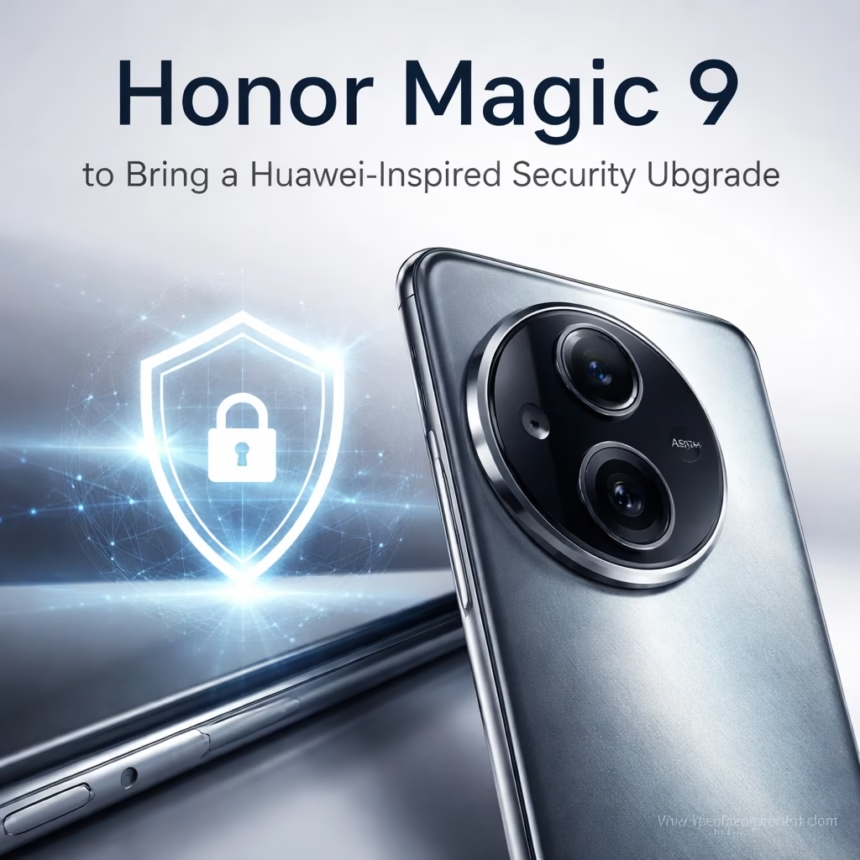
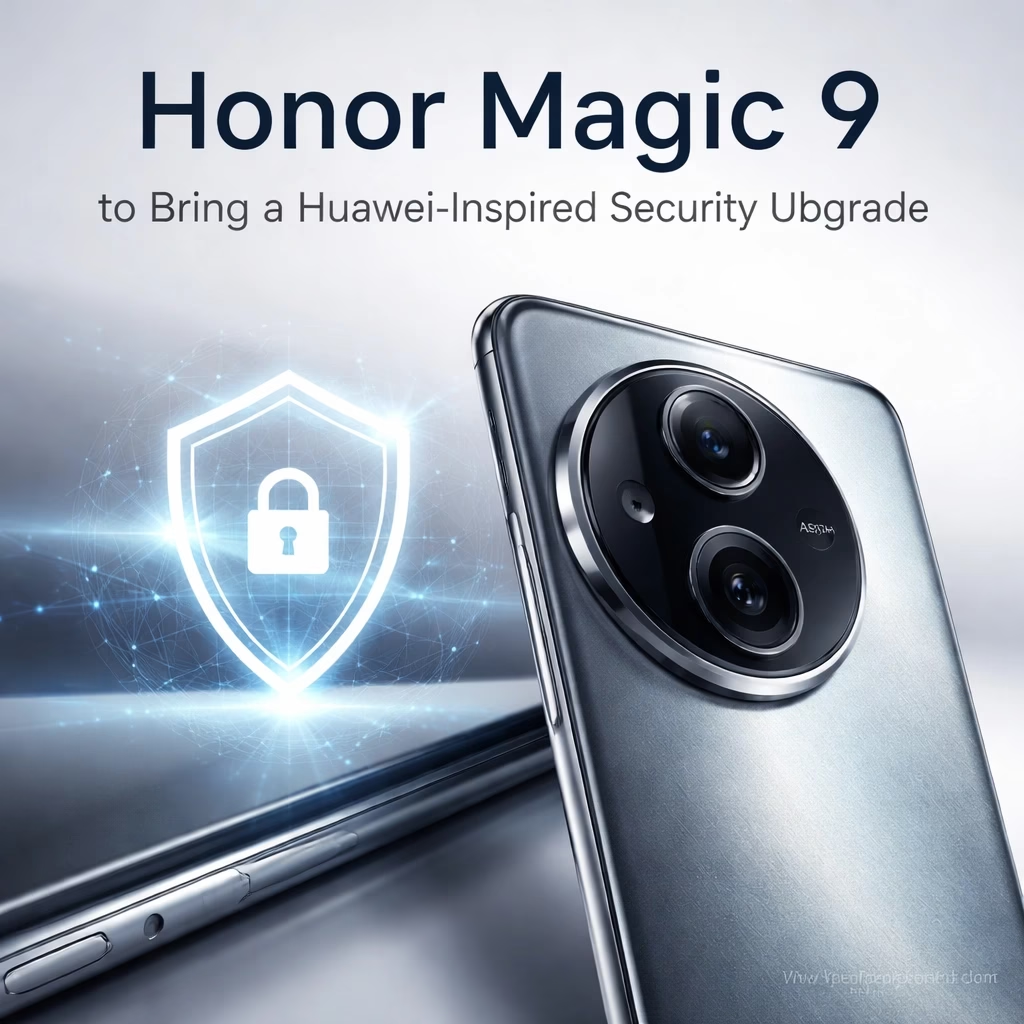
Honor is reportedly gearing up to introduce a significant security enhancement with its upcoming Magic 9 series, drawing inspiration from its former parent company, Huawei. This strategic move aims to elevate user data protection and privacy, positioning the device as a robust contender in the premium smartphone segment. The anticipated upgrade is expected to be a key highlight during the Magic 9's official unveiling, setting a new bar for device integrity.
Background: A Legacy of Innovation and Challenge
The relationship between Honor and Huawei is a complex tapestry woven with innovation, geopolitical challenges, and strategic pivots. Huawei, once a dominant force in the global smartphone market and a pioneer in telecommunications technology, earned a reputation for its deep integration of hardware and software, often extending to robust security features. Its Kirin chipsets, for instance, frequently incorporated dedicated security modules and advanced encryption capabilities, providing a foundational layer of protection for devices like the Mate and P series.
However, Huawei’s trajectory shifted dramatically in May 2019 when the U.S. government placed the company on its Entity List. This action severely restricted Huawei’s access to critical American technologies, including Google Mobile Services (GMS) and advanced semiconductor manufacturing. The sanctions crippled its international smartphone business, forcing Huawei to accelerate the development of its own ecosystem, including HarmonyOS and AppGallery, while doubling down on its proprietary security architecture.

Honor, originally launched in 2013 as a sub-brand of Huawei, primarily targeted a younger, more budget-conscious demographic. It leveraged Huawei’s extensive R&D prowess and supply chain, offering competitive devices across various price points. As the U.S. sanctions tightened, Honor’s future became uncertain. To ensure its survival and regain access to essential global supply chains and software components, Huawei made the difficult decision to sell Honor in November 2020. A consortium led by Shenzhen Zhixin New Information Technology Co., Ltd. acquired Honor, effectively making it an independent entity.
Post-separation, Honor successfully re-established partnerships with key suppliers like Qualcomm and Google, regaining access to GMS and cutting-edge chipsets. While forging its own path, the brand has consistently sought to differentiate itself in a highly competitive market. Now, reports suggest Honor is looking back to its roots, specifically to Huawei’s lauded security philosophy, to carve out a unique selling proposition for its next flagship, the Magic 9 series.
More Read

Key Developments: Emulating Huawei’s Security Blueprint
Recent leaks and industry whispers indicate that the Honor Magic 9 will incorporate a suite of advanced security features reminiscent of Huawei’s approach to device protection. This isn’t merely about standard software updates; it points towards a more fundamental, architectural commitment to user privacy and data integrity. The focus appears to be on creating an immutable security foundation, deeply embedded within the device’s hardware and operating system.
Hardware-Level Protection
At the core of the anticipated upgrade is an emphasis on hardware-level security. This likely includes the integration of a dedicated Secure Element (SE) or a highly robust Trusted Execution Environment (TEE) that surpasses typical implementations in many Android devices. This specialized hardware acts as an isolated processing environment, completely separate from the main operating system, to handle sensitive operations such as biometric authentication (fingerprint and facial recognition), digital payments, and cryptographic key management. By isolating these critical functions, the device significantly reduces the attack surface for malicious software and unauthorized access.
Furthermore, Honor is expected to enhance its secure boot process. This mechanism ensures that only trusted and authorized software can load during the device startup, rigorously verifying each stage of the boot sequence. This proactive measure prevents rootkits and other low-level malware from compromising the system before it even fully boots, safeguarding the integrity of the operating system from the very first moment the device powers on. The depth of this integration could mirror Huawei’s past efforts, where boot processes were meticulously secured against tampering.
Software Integration and AI
Beyond hardware, the Magic 9’s security enhancements are rumored to extend into its software architecture. This could involve a more refined microkernel design for critical system components, similar in principle to the architecture seen in Huawei’s HarmonyOS, which isolates core functions for improved stability and security. Such an approach minimizes the impact of vulnerabilities in one part of the system on another, particularly sensitive security modules, enhancing overall system resilience.
Moreover, artificial intelligence (AI) is expected to play a crucial role. On-device AI capabilities could be leveraged for real-time threat detection and anomaly analysis. By continuously monitoring device behavior, network traffic, and application activity, the Magic 9 could proactively identify and neutralize potential threats, from sophisticated malware to phishing attempts, without relying solely on cloud-based security solutions. This local processing ensures faster response times and maintains user privacy by keeping data on the device.
Beyond Standard Android Security
While Android offers robust security features through its regular updates and Google Play Protect, the Honor Magic 9’s proposed upgrades aim to go a step further. It seeks to establish a proprietary security layer that complements and enhances the existing Android framework, providing a deeper, more resilient defense. This approach could involve custom cryptographic algorithms, advanced memory protection techniques, and an enhanced permission management system that gives users finer, more granular control over their data, extending beyond standard Android permissions to offer a truly fortified user experience.

Impact: Reshaping the Premium Smartphone Landscape
The introduction of Huawei-inspired security features in the Honor Magic 9 could have far-reaching implications, affecting consumers, Honor’s market position, and the broader smartphone industry.
Consumer Confidence
For consumers, the primary benefit is an elevated level of data privacy and protection. In an era where data breaches, identity theft, and sophisticated cyber threats are increasingly prevalent, a smartphone with demonstrably superior security can offer significant peace of mind. Users will feel more secure conducting financial transactions, storing sensitive personal information, and using biometric authentication, knowing that their device employs advanced safeguards against sophisticated attacks. This could be particularly appealing to privacy-conscious individuals and enterprise users who require stringent security protocols for sensitive corporate data.
Honor’s Market Position
This strategic move could significantly bolster Honor’s competitive standing in the cutthroat premium smartphone market. By emphasizing a robust, hardware-software integrated security architecture, Honor can differentiate the Magic 9 from rivals, including Apple and Samsung, which also prioritize security but might not highlight the same depth of proprietary integration. It positions Honor not just as a purveyor of cutting-edge hardware and cameras, but as a leader in device integrity and user protection. This could attract a new segment of users, including businesses and government entities, for whom security is a paramount concern, potentially expanding Honor’s market share in lucrative segments.
Furthermore, it helps Honor shed any lingering perceptions of being merely a budget-friendly offshoot of Huawei, establishing its identity as an independent innovator capable of leading in critical technological areas and setting new industry benchmarks.
Industry-Wide Implications
Should the Magic 9’s security features prove effective and resonate with consumers, it could prompt other Android manufacturers to re-evaluate and enhance their own security strategies. The industry might see an accelerated adoption of more advanced hardware-software integrated security solutions, pushing the boundaries of what is considered standard for smartphone protection. This could lead to a positive ripple effect, elevating security standards across the entire mobile ecosystem and fostering greater innovation in device protection.
What Next: Anticipating the Unveiling
The tech world now eagerly awaits the official launch of the Honor Magic 9 series. While no specific date has been confirmed, based on previous release cycles (the Magic 6 series launched in January 2024), an early 2025 unveiling is highly anticipated, likely featuring a global launch event.
During the launch event, Honor is expected to provide comprehensive details about its new security architecture, confirming the extent and nature of the Huawei-inspired elements. This will be a critical moment for the company to articulate its vision for device security and demonstrate the tangible benefits to users through detailed technical explanations and practical use-case scenarios.
Following the official reveal, security experts and independent auditing firms will undoubtedly scrutinize the Magic 9’s claims. Their assessments will be crucial in validating the efficacy of the new security features and building trust with consumers. Market reception, particularly among enterprise clients and privacy-conscious users, will serve as a key indicator of the strategy’s success and its long-term viability.
Looking ahead, if this security-first approach proves successful, it could become a defining characteristic of Honor’s product roadmap, extending beyond the Magic series to other devices in its ecosystem, including tablets and wearables. Continuous software updates and security patches will also be vital to maintaining the device’s integrity and adapting to evolving cyber threats throughout its lifecycle, solidifying Honor’s position as a serious contender in the premium and secure smartphone market for years to come.