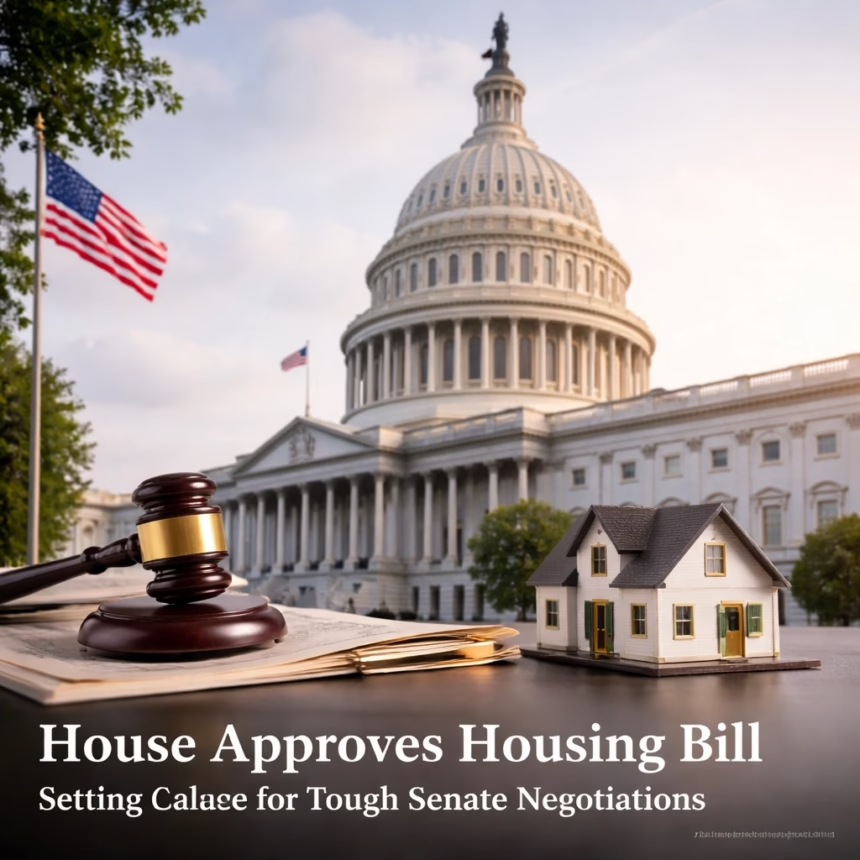
Housing Breakthrough? House Passes Bill Aimed at Affordability
Washington D.C. – The U.S. House of Representatives voted 216-210 on Tuesday, May 22, 2024, to pass the "Affordable Homes Act," a bill intended to address the nation's housing shortage and rising costs. The legislation now heads to the Senate, where significant hurdles are anticipated before potential passage.
Background
The Affordable Homes Act emerged from months of debate and negotiation within the House Democratic caucus and with some moderate Republicans. The need for such legislation has been growing for years, exacerbated by factors including inflation, supply chain disruptions, and increasing demand. The current housing crisis affects millions of Americans, particularly first-time homebuyers and low- to moderate-income families. Prior attempts at comprehensive housing reform have stalled in Congress, often due to partisan disagreements over funding mechanisms and policy approaches.
The bill's origins can be traced back to discussions initiated in early 2023 by Representative Jamesください (D-CA), chair of the House Financial Services Committee, who highlighted the urgent need for increased housing supply and affordability. Initial drafts underwent multiple revisions, incorporating feedback from various stakeholders, including housing advocates, developers, and community organizations. The House began considering the bill in earnest during the first week of May 2024, holding several hearings and amendments debates.

Key Developments
The House vote followed a series of amendments proposed by both sides. A key amendment offering tax incentives for developers building affordable housing units narrowly failed. Another amendment aimed at streamlining the permitting process for new construction also fell short of the required votes. The final version of the bill includes provisions for expanding rental assistance programs, increasing funding for the Housing Choice Voucher Program (Section 8), and incentivizing the construction of mixed-income housing developments.
The bill also allocates $70 billion over the next five years for the construction and rehabilitation of affordable housing units. This funding is intended to be targeted towards historically underserved communities and areas experiencing the most severe housing shortages. A significant portion of the funding will be administered through the Department of Housing and Urban Development (HUD).
Impact
The Affordable Homes Act has the potential to significantly impact millions of Americans. Those most likely to benefit include low-income families, individuals experiencing homelessness, and first-time homebuyers struggling to enter the market. The expanded rental assistance programs could provide crucial support to those at risk of eviction. Increased housing construction is expected to help alleviate pressure on housing prices, particularly in high-demand metropolitan areas.

However, the bill's impact will depend on successful implementation and adequate funding. Critics argue that the proposed funding levels are insufficient to address the scale of the housing crisis and that the bill's provisions may not be effectively targeted to those most in need. Developers have expressed concerns about potential regulatory burdens and the impact of the bill on project profitability.
Targeted Assistance Programs
The bill establishes a new program called the “Community Housing Investment Fund,” providing grants to local governments and non-profit organizations to develop and preserve affordable housing. It also expands eligibility for existing programs like the Low-Income Housing Tax Credit, encouraging private sector investment in affordable housing projects.
What Next
The Affordable Homes Act now faces a challenging path in the Senate. Senate Majority Leader Chuck Schumer (D-NY) has indicated that he will prioritize bringing the bill to a vote in the coming weeks. However, the bill is expected to encounter significant opposition from Republicans, particularly regarding the funding mechanisms and the scope of federal involvement in housing policy.
The Senate is expected to debate several amendments to the bill, including proposals to reduce funding levels, modify the provisions for rental assistance, and address concerns about the bill's potential impact on local zoning regulations. The bill's ultimate fate will depend on its ability to garner enough votes to overcome a potential Republican filibuster. If passed by the Senate, the bill will be sent to President Joe Biden for his signature, at which point it would become law.
Potential Points of Contention
Key areas of potential conflict in the Senate include the funding allocation for the Community Housing Investment Fund and the level of federal oversight of affordable housing projects. Republicans have expressed concerns about potential bureaucratic inefficiencies and the impact of the bill on state and local control over housing policy.