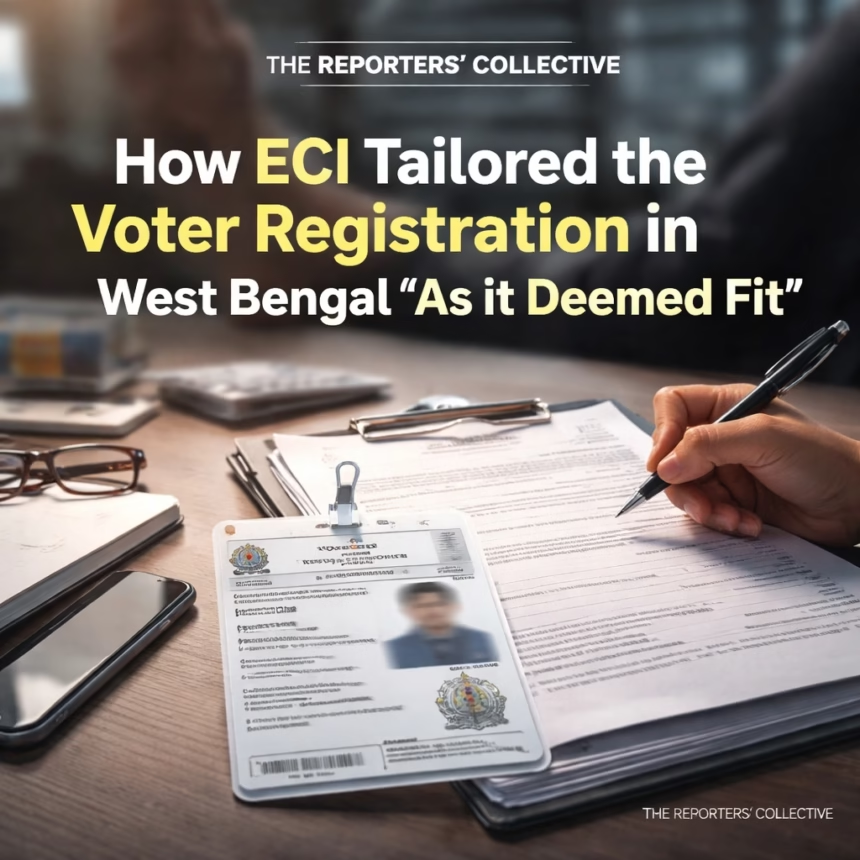
The Election Commission of India (ECI) has reportedly implemented a highly customized approach to voter registration in West Bengal, adapting its standard protocols "as it deemed fit" for the state. This strategic recalibration, highlighted by The Reporters' Collective, comes amidst heightened political scrutiny and ahead of crucial electoral cycles, reshaping how citizens are added to the electoral rolls across the region.
This tailored methodology aims to address unique local challenges and ensure the integrity of the democratic process, particularly in a state with a complex electoral history and diverse demographics.
Background: A Legacy of Electoral Dynamics
West Bengal has historically presented a unique set of challenges for electoral management. Its dense population, significant urban-rural divide, and often politically charged environment necessitate a robust and adaptable framework for voter registration and roll revision.
Typically, the ECI conducts an annual Special Summary Revision (SSR) of electoral rolls, allowing citizens to register, update details, or raise objections. This process relies heavily on the network of Booth Level Officers (BLOs) who serve as the grassroots interface between the ECI and the electorate.
Standard Operating Procedures
Under normal circumstances, the SSR involves a draft publication of electoral rolls, followed by a period for claims and objections. Door-to-door verification by BLOs is a cornerstone, ensuring accuracy and reaching eligible voters who might otherwise be missed. This standard procedure is designed for uniformity across the nation.
More Read

West Bengal’s Unique Context
However, West Bengal's electoral landscape often sees intense political mobilization and occasional allegations of irregularities, including duplicate entries, exclusion of eligible voters, or inclusion of non-eligible individuals. Border areas, migratory populations, and regions with fluctuating demographics further complicate the task of maintaining precise electoral rolls.
Past elections, both state assembly and Lok Sabha, have frequently seen debates over the accuracy and fairness of voter lists, prompting the ECI to often deploy additional measures or observers. The "tailored" approach, therefore, appears to be an evolution of these past efforts, refined for the current political climate.
Key Developments: The ‘Tailored’ Approach Unfolds
The ECI's recent strategy in West Bengal has reportedly deviated from or significantly enhanced standard practices, demonstrating a proactive stance in electoral roll management. These modifications aim to fortify the registration process against potential vulnerabilities and improve overall data quality.
More Read

Enhanced Verification Protocols
One of the most notable aspects of this tailored approach is the implementation of more stringent verification protocols. While door-to-door surveys remain fundamental, the ECI has reportedly mandated a multi-layered verification process for new applications and existing entries. This includes cross-referencing data with other government databases and increasing the frequency of supervisory checks by Electoral Registration Officers (EROs) and Assistant EROs.
For instance, applications for new voters or changes in address are said to undergo additional scrutiny, potentially involving visits by more than one BLO or a supervisory officer to corroborate details, especially in areas identified as sensitive or prone to higher rates of claims and objections.
Technological Integration for Accuracy
The ECI has reportedly leveraged advanced technology to bolster the integrity of the voter rolls. This includes the deployment of sophisticated GIS mapping tools to verify addresses and identify potential discrepancies in geographical data. Advanced photo matching algorithms are also said to be in use to detect duplicate entries across different constituencies or even within the same household, a common challenge in large-scale registration drives.
Furthermore, the use of ECI's ERONET system for online applications and data management has been reinforced with additional audit trails and real-time monitoring capabilities, allowing for quicker identification and resolution of anomalies.
Special Drives and Outreach
Beyond the standard SSR, the ECI has reportedly initiated special registration drives targeting specific demographics or regions. These might include focused campaigns for young voters turning 18, women, persons with disabilities, or marginalized communities, ensuring broader inclusion. These drives often involve mobile registration units and increased awareness campaigns in local languages, making the process more accessible.
Such targeted outreach not only aims to maximize registration but also seeks to correct historical underrepresentation in electoral rolls, promoting a more equitable voter base.
More Read

Training and Accountability for BLOs
Recognizing the critical role of BLOs, the ECI has reportedly invested in specialized training programs tailored for West Bengal's electoral staff. These sessions focus on meticulous data collection, ethical conduct, and the proper use of digital tools. Emphasis has been placed on the accountability of BLOs, with clearer guidelines on their responsibilities and mechanisms for reporting and addressing lapses.
This enhanced training is crucial for ensuring that the tailored protocols are implemented uniformly and effectively at the grassroots level, reducing the scope for errors or partisan influence.
Impact: Reshaping the Electorate and Political Landscape
The ECI's "tailored" approach to voter registration in West Bengal carries significant implications for various stakeholders, from individual citizens to political parties and the broader electoral system.
For Prospective Voters
For eligible citizens, the refined process could mean both increased opportunities and potential hurdles. On one hand, targeted outreach and enhanced verification might make it easier for genuine voters, especially those in previously underserved areas, to register accurately. On the other hand, the stricter scrutiny could lead to longer processing times or more rigorous documentation requirements, potentially deterring some.
The emphasis on accuracy aims to instill greater confidence among voters that their registration is legitimate and their right to vote secure.
For Political Parties
Political parties in West Bengal are keenly observing these developments. Accurate electoral rolls are fundamental to their campaign strategies and election outcomes. Parties often deploy their own representatives to assist voters with registration and verification, and the ECI's stricter norms might alter these dynamics.
While some parties might welcome the enhanced integrity, others might raise concerns about potential disenfranchisement or perceived bias in the implementation of new rules, leading to increased political discourse and, potentially, legal challenges.
On Electoral Integrity and Trust
Ultimately, the tailored approach seeks to bolster the overall integrity of the electoral process in West Bengal. By minimizing errors, duplicates, and fraudulent entries, the ECI aims to enhance public trust in the fairness and transparency of elections. This is particularly vital in a state where electoral disputes have often been a flashpoint.
The success of these measures will be judged by the perceived accuracy of the final electoral rolls and the smooth conduct of subsequent elections.
What Next: Milestones on the Electoral Horizon
As the ECI continues to refine and implement its tailored voter registration strategy in West Bengal, several key milestones lie ahead, shaping the state's democratic future.
Final Publication of Electoral Rolls
The immediate next step involves the final publication of the updated electoral rolls. This document will be the culmination of the intensive registration and verification drives, serving as the definitive list of eligible voters for upcoming elections. The ECI will make these rolls publicly available, allowing for final scrutiny by citizens and political parties.
Any remaining claims or objections after the final publication will typically be addressed through a continuous updation mechanism, but the bulk of the revision process concludes here.
Monitoring and Review
Following the publication, the ECI will likely undertake a comprehensive review of its "tailored" approach. This will involve assessing the effectiveness of the new protocols, the efficiency of technological deployments, and feedback from electoral officers, political parties, and civil society organizations.
Lessons learned from this unique exercise in West Bengal could potentially influence voter registration strategies in other states facing similar challenges, establishing a new precedent for electoral management.
Anticipating Upcoming Elections
The ultimate test of the tailored registration drive will be the conduct of the next major elections in West Bengal, most prominently the upcoming Lok Sabha elections in 2024. The accuracy and integrity of the voter rolls will directly impact the electoral process, from candidate nominations to the casting of votes.
Political parties will scrutinize the voter lists for any perceived anomalies, and the ECI's preparedness in addressing these concerns will be under the spotlight. The success of this "Bengal Gambit" will be measured by its contribution to free, fair, and credible elections.