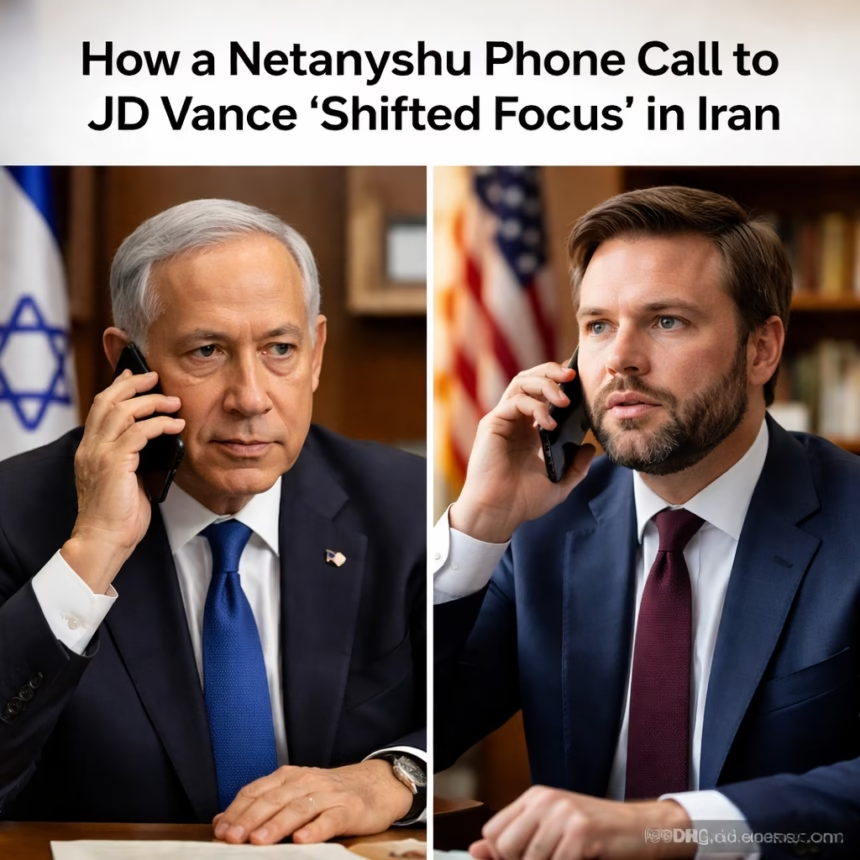
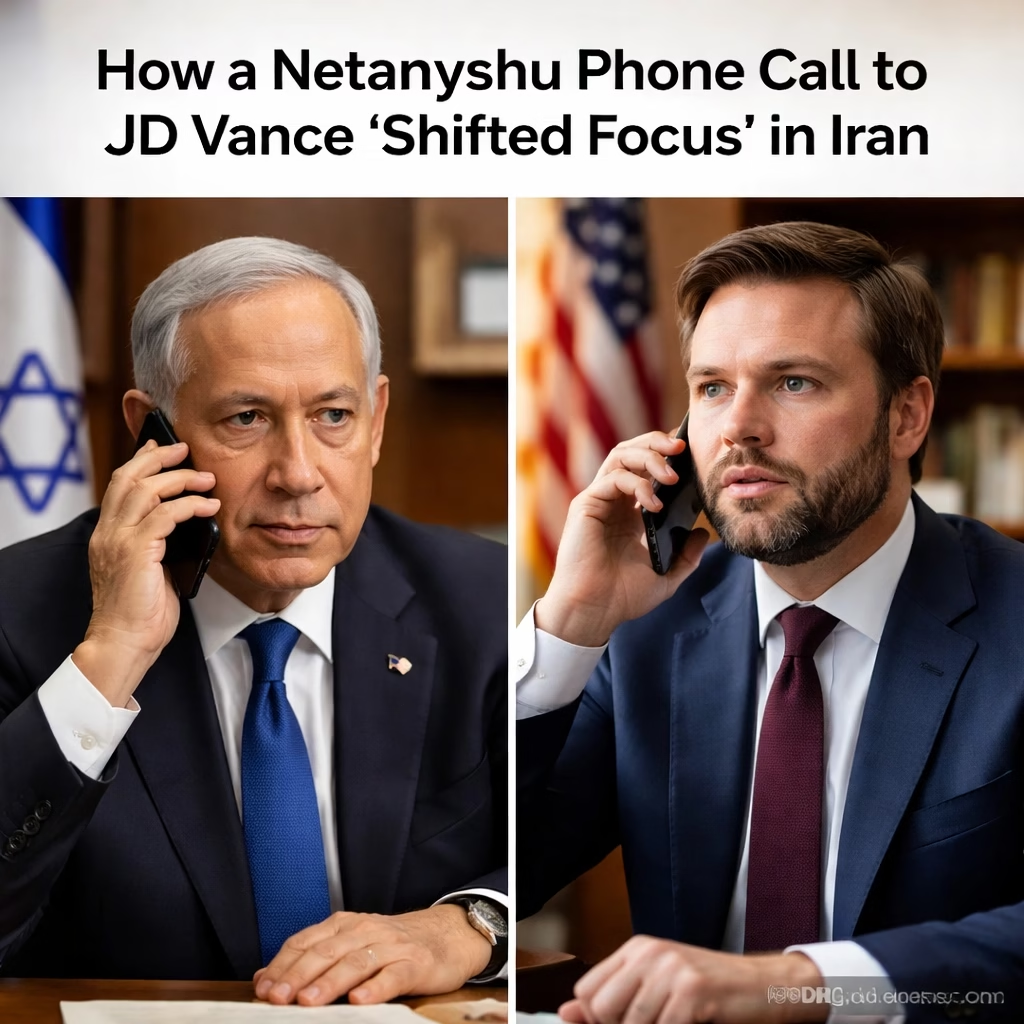
A recent phone conversation between Israeli Prime Minister Benjamin Netanyahu and Ohio Senator JD Vance has reportedly introduced an unforeseen dynamic into the delicate, long-running negotiations between the United States and Iran regarding Tehran's nuclear program. The call, which occurred in late 2023 amidst ongoing, indirect talks, is said to have prompted a reevaluation of certain strategic approaches within Washington's diplomatic efforts, highlighting the complex interplay of international and domestic political pressures.
Background: A Decades-Long Standoff
The nuclear ambitions of the Islamic Republic of Iran have been a central point of international concern for over two decades. In 2015, the Joint Comprehensive Plan of Action (JCPOA), often known as the Iran nuclear deal, was signed by Iran, the P5+1 (China, France, Russia, United Kingdom, United States, plus Germany), and the European Union. This landmark agreement aimed to curb Iran's nuclear program in exchange for sanctions relief. However, in May 2018, the Trump administration withdrew the United States from the JCPOA, reimposing stringent sanctions and prompting Iran to gradually scale back its commitments under the deal, including increasing uranium enrichment levels.
The Biden Administration’s Approach
Upon taking office in January 2021, President Joe Biden expressed a desire to return to the JCPOA, provided Iran also returned to full compliance. Multiple rounds of indirect talks, primarily held in Vienna, Austria, between US and Iranian envoys, often facilitated by European intermediaries, have since sought to revive the accord. These negotiations have faced numerous hurdles, including disagreements over sanctions relief, guarantees for future US compliance, and the scope of Iran's ballistic missile program and regional activities.
Israel’s Unwavering Stance
Israel, under Prime Minister Benjamin Netanyahu's leadership, has consistently viewed the JCPOA as fundamentally flawed, arguing it does not sufficiently prevent Iran from developing nuclear weapons and fails to address its broader destabilizing actions in the Middle East. Jerusalem has advocated for a more robust approach, including stronger sanctions and a credible military threat, to dismantle Iran's nuclear infrastructure permanently. Netanyahu has frequently used diplomatic channels to express these concerns directly to US officials and members of Congress.
More Read

JD Vance’s Rising Influence
Senator JD Vance, a Republican from Ohio elected in 2022, has emerged as a prominent voice within a segment of the Republican Party that advocates for a more assertive, yet often non-interventionist, US foreign policy. While not traditionally seen as a leading figure on Middle East policy, Vance has increasingly engaged with international affairs, often aligning with conservative critiques of current US diplomatic strategies. His direct communication with a foreign head of state on a sensitive diplomatic issue marks a notable moment in his burgeoning foreign policy profile.
Key Developments: The Call and its Aftermath
The phone call between Prime Minister Netanyahu and Senator Vance reportedly took place in late November 2023. While specific details of the conversation remain largely private, sources close to the matter indicate that Netanyahu directly conveyed Israel's profound concerns regarding the ongoing US-Iran nuclear discussions. He is understood to have emphasized the perceived dangers of any agreement that would leave Iran with significant enrichment capabilities or allow for a sunset clause on restrictions.
Shifting Focus in Washington
Following the call, reports suggest that Senator Vance began to actively engage with fellow Republican senators and, to a lesser extent, some moderate Democrats, articulating the Israeli perspective with renewed vigor. This outreach reportedly coincided with a period when US negotiators were evaluating potential concessions or alternative frameworks to break the deadlock in indirect talks with Tehran. The influx of direct, high-level Israeli concerns through a prominent congressional voice is believed to have prompted a "shifting focus" within certain US policy circles. This shift manifested as increased scrutiny on the potential security implications for regional allies and a re-emphasis on the need for stronger verification mechanisms in any future agreement.
More Read

Reactions and Interpretations
The revelation of the call and its alleged impact drew varied reactions. Some US officials privately expressed frustration, viewing such direct engagement as potentially undermining the executive branch's diplomatic efforts and creating internal divisions. Others, particularly hawkish voices in Congress, welcomed Vance's engagement, seeing it as a necessary check on what they perceive as a too-lenient approach by the Biden administration. Iranian state media, while not directly addressing the Vance call, continued to reiterate Tehran's demands for comprehensive sanctions relief and guarantees, suggesting little change in their core negotiating position but perhaps noting the increased internal US debate.
Impact: A Web of Consequences
The Netanyahu-Vance phone call and its subsequent influence ripple across several dimensions, affecting US foreign policy, regional dynamics, and domestic politics.
On US Diplomacy with Iran
The incident injected a heightened sense of caution into the US negotiating team. While the fundamental objectives of preventing Iran from acquiring nuclear weapons remain unchanged, the pathways to achieving them became subject to more intense internal debate. The call underscored the persistent challenge for any US administration in balancing its diplomatic goals with strong bipartisan and allied concerns. It also highlighted the influence that individual members of Congress can exert on foreign policy discussions, even when not holding formal leadership positions on relevant committees.
Regional Security and Alliances
For Israel, the call served as a direct means to ensure its security concerns were heard at various levels of the US government, beyond traditional executive-to-executive channels. It reinforced Israel's strategy of engaging directly with Congress to influence US policy. For other regional allies, the incident might be interpreted as a sign of potential shifts in US resolve or a demonstration of the complex, sometimes conflicting, influences on Washington's Middle East strategy.
Domestic Political Landscape
Domestically, the call elevated Senator Vance's profile as a player in foreign policy, particularly within the Republican Party. It showcased a willingness to engage directly with international leaders on critical issues, potentially positioning him for greater influence in future foreign policy debates. The episode also reignited discussions about the appropriate role of individual lawmakers in sensitive international negotiations, particularly concerning issues where there is a significant divergence of opinion between the executive branch and certain congressional factions.
What Next: Navigating a Fractured Path
The immediate future of US-Iran negotiations remains uncertain. While indirect talks continue, the "shifted focus" prompted by the Netanyahu-Vance call suggests a more cautious and perhaps more protracted path ahead.
More Read

Future of Negotiations
Any potential agreement will likely face even greater scrutiny from Congress, particularly from those influenced by the Israeli perspective. US negotiators may be compelled to seek more stringent terms or additional guarantees to assuage these concerns, potentially complicating efforts to find common ground with Tehran. The incident could also lead to more direct consultations between the Biden administration and congressional leaders on Iran policy, aiming to build a broader consensus before any significant diplomatic breakthroughs.
US-Israel Relations
The event underscores the enduring strength and complexity of the US-Israel relationship. While the two nations often share strategic goals, their tactical approaches to Iran can differ significantly. This incident demonstrates Israel's proactive measures to shape US policy, leveraging its strong ties with members of Congress. Future interactions may see similar direct engagements as both nations navigate the evolving regional landscape.
Congressional Oversight and Influence
The episode is likely to empower congressional voices, particularly those critical of the administration's Iran policy, to demand more transparency and input into diplomatic initiatives. It signals a potential trend where foreign leaders might increasingly seek to engage directly with influential members of the US legislature to advocate for their national interests, adding another layer of complexity to the already intricate process of American foreign policymaking. The road ahead for Iran-US relations appears increasingly shaped by these multifaceted influences.