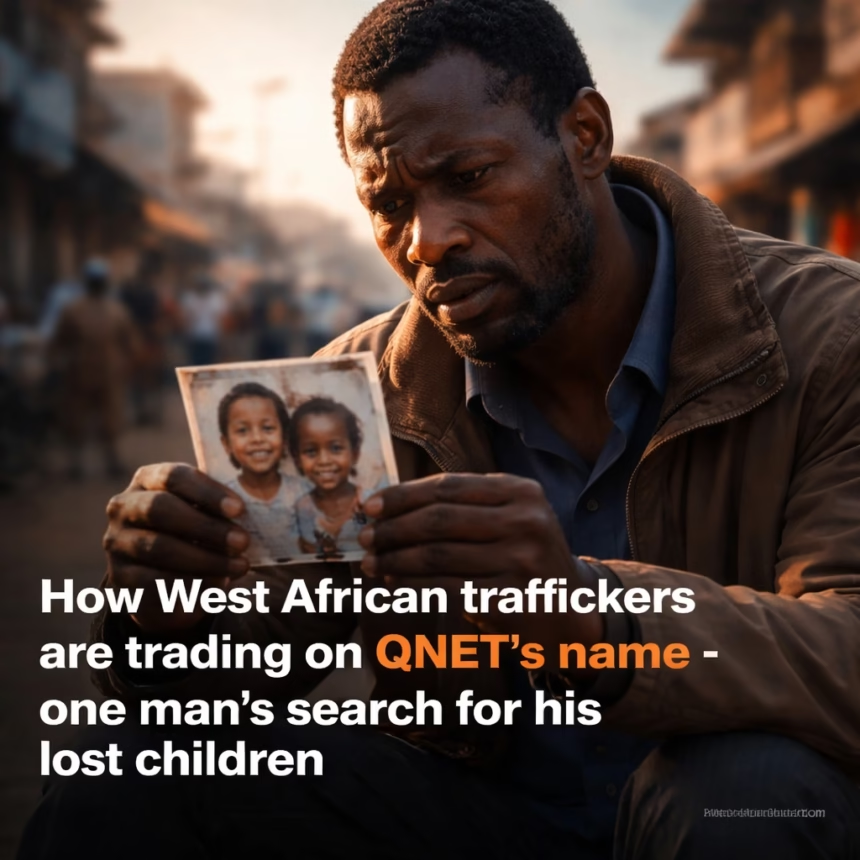
False Hope: QNET Scam Exploits West Africa's Vulnerable
For years, the promise of financial freedom through network marketing has lured individuals across the globe. But in West Africa, a darker reality is emerging, with traffickers exploiting the name and reputation of QNET, a multi-level marketing company, to lure vulnerable people, including children, into exploitative situations. This alarming trend has sparked a desperate search for answers and a renewed fight against human trafficking.
Background: The Rise of QNET and Network Marketing in West Africa
QNET, headquartered in Hong Kong, has operated in West Africa since the early 2000s, primarily selling health, wellness, and home care products through a network of independent distributors. The company’s marketing model relies heavily on recruitment, promising significant income potential through building downlines. The rise of social media and increased internet access in countries like Nigeria, Ghana, and Ivory Coast provided fertile ground for network marketing to flourish. However, the lack of robust regulatory oversight in some areas has created opportunities for unscrupulous actors to exploit the system.
The appeal of QNET, and network marketing in general, is particularly strong in regions facing high unemployment and poverty. The promise of becoming an entrepreneur and achieving financial independence can be incredibly enticing, especially for young people seeking opportunities. This vulnerability is being weaponized by traffickers who are now disguising their operations as legitimate QNET recruitment schemes.
Key Developments: The Emergence of Trafficking Networks
Reports of QNET-related trafficking began surfacing in late 2022 and have steadily increased throughout 2023. Investigations by local NGOs and international law enforcement agencies have revealed sophisticated networks preying on individuals with limited education and economic prospects. These networks often use social media platforms like Facebook and WhatsApp to advertise "exclusive" opportunities to join QNET, promising high returns and rapid wealth accumulation.

Crucially, these schemes often involve exorbitant upfront fees for training materials, product purchases, and "membership" – funds that disappear without delivering promised benefits. Traffickers then use various coercive tactics, including debt bondage and threats, to force recruits, including children, into labor, often in agriculture, domestic work, or sex work. Specific cases have been documented in Lagos, Nigeria, and Accra, Ghana, where young people were lured with promises of QNET success and subsequently subjected to forced labor.
Impact: The Human Cost of Exploitation
The impact of this exploitation is devastating. Victims face physical, psychological, and emotional trauma. Children are deprived of their education and childhood, forced into dangerous and exploitative situations. Families are left devastated, often burdened with debt incurred by the trafficking networks. The economic impact on communities is also significant, as the exploitation undermines legitimate businesses and perpetuates cycles of poverty.

More Read

The scale of the problem is difficult to quantify, but estimates suggest that hundreds, possibly thousands, of individuals have been affected across West Africa. Many victims are reluctant to report the crimes due to fear of retaliation or shame. The lack of awareness and understanding of the dangers associated with these schemes further exacerbates the problem.
Case Study: The Disappearance of 12-Year-Old Amina
Amina, a 12-year-old girl from Kano, Nigeria, disappeared in March 2023 after being promised a lucrative opportunity to join a "QNET-affiliated business." Her family was told she would be training for a new product launch. However, Amina was instead trafficked to a farm in Benin where she was forced to work long hours under harsh conditions. Her family is desperately searching for her, but authorities have faced difficulties tracing the traffickers.
What Next: Combating the Exploitation and Protecting Vulnerable Populations
Addressing this complex issue requires a multi-pronged approach. Law enforcement agencies need to strengthen their investigations and prosecute traffickers more effectively. Governments must implement stricter regulations on network marketing companies operating within their borders to prevent exploitation. Increased public awareness campaigns are crucial to educate vulnerable populations about the risks associated with these schemes.
QNET itself has issued statements condemning human trafficking and has pledged to cooperate with authorities in investigating the alleged exploitation of its name. However, more needs to be done to ensure that the company actively monitors its distributor network and takes decisive action against those who engage in illicit activities. International collaboration between law enforcement agencies and NGOs is essential to disrupt trafficking networks operating across borders.
Expected Milestones:
Increased collaboration between QNET and West African governments on anti-trafficking initiatives (Target: Q4 2023)
Launch of regional awareness campaigns targeting vulnerable communities (Target: November 2023)
Establishment of a dedicated hotline for reporting suspected QNET-related trafficking cases (Target: December 2023)
The fight against human trafficking is a long and arduous one. But by working together, governments, NGOs, and the private sector can break the cycle of exploitation and protect vulnerable populations from the deceptive promises of those who seek to profit from their suffering.