Monkeypox Evolution: New Hybrid Strain Detected – Global Health Alert
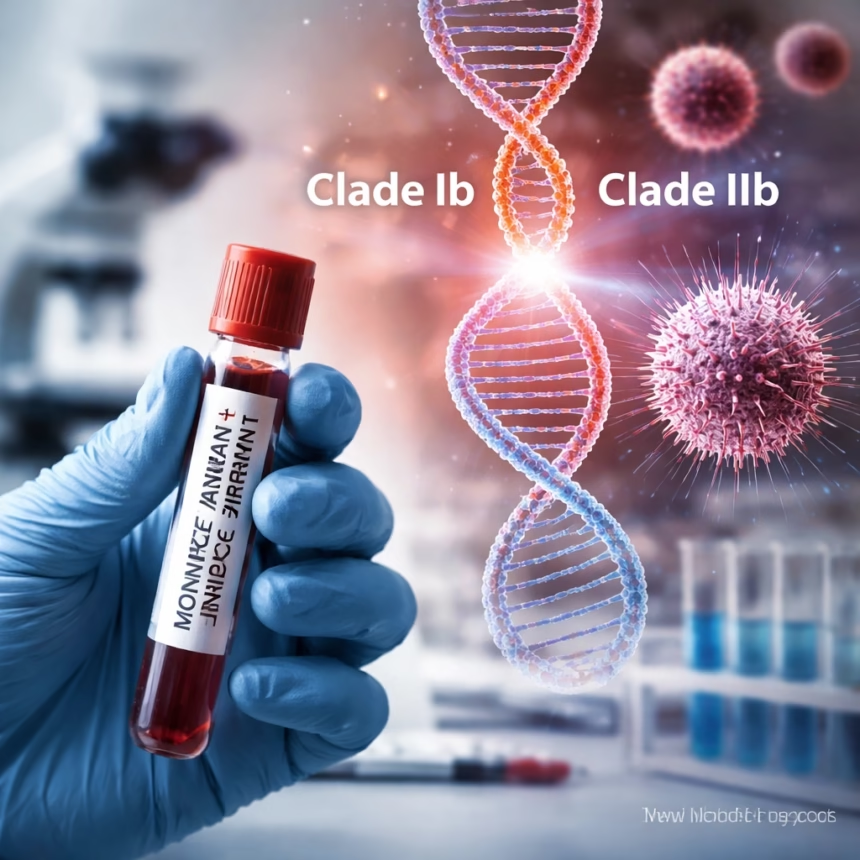
A new variant of the monkeypox virus has been identified, exhibiting characteristics of both the IB and IIb clades. The emergence of this hybrid strain has been detected in limited cases in the United Kingdom and India, prompting increased monitoring by health authorities.
Background: Understanding the Monkeypox Virus
Monkeypox is a viral disease that causes a rash, fever, and swollen lymph nodes. It’s part of the same family of viruses as smallpox, but is generally milder. Historically, the virus has primarily circulated in Central and West Africa. A significant outbreak occurred globally starting in May 2022, spreading to dozens of countries, including the UK and India. This outbreak marked a shift in the virus's transmission patterns, with increased human-to-human spread occurring outside of traditional endemic regions.
The monkeypox virus is categorized into different clades, which represent distinct evolutionary lineages. The two main clades circulating globally are the Congo Basin (formerly CI) and the West African (WAF) clades, further subdivided into sub-lineages like IB and IIb. These sub-lineages have shown varying levels of transmissibility and virulence.
Key Developments: The Hybrid Strain Discovery
Recent genomic sequencing efforts in the UK and India have revealed cases of a new monkeypox variant. This variant appears to be a hybrid, combining genetic material from the previously identified IB and IIb clades. The first confirmed case of this hybrid strain was reported in the UK in early July 2024. Shortly after, a similar case was identified in India, also in early July.
More Read

While the exact origins of this hybrid strain are still under investigation, scientists believe it likely arose through reassortment – a process where viruses from different lineages exchange genetic material during infection.
The specific mutations present in this hybrid strain are being analyzed to determine if they confer any advantages in transmissibility, immune evasion, or disease severity. Preliminary data suggests that the hybrid strain may exhibit slightly increased transmissibility compared to the existing WAF clades, but further research is needed to confirm this.
Impact: Who is at Risk?
Currently, the number of cases associated with the hybrid strain remains low, and the impact is considered limited. However, health officials are closely monitoring the situation and emphasizing the importance of vigilance. Individuals who have been in close contact with confirmed monkeypox cases, particularly those with symptoms like fever, rash, swollen lymph nodes, or fatigue, are advised to seek medical attention.
More Read

The risk is not limited to any specific demographic. While the global outbreak initially disproportionately affected men who have sex with men, the hybrid strain emergence underscores the importance of understanding and responding to potential shifts in transmission patterns across all populations.
Health authorities are urging healthcare providers to be aware of the possibility of this new variant and to consider monkeypox as a potential diagnosis in patients presenting with relevant symptoms, even if they haven’t traveled to endemic regions.
What Next? Monitoring and Response
Global health organizations, including the World Health Organization (WHO), are actively monitoring the spread of the hybrid strain and coordinating research efforts. Enhanced genomic surveillance is crucial to track the evolution of the virus and identify any further mutations.
Enhanced Surveillance
Increased genomic sequencing is being implemented in the UK, India, and other countries to detect and characterize new variants. This will allow for a better understanding of the virus’s evolution and potential impact.
Vaccine Effectiveness
Researchers are evaluating the effectiveness of existing monkeypox vaccines against the hybrid strain. Early indications suggest that the current vaccines may still provide some level of protection, but further studies are necessary to determine the optimal vaccination strategies.

Public Health Messaging
Health agencies are reinforcing public health messaging around monkeypox prevention, including awareness of symptoms, safe sexual practices, and hygiene measures. The importance of early diagnosis and isolation remains paramount in controlling the spread.
The WHO is expected to release further guidance on the hybrid strain in the coming weeks, including recommendations for diagnostic testing, treatment, and vaccination.
The situation remains dynamic, and ongoing research will be critical in understanding the long-term implications of this new monkeypox variant.