Modi's Urgent Call: India's Diplomatic Blueprint to End West Asia Conflict Shakes Global Stage
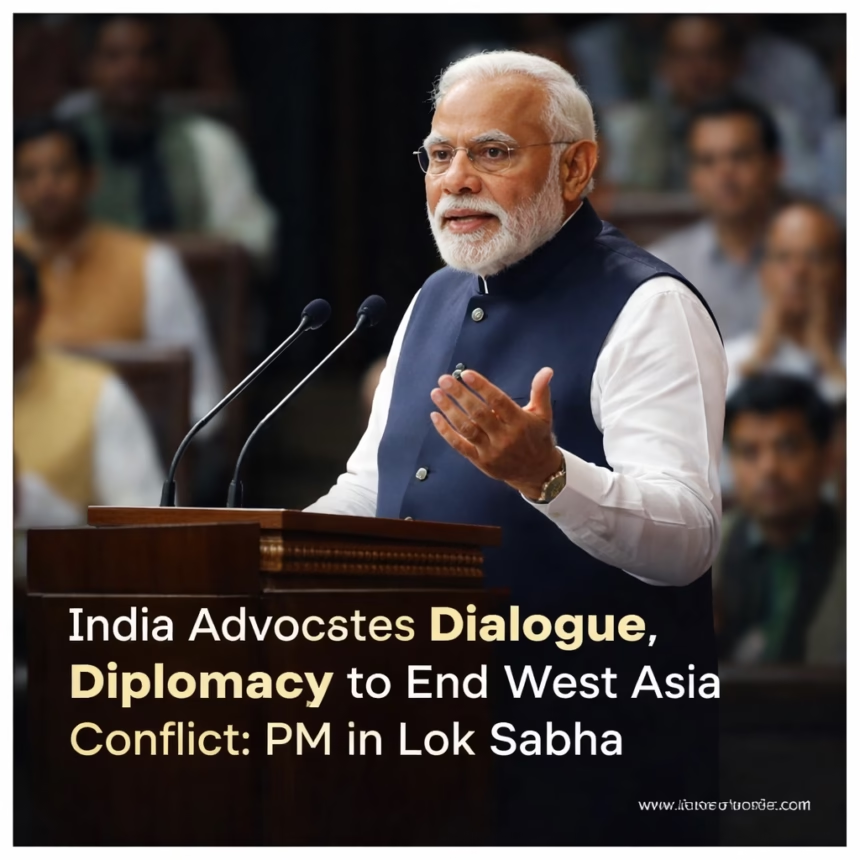
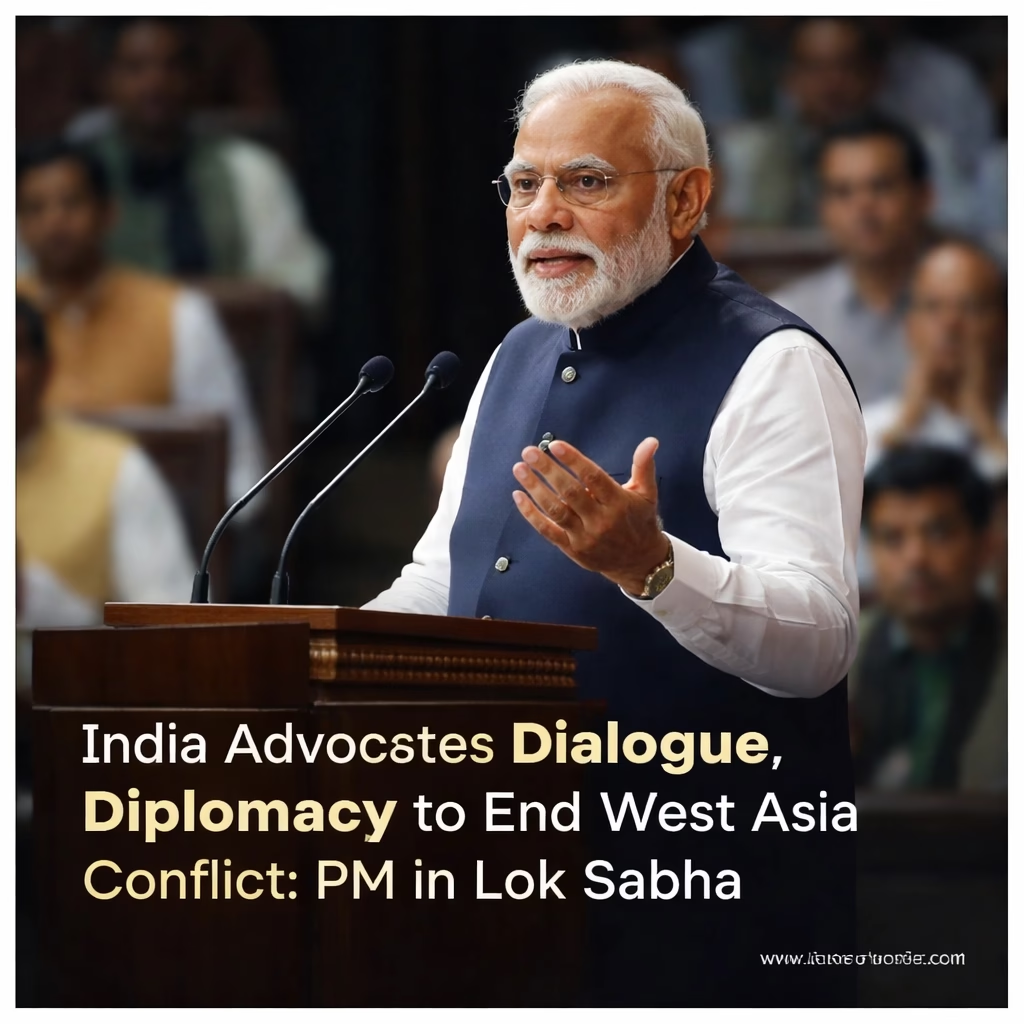
Prime Minister Narendra Modi, during a recent session in the Lok Sabha, articulated India's firm stance on the ongoing conflict in West Asia. He underscored the nation's unwavering commitment to resolving the complex regional crisis through dialogue and diplomatic engagement, rejecting military confrontation as a viable solution. This declaration reaffirms India's long-standing foreign policy principles of peaceful conflict resolution.
Background: Decades of Conflict and Recent Escalation
The West Asia region has been a focal point of geopolitical tension for decades, primarily centered around the Israeli-Palestinian conflict. This historical dispute encompasses issues of land, sovereignty, and the rights of both peoples, with roots stretching back to the mid-20th century. Numerous peace efforts have been attempted over the years, often faltering due to intractable disagreements and shifting political landscapes.
A significant and devastating escalation occurred on October 7, 2023, when Hamas launched a multi-pronged attack on southern Israel. This coordinated assault resulted in widespread casualties among Israeli civilians and military personnel, alongside the abduction of over 240 individuals, including women, children, and foreign nationals. Israel responded with a large-scale military operation in the Gaza Strip, aiming to dismantle Hamas's capabilities, secure its borders, and facilitate the release of hostages.
This recent surge in violence has exacerbated humanitarian concerns in Gaza, leading to a severe crisis with widespread displacement, critical shortages of essential supplies, and a collapsing healthcare system. The conflict has also raised fears of regional spillover, with various non-state actors and state powers expressing concerns or taking actions that could further destabilize the wider Middle East, including increased tensions along the Israel-Lebanon border and attacks on shipping in the Red Sea.

India's historical position on the Israeli-Palestinian issue has been characterized by consistent support for a two-state solution, advocating for a sovereign, independent, and viable Palestinian state coexisting peacefully alongside Israel. Simultaneously, India maintains robust diplomatic and economic ties with Israel, recognizing its security concerns. New Delhi has consistently called for de-escalation and a peaceful resolution, emphasizing the imperative to protect civilian lives and uphold international law. The current conflict presents a significant challenge to global stability and humanitarian principles, prompting leaders worldwide to seek pathways to peace.
Key Developments: India’s Proactive Stance and Evolving Global Discourse
Prime Minister Modi's recent address in the Lok Sabha marks a significant articulation of India's proactive stance amidst the escalating West Asia crisis. His statement emphasized that dialogue and diplomacy are the only pathways to a lasting resolution, a message consistent with India's independent foreign policy and its commitment to multilateralism. This public declaration within the Indian Parliament signals a clear national consensus on the matter, underscoring the gravity with which New Delhi views the situation.
Globally, the discourse surrounding the conflict has evolved considerably since October 2023. Initially, much of the international community focused on condemning the Hamas attacks and affirming Israel's right to self-defense. However, as the humanitarian situation in Gaza deteriorated rapidly, characterized by widespread destruction and immense civilian suffering, there has been an increasing international consensus on the urgent need for humanitarian pauses, a comprehensive ceasefire, and the unimpeded delivery of aid. Numerous United Nations resolutions, calls from international bodies, and statements from various heads of state reflect this significant shift in focus.
India has actively engaged in diplomatic outreach since the onset of the conflict. Prime Minister Modi has held discussions with leaders from both Israel and Palestine, including Israeli Prime Minister Benjamin Netanyahu and Palestinian President Mahmoud Abbas, as well as other regional and global stakeholders. These engagements aim to understand diverse perspectives and encourage de-escalation. India has also dispatched crucial humanitarian aid to the Palestinian people, reaffirming its commitment to assisting those affected by the conflict. This includes consignments of medical supplies, food items, and disaster relief materials, channeled through the Rafah border crossing into Gaza, underscoring India's practical support.
While some Western nations initially offered unequivocal support to Israel, India has maintained a carefully balanced approach, advocating for both Israel's legitimate security concerns and the fundamental rights of the Palestinian people. This nuanced position allows India to retain credibility with all parties involved, positioning itself as a potential constructive force and mediator in future peace efforts, distinct from the polarized stances adopted by some other global powers.
Impact: A Crisis with Global Ramifications
The ramifications of the West Asia conflict are profound and far-reaching, impacting millions across the globe and threatening to reshape geopolitical dynamics.
Humanitarian Catastrophe in Gaza
The most immediate and severe impact is on the civilian population of the Gaza Strip. Over 30,000 Palestinians have reportedly been killed since October 7, a significant number of whom are women and children. The Israeli military offensive has led to widespread destruction of infrastructure, including homes, hospitals, schools, and critical sanitation systems. Approximately 85% of Gaza’s 2.3 million residents have been internally displaced, facing acute shortages of food, water, medicine, and shelter. The United Nations and various aid organizations have described the situation as an unprecedented humanitarian catastrophe, with warnings of famine looming over the besieged territory.
Security and Trauma in Israel
On the Israeli side, the October 7 attacks resulted in the deaths of approximately 1,200 people, primarily civilians, and the abduction of over 240 hostages. The ongoing conflict has caused immense trauma and insecurity across Israeli society. Communities near the Gaza border remain heavily impacted, with many residents evacuated and facing long-term displacement. The constant threat of rocket fire continues to affect daily life in many parts of Israel, and the fate of the remaining hostages is a central concern, driving much of Israel’s military strategy and public discourse.

Regional Destabilization and Spillover
Beyond Israel and Palestine, the conflict poses a grave threat to wider regional stability. Cross-border clashes between Israel and Hezbollah in Lebanon have intensified significantly, raising fears of a second, broader front in the conflict. Attacks by Yemen’s Houthi rebels on commercial shipping in the Red Sea, ostensibly in solidarity with Palestinians, have severely disrupted global trade routes, prompting military responses from a coalition of international forces. Iran’s role and influence in supporting various non-state actors across the region add another layer of complexity, increasing the risk of a broader regional conflagration involving major powers.
Global Economic Repercussions
The conflict has significant global economic implications. Disruptions to Red Sea shipping have forced vessels to reroute around Africa, increasing transit times, fuel consumption, and shipping costs, which in turn impacts global supply chains and contributes to inflationary pressures worldwide. Volatility in global oil markets is another persistent concern, as West Asia is a critical source of energy for the global economy. Prolonged instability in the region could further depress investor confidence and hinder global economic recovery efforts.
International Relations and India’s Interests
The conflict has also strained international relations, highlighting divisions within the United Nations Security Council and among various alliances. It has fueled a global rise in both antisemitism and Islamophobia, exacerbating societal tensions in many countries. For India, the stability of West Asia is crucial due to its significant energy security needs, the presence of millions of Indian expatriates working in the Gulf region whose remittances are vital, and its extensive trade ties with countries across the Middle East. India’s advocacy for dialogue and diplomacy reflects its commitment to protecting these vital national interests and contributing to global peace and stability.
What Next: Pathways to Peace and India’s Continued Role
The path forward in West Asia remains fraught with challenges and uncertainties, yet several key areas are expected to define the immediate and long-term future of the conflict.
Intensified Diplomatic Engagements
Diplomatic efforts are anticipated to intensify on multiple fronts. The United Nations Security Council and General Assembly will likely continue to debate resolutions aimed at securing a comprehensive ceasefire and facilitating unimpeded humanitarian access. Regional actors like Qatar, Egypt, and Jordan, alongside global powers such as the United States, are expected to persist in their mediation attempts to broker a sustainable cessation of hostilities. These complex negotiations will likely focus on critical issues such as prisoner exchanges, humanitarian pauses, and robust mechanisms for aid distribution.
Humanitarian Aid and Reconstruction
A critical and immediate priority will be scaling up humanitarian aid delivery to Gaza. International organizations are pushing vehemently for the opening of additional border crossings and ensuring the safe and continuous passage of relief supplies, including food, water, medicine, and fuel. Should a ceasefire materialize, the daunting task of reconstruction in Gaza will begin, requiring massive international financial and logistical support to rebuild devastated infrastructure, homes, and public services that have been destroyed.
Pathways to a Political Solution
In the longer term, renewed and concerted focus will be placed on finding a viable political solution to the entrenched Israeli-Palestinian conflict. The two-state solution, though currently facing significant obstacles and diminished prospects in the immediate term, remains the internationally recognized framework for achieving lasting peace and security for both peoples. Discussions will likely revolve around the parameters of a future independent and viable Palestinian state, comprehensive security guarantees for Israel, and the contentious status of Jerusalem. Post-conflict governance arrangements for Gaza will also be a crucial topic, with various proposals being considered by international and regional stakeholders.
India’s Continued Engagement
India is expected to maintain its consistent and balanced approach to the West Asia conflict. New Delhi will likely continue to leverage its growing diplomatic influence to advocate for dialogue, de-escalation, and a peaceful resolution in various international forums, including the UN and multilateral groupings. Furthermore, India’s commitment to providing humanitarian assistance to the Palestinian people is set to continue as part of its broader foreign policy. As a significant global player with strong historical ties across the region, India aims to contribute constructively to any peace process, emphasizing its steadfast belief in multilateralism and peaceful conflict resolution as the only sustainable way forward for West Asia and global stability.