Blueprint for Billions: Jaishankar Declares India Will Chart Its Own Global Ascent
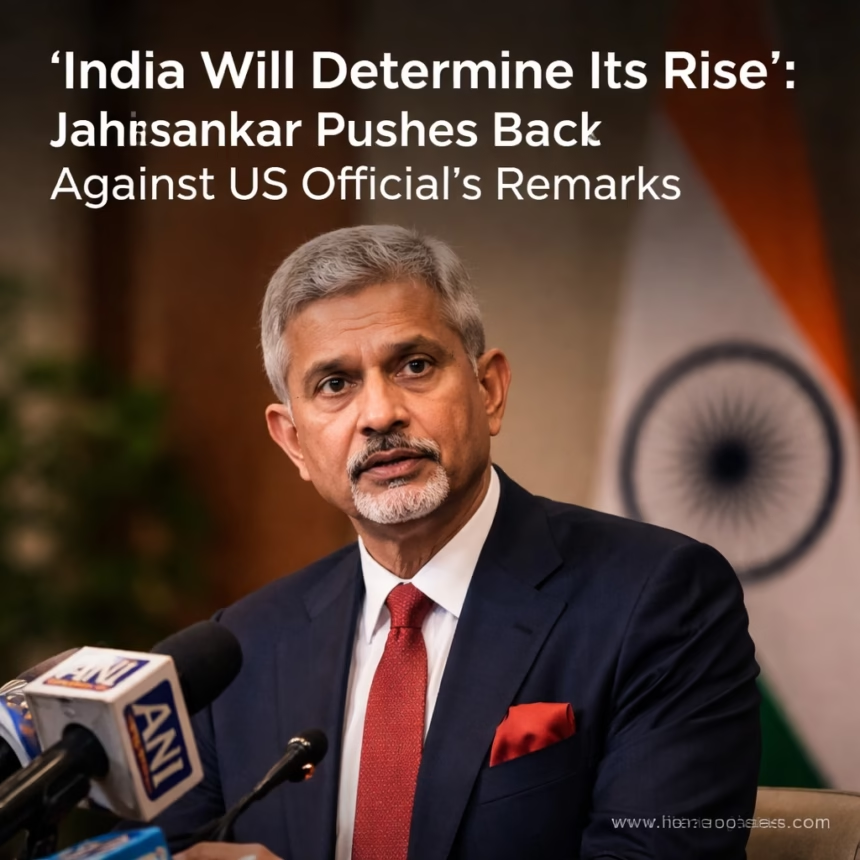
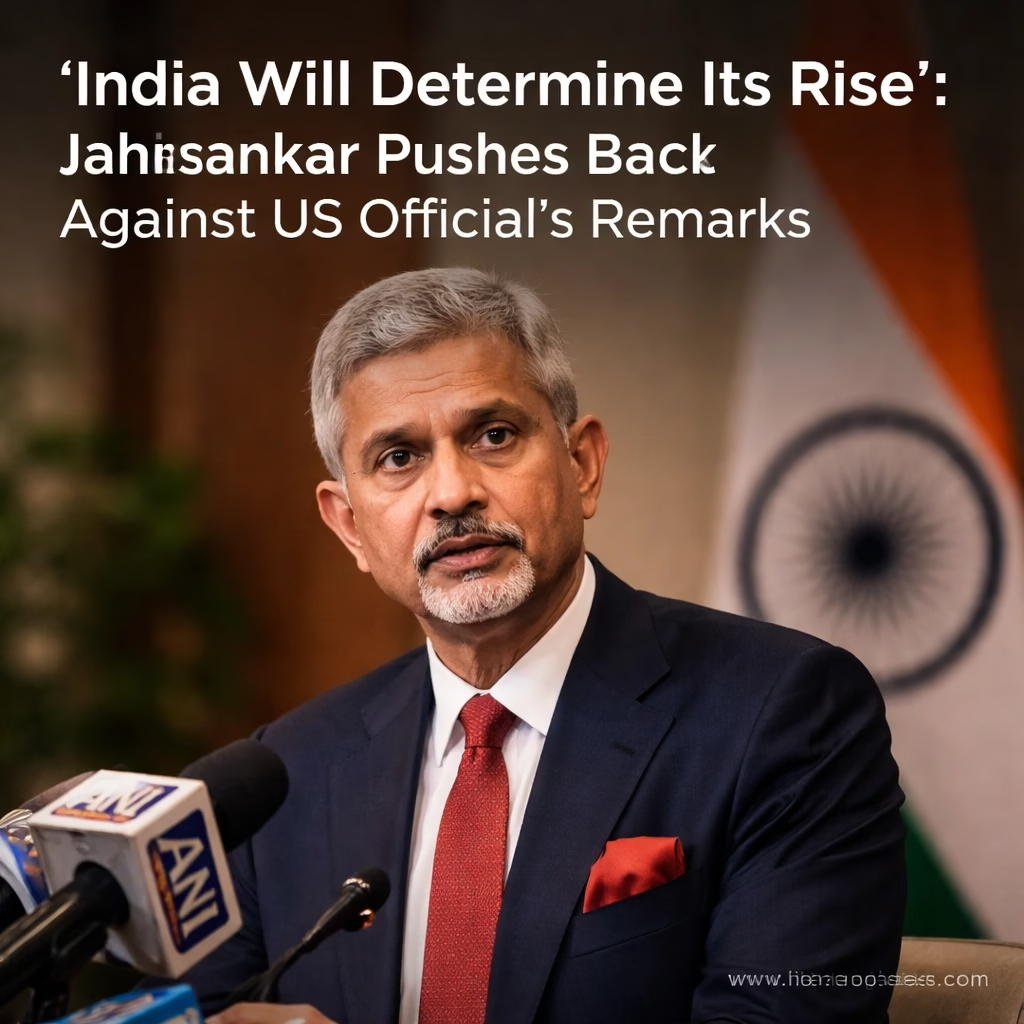
India's External Affairs Minister S. Jaishankar recently asserted that the nation's trajectory as a global power would be determined solely by its own people and policies, firmly pushing back against suggestions from a US official regarding India's strategic alignment. The statement, made during a public address in New Delhi, underscores India's steadfast commitment to an independent foreign policy and the pursuit of national interest in the evolving geopolitical landscape.
Background: The Evolving Geopolitical Canvas
The remarks by Minister Jaishankar came in response to comments attributed to a senior US State Department official during a recent policy briefing in Washington D.C. The official had reportedly suggested that India's rise was contingent upon its alignment with certain global values and partnerships, implicitly hinting at a preferred strategic direction for the South Asian giant.
India has historically championed a policy of strategic autonomy, a doctrine that evolved from its non-alignment movement during the Cold War. This approach emphasizes New Delhi's right to make independent foreign policy choices based on its national interests, rather than aligning exclusively with any single power bloc. This principle has been a cornerstone of Indian diplomacy for decades, even as its relationships with major global powers have deepened and diversified.
Deepening US-India Ties Amidst Divergent Views
Over the past two decades, relations between the United States and India have witnessed significant growth, encompassing strategic defense cooperation, burgeoning trade, and technological partnerships. Both nations are key members of the Quadrilateral Security Dialogue (Quad), an informal strategic forum that also includes Australia and Japan, aimed at promoting a free and open Indo-Pacific.
More Read

Despite this deepening engagement, certain areas of divergence persist. India's long-standing defense ties with Russia, its stance on the Ukraine conflict, and its pursuit of indigenous economic and technological development have occasionally led to differing perspectives with its Western partners. The US official's comments are seen by many as reflecting a desire for greater convergence in strategic outlooks, particularly concerning global challenges and the perceived rise of rival powers.
India’s Multipolar Vision
New Delhi's foreign policy establishment has consistently advocated for a multipolar world order, where power is distributed among several major centers, rather than concentrated in one or two. This vision inherently supports a system where nations, especially large developing ones like India, have the agency to chart their own course without external dictation. Jaishankar's statement is a powerful articulation of this core belief, reinforcing India's commitment to its sovereign decision-making.
Key Developments: Asserting Sovereignty and Self-Reliance
Minister Jaishankar's address was unequivocal. He stated that India's rise would be "an Indian rise," shaped by Indian aspirations, values, and strategies. He emphasized that the nation's journey would be defined by its own civilization, culture, and unique historical experiences, rather than conforming to an external blueprint or expectations from any other country.
More Read

Focus on Internal Strength and Global Responsibility
The External Affairs Minister highlighted India's robust economic growth, its technological advancements, and its increasing demographic dividend as foundational pillars of its ascent. He underscored the government's focus on self-reliance (Atmanirbhar Bharat) across various sectors, from defense manufacturing to digital infrastructure, as crucial for ensuring India's strategic independence.
Furthermore, Jaishankar pointed to India's growing role as a voice for the Global South, particularly during its recent G20 presidency. This leadership position, he argued, is a natural extension of India's independent foreign policy, allowing it to champion the interests of developing nations and contribute to global solutions on its own terms.
Beyond Alignment: The Concept of “Many Alignments”
Indian diplomats have increasingly articulated a foreign policy that embraces "many alignments" rather than exclusive alliances. This approach allows India to maintain strong, independent relationships with diverse partners – including the US, Russia, European Union, and countries in the Middle East and Africa – based on specific mutual interests, without being constrained by the geopolitical rivalries of others.
This nuanced stance enables India to procure defense equipment from Russia, engage in strategic dialogues with the US, participate in BRICS (Brazil, Russia, India, China, South Africa) forums, and simultaneously strengthen its ties with the European Union. Jaishankar's recent comments serve to clarify that this multi-faceted engagement is a deliberate strategy, not a hesitant indecision.
Impact: Reaffirming Autonomy and Redefining Partnerships
Jaishankar's firm stance carries significant implications for various stakeholders, both domestically and internationally. It reinforces India's image as a confident, independent actor on the global stage, unwilling to compromise its sovereignty for perceived external benefits.
More Read

Diplomatic Implications for US-India Relations
For the United States, the remarks serve as a clear communication of India's boundaries and expectations. While the US values India as a critical strategic partner, particularly in balancing China's influence, New Delhi's assertion of autonomy indicates that its partnership will not be one of subservience or automatic alignment. This may necessitate a recalibration of US diplomatic approaches, emphasizing shared interests and mutual respect rather than prescriptive expectations.
The statements do not necessarily signal a downturn in relations but rather a clarification of their nature. Both nations are expected to continue their robust engagement, but with a clearer understanding of India's non-negotiable commitment to independent decision-making.
Strengthening India’s Global Standing
Internationally, the declaration bolsters India's credibility among nations that value independent foreign policies. It could resonate positively with countries in the Global South, seeing India as a leader capable of standing up to external pressures. For strategic rivals, it underlines the complexity of engaging with India, which cannot be easily categorized or influenced.
Domestic Resonance and National Pride
Domestically, Jaishankar's comments have been widely lauded, resonating with a populace that values national sovereignty and pride. Such assertions reinforce the government's narrative of a rising India that is confident, self-reliant, and capable of charting its own destiny. This political messaging strengthens public support for the nation's foreign policy direction.
What Next: Navigating a Complex Global Future
The pushback from Minister Jaishankar sets a clear tone for India's future engagements and diplomatic posture. It signals a continued emphasis on strategic autonomy as a foundational principle, even as India's global responsibilities and partnerships expand.
Continued High-Level Diplomatic Engagements
Expect continued high-level visits and dialogues between Indian and US officials. These interactions will likely focus on bridging understanding, reinforcing areas of convergence, and respectfully addressing points of divergence. Future joint statements and policy documents will be scrutinized for how they reflect this dynamic balance of partnership and independence.
India’s Unwavering Focus on Development
New Delhi is expected to remain steadfast in its pursuit of ambitious national development goals, including economic growth, poverty alleviation, and technological advancement. These internal priorities will continue to drive its foreign policy choices, as India seeks to create a conducive external environment for its domestic transformation.
Evolving Multilateral Engagements
India will likely continue to play an active role in diverse multilateral forums, from the Quad to BRICS, the Shanghai Cooperation Organization (SCO), and the G20. Its participation will be guided by its own strategic calculus, aiming to maximize its influence and safeguard its interests in a rapidly changing world order.
The assertion that India will determine its own rise is more than just a diplomatic statement; it is a declaration of intent, signaling New Delhi's firm resolve to be a significant, yet independent, architect of the 21st-century global landscape.