India's Economic Surge: World Bank Fuels Optimism with Robust Growth Forecasts
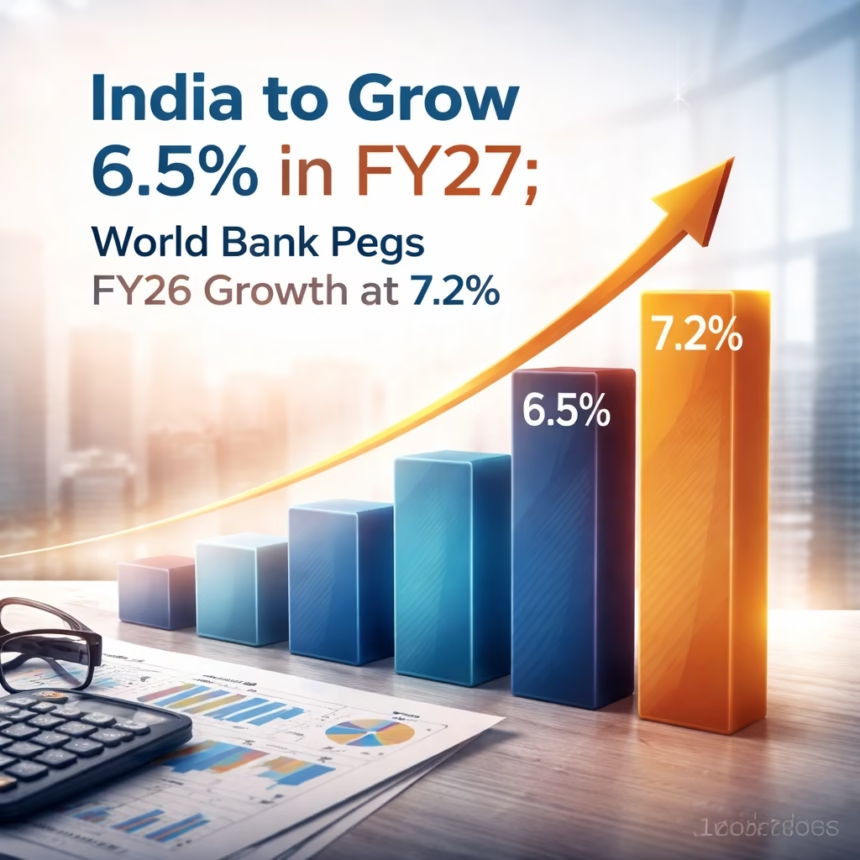
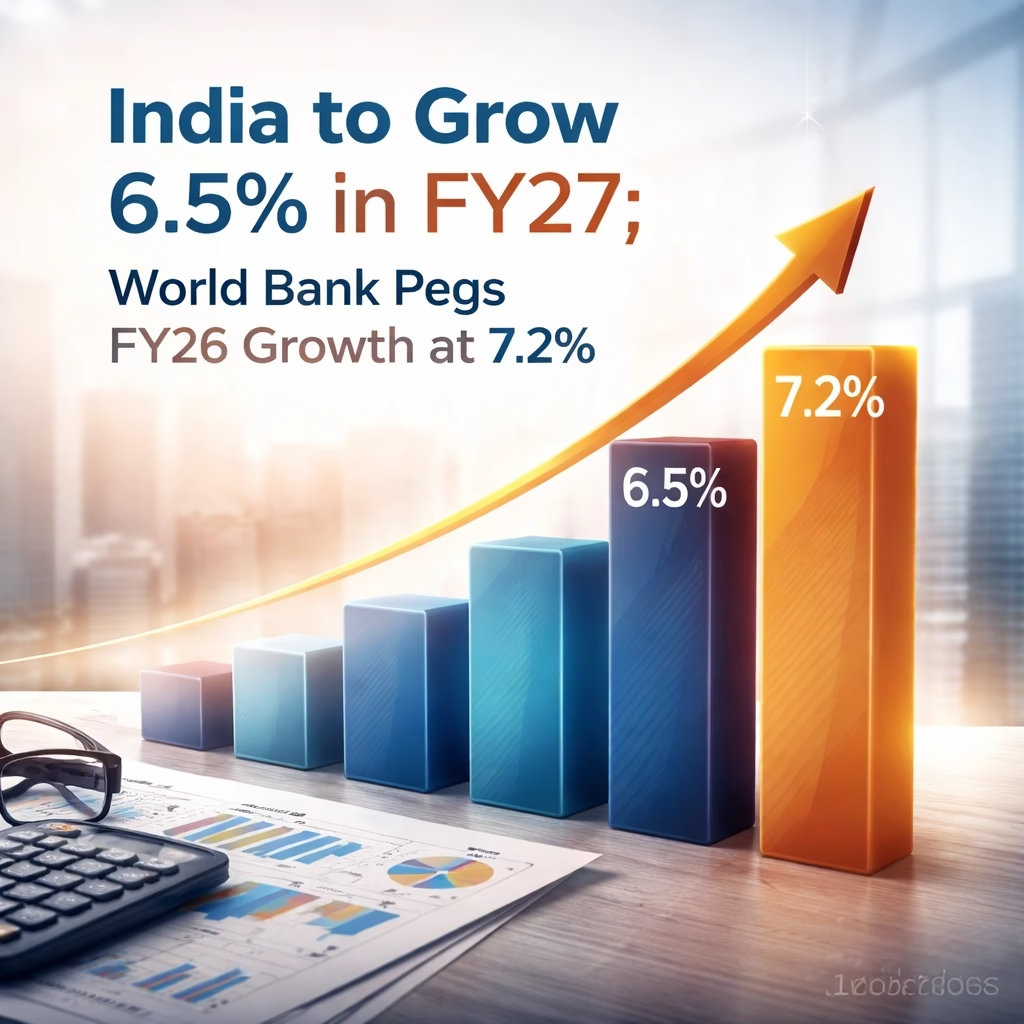
India's economic trajectory continues to capture significant global attention, with the World Bank recently projecting a robust 7.2% growth for the fiscal year 2025-26. This optimistic outlook positions India as a leading economic force, with further projections indicating a resilient 6.5% expansion in FY27, underscoring the nation's sustained momentum.
Background: India’s Economic Journey and Resilience
India has long been recognized as a rapidly emerging economy, characterized by its vast population, burgeoning middle class, and increasingly diversified industrial base. The nation embarked on a path of economic liberalization in the early 1990s, which gradually opened its markets and integrated it more deeply into the global economy.
Over the past two decades, India has experienced periods of impressive growth, punctuated by global economic slowdowns and domestic policy shifts. Key reforms such as the Goods and Services Tax (GST) implemented in 2017 aimed to streamline indirect taxation and create a unified national market, albeit with initial transitional challenges.

The COVID-19 pandemic presented an unprecedented challenge, causing a significant contraction in economic activity during FY2020-21. However, India demonstrated remarkable resilience, bouncing back strongly in the subsequent fiscal years through a combination of targeted government stimulus, robust domestic demand, and a swift vaccination drive. This recovery laid the groundwork for the current optimistic projections.
International financial institutions, including the World Bank and the International Monetary Fund (IMF), regularly assess India's economic health, providing crucial insights into its performance and potential. These assessments are vital for global investors, policymakers, and businesses seeking to understand India's role in the evolving world order.
Key Developments: Driving Forces Behind the Projections
The World Bank's latest projections for India highlight several critical factors contributing to its accelerated growth path. The 7.2% forecast for FY26 and the 6.5% for FY27 are underpinned by a confluence of strong domestic fundamentals and strategic policy interventions.
More Read

A primary driver is the robust domestic demand, fueled by a growing urban population, rising disposable incomes, and increasing consumer confidence. This demand spans various sectors, from fast-moving consumer goods to consumer durables and services.
Government capital expenditure has played a pivotal role in stimulating economic activity. Significant investments in infrastructure, including roads, railways, ports, and digital networks, have created jobs, improved logistics, and enhanced productivity across the economy. Schemes like the National Infrastructure Pipeline continue to channel substantial funds into these crucial areas.
The manufacturing sector has also shown signs of a sustained revival, partly aided by the government's Production Linked Incentive (PLI) schemes. These initiatives aim to boost domestic manufacturing and make India a global hub for production in key sectors such as electronics, pharmaceuticals, automobiles, and textiles, thereby reducing import dependence and increasing export potential.
The services sector, a traditional stronghold of the Indian economy, continues its strong performance. Areas such as information technology, business process outsourcing, and financial services remain vibrant, contributing significantly to GDP and employment. The digital public infrastructure, including platforms like UPI (Unified Payments Interface), has revolutionized financial transactions, boosting formalization and efficiency.
Compared to global averages, where many developed economies face headwinds of inflation and slower growth, India's projected rates stand out. This relative strength is attracting greater foreign direct investment (FDI) as global companies seek opportunities in dynamic and expanding markets.
Impact: Reshaping India’s Economic Landscape
The sustained high growth rates are poised to have a multifaceted impact across India's economy and its global standing.

Domestic Economy and Livelihoods
Within India, robust growth translates directly into enhanced opportunities. Job creation is expected to accelerate, particularly in manufacturing, construction, and services, absorbing a significant portion of the young workforce entering the labor market annually. Increased employment, coupled with potential wage growth, will likely boost household incomes and consumer spending further, creating a virtuous cycle.
Poverty reduction efforts will receive a substantial impetus, as economic expansion often lifts more people out of destitution. Government social welfare programs, combined with improved economic prospects, are crucial for inclusive growth. While inflation remains a concern, sustained growth provides the government with greater fiscal space to manage price stability and invest in social sectors like education and healthcare.
Global Standing and Investment
Internationally, India’s strong economic performance reinforces its position as one of the fastest-growing major economies. This strengthens its appeal as a destination for foreign direct investment (FDI), with global corporations viewing India as a critical market and a reliable manufacturing base. Enhanced economic clout also bolsters India’s voice in international forums such as the G20, influencing global economic policy and trade discussions.
The perception of India as a stable and growing economy can also improve its credit ratings, making it more attractive for foreign institutional investors seeking long-term returns in emerging markets. This influx of capital can further fuel domestic investment and innovation.
Sectoral Development
Specific sectors are set to benefit disproportionately. Infrastructure development will continue to be a cornerstone, driving growth in construction, cement, steel, and related industries. The digital economy, including e-commerce, fintech, and IT services, is expected to expand rapidly, leveraging India’s vast digital talent pool and widespread internet penetration. The renewable energy sector is also poised for significant growth, aligning with India’s ambitious climate goals and energy security objectives.
What Next: Sustaining Momentum and Navigating Challenges
While the projections are optimistic, sustaining this growth trajectory requires continuous policy focus and strategic foresight. The path ahead involves both leveraging existing strengths and addressing potential headwinds.
Government Priorities and Policy Direction
The Indian government is expected to maintain its focus on fiscal prudence while continuing strategic capital expenditure. Further reforms aimed at improving the ease of doing business, simplifying regulations, and enhancing the efficiency of the judicial system will be critical for attracting and retaining investment. Initiatives to boost human capital development, particularly in skill enhancement and education, are essential to ensure a productive workforce capable of meeting the demands of a modern economy.
Emphasis on green energy transition, including solar, wind, and hydrogen power, will not only contribute to climate goals but also create new industries and jobs, positioning India as a leader in sustainable development. Continued investment in digital public infrastructure will further enhance productivity and financial inclusion.
Potential Challenges and Risks
Despite the positive outlook, several challenges could impact India’s growth trajectory. A global economic slowdown, exacerbated by geopolitical tensions or persistent inflation in major economies, could dampen export demand and affect capital flows. Volatility in global commodity prices, particularly crude oil, remains a significant risk for an import-dependent nation like India.
Domestically, managing inflation while ensuring growth, addressing income inequality, and creating sufficient quality jobs for the expanding workforce are ongoing priorities. The impact of climate change, including extreme weather events, poses risks to agricultural output and overall economic stability. Effective policy execution and adaptive governance will be crucial in mitigating these risks.
Future Outlook and Long-Term Vision
Looking further ahead, India aims to become a developed economy by 2047, the centenary of its independence. Achieving this ambitious goal will require sustained high growth rates, significant structural reforms, and a continued focus on innovation and technological advancement. The current projections from the World Bank provide a strong foundation and a clear indication that India is on a promising path to becoming a major global economic powerhouse, reshaping the 21st-century economic landscape.