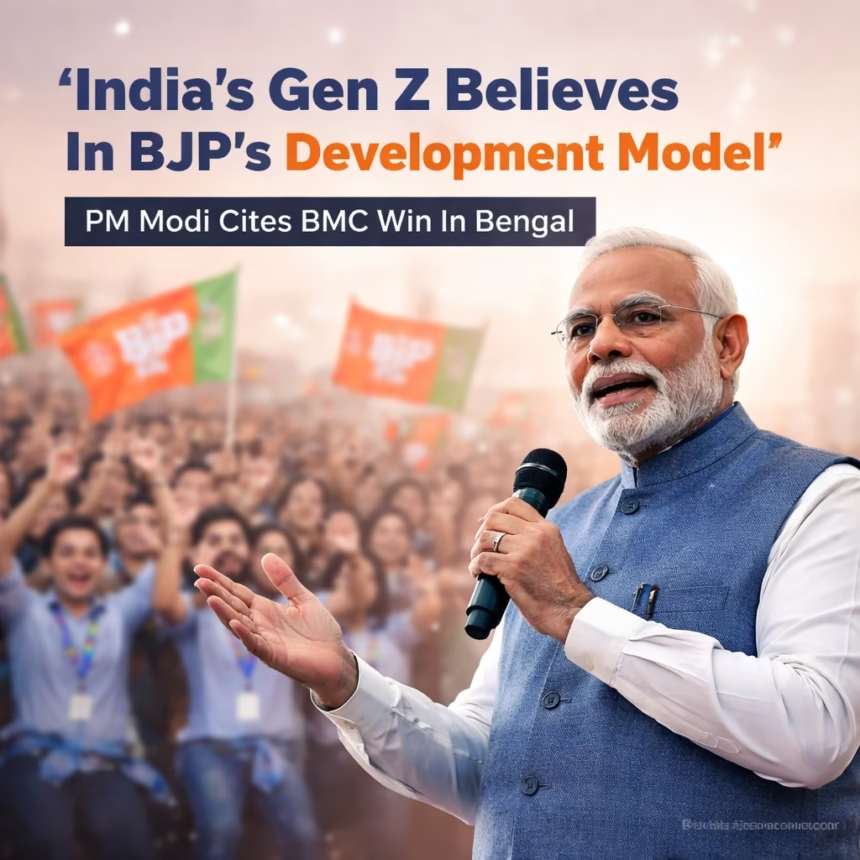
Gen Z's Future with BJP? PM Modi Cites Bengal Civic Win as Proof of Development Model Appeal
Prime Minister Narendra Modi recently asserted that India's Generation Z is increasingly aligning with the Bharatiya Janata Party's (BJP) development model. This significant claim, made during a public address, specifically referenced the party's performance in the Bidhan Nagar Municipal Corporation (BMC) elections in West Bengal as an indicator of evolving youth sentiment. The statement has ignited a national debate concerning youth demographics, political allegiance, and the future electoral landscape.
Background: The Evolution of India’s Youth Vote
The Bharatiya Janata Party, under Prime Minister Modi’s leadership since 2014, has consistently promoted a narrative centered on “Vikas” or development. This agenda, encompassing economic growth, infrastructure projects, digital transformation, and social welfare schemes, aims to resonate across diverse demographics. Historically, the youth vote in India has been dynamic, often influenced by immediate concerns such as employment, education, and economic opportunities. While the BJP has traditionally garnered support from segments of the youth, particularly those drawn to its nationalist stance and perceived economic efficiency, securing a broad base among the digitally native and globally aware Gen Z presents both a unique challenge and a considerable opportunity.
India’s Gen Z, generally comprising individuals born between the mid-1990s and early 2010s, forms a substantial and expanding segment of the electorate. This cohort is characterized by its digital fluency, heightened social awareness, and often pragmatic approach to governance, prioritizing tangible outcomes and future prospects. Their political engagement is frequently mediated through social media, and their aspirations are shaped by a rapidly evolving global and domestic landscape, making them a crucial demographic for any political party.
West Bengal, a state long dominated by regional forces like the Trinamool Congress (TMC) and previously the Left Front, has witnessed the BJP make notable inroads over the past decade. From a marginal presence, the BJP emerged as the principal opposition in the 2019 Lok Sabha elections, securing 18 out of 42 seats. It further consolidated its position in the 2021 Assembly elections, despite ultimately not winning power. This gradual expansion in the state has been attributed to various factors, including local anti-incumbency, the BJP’s robust organizational efforts, and its emphasis on cultural nationalism alongside development promises. Municipal elections, often serving as a localized barometer of public sentiment, provide granular insights into political shifts within urban and semi-urban areas.

Key Developments: Modi’s Assertion and Youth Outreach
Prime Minister Modi’s recent pronouncement specifically highlighted the BJP’s performance in the Bidhan Nagar Municipal Corporation elections. While the Trinamool Congress achieved a dominant victory in the overall West Bengal civic polls held in early 2022, the Prime Minister cited the BJP’s ability to retain or increase its vote share in specific wards, particularly within an urban hub like Bidhan Nagar (which includes areas such as Salt Lake City, known for its educated and professional populace), as evidence of youth inclination towards the party’s development agenda. This framing suggests a perceived shift in sentiment rather than an outright majority win for the corporation.
The BJP’s broader strategy to engage youth extends well beyond traditional electoral campaigns. Initiatives like ‘Startup India,’ ‘Skill India,’ and ‘Digital India’ are explicitly designed to cater to the aspirations of young entrepreneurs, professionals, and job seekers. The government has also focused on expanding digital infrastructure and promoting online education, aiming to create an ecosystem that empowers the younger generation. These policy interventions are often presented as concrete manifestations of the BJP’s development model, promising a pathway to economic empowerment and national progress.
Furthermore, the party has actively leveraged social media platforms to disseminate its message, directly engaging with young voters in their preferred digital spaces. From Twitter to Instagram and YouTube, BJP leaders and its extensive network of supporters communicate policy achievements, development narratives, and counter-narratives to opposition critiques. This sophisticated digital offensive is a critical component of their outreach, aiming to bypass traditional media filters and establish a direct, consistent connection with the youth.
More Read

Impact: Reshaping Political Discourse
Prime Minister Modi’s statement carries significant implications for various stakeholders within India’s political and social landscape, potentially reshaping future discourse and strategies.
Decoding the Youth Vote
For India’s Gen Z, the statement prompts introspection into their political leanings and future choices. While many young voters are driven by economic opportunities, educational access, and a desire for a stable future, their political affiliations are rarely monolithic. Factors such as regional identity, caste, religion, and socio-economic background continue to play crucial roles. The claim suggests a growing confidence among this demographic in the BJP’s capacity to deliver on these aspirations, potentially signaling a shift from traditional voting patterns or a consolidation of existing support. Their increasing participation in the electoral process, coupled with their digital activism, makes them a powerful, yet complex, demographic to woo.
BJP’s Electoral Strategy
For the Bharatiya Janata Party, the Prime Minister’s assertion reinforces its core electoral strategy: presenting itself as the party of development and future-oriented governance. By linking Gen Z’s aspirations directly to its model, the BJP aims to solidify its image as a progressive force capable of addressing modern challenges. This narrative is crucial for upcoming electoral cycles, especially the 2024 Lok Sabha elections, where the youth vote will be a decisive factor. The party will likely intensify its youth-centric campaigns, emphasizing its achievements in areas relevant to this demographic, such as job creation, technological advancement, and educational reforms.
Opposition’s Dilemma
Opposition parties face a formidable challenge in countering this narrative. They must not only articulate compelling alternative development visions but also effectively communicate them to a digitally savvy youth audience. Critiquing the BJP’s claims requires presenting concrete data, highlighting areas where the government might have fallen short, and offering credible solutions to issues like unemployment and economic disparity. The ability of opposition parties to connect with Gen Z on their terms, through relevant issues and effective digital engagement, will be critical to their future electoral prospects.
West Bengal’s Political Trajectory
In West Bengal, the statement further underscores the BJP’s continued ambition to expand its footprint. Despite the TMC’s dominance, particularly in civic bodies, the BJP views any perceived shift in youth sentiment as a positive indicator for its long-term strategy in the state. The focus on Bidhan Nagar, an urban constituency, suggests an attempt to appeal to the educated middle class and young professionals, a demographic often influential in shaping broader political discourse. This ongoing political contestation will likely intensify, with both major parties vying for the allegiance of the state’s younger population.
What Next: The Road Ahead for Youth and Politics
The Prime Minister’s statement sets the stage for intensified political engagement with India’s youth ahead of crucial electoral battles.

Road to 2024
The most significant milestone on the horizon is the 2024 general election. Both the BJP and opposition parties will meticulously analyze youth voting patterns, conduct extensive surveys, and tailor their manifestos and campaigns to specifically address the concerns and aspirations of Gen Z. The narrative around development, employment, and future opportunities will undoubtedly dominate the discourse targeting this demographic. The BJP will likely leverage its current government’s policy initiatives, while the opposition will seek to highlight perceived gaps and propose alternative solutions.
Policy Focus on Youth
Expect a continued and perhaps accelerated focus on policies aimed at youth empowerment. This could include further investments in skill development programs, initiatives to boost entrepreneurship, reforms in the education sector to align with modern job market demands, and expanded digital infrastructure. Government schemes related to financial assistance for startups, educational loans, and vocational training are likely to be amplified and promoted as evidence of the BJP’s commitment to the youth.
Digital Engagement Intensifies
The digital battleground will become even more crucial. Political parties will invest heavily in social media teams, data analytics, and targeted digital campaigns to reach Gen Z voters. Influencer marketing, short-form video content, and interactive online engagements will become standard tools for political communication, moving beyond traditional rallies and print advertisements. The ability to craft compelling, authentic, and shareable content will be key to winning the hearts and minds of this tech-savvy generation.
Ongoing Debates and Surveys
Academics, think tanks, and media organizations will likely conduct more in-depth studies and surveys to ascertain the true political leanings of India’s Gen Z. These analyses will provide a more nuanced understanding of how factors like economic conditions, social issues, regional dynamics, and national identity influence their voting behavior. The findings from such research will inform the strategies of all political actors, shaping the trajectory of India’s democratic future. The Prime Minister’s claim has undeniably brought the spotlight onto this vital demographic, ensuring that their voice and choices will remain a central theme in India’s political narrative.