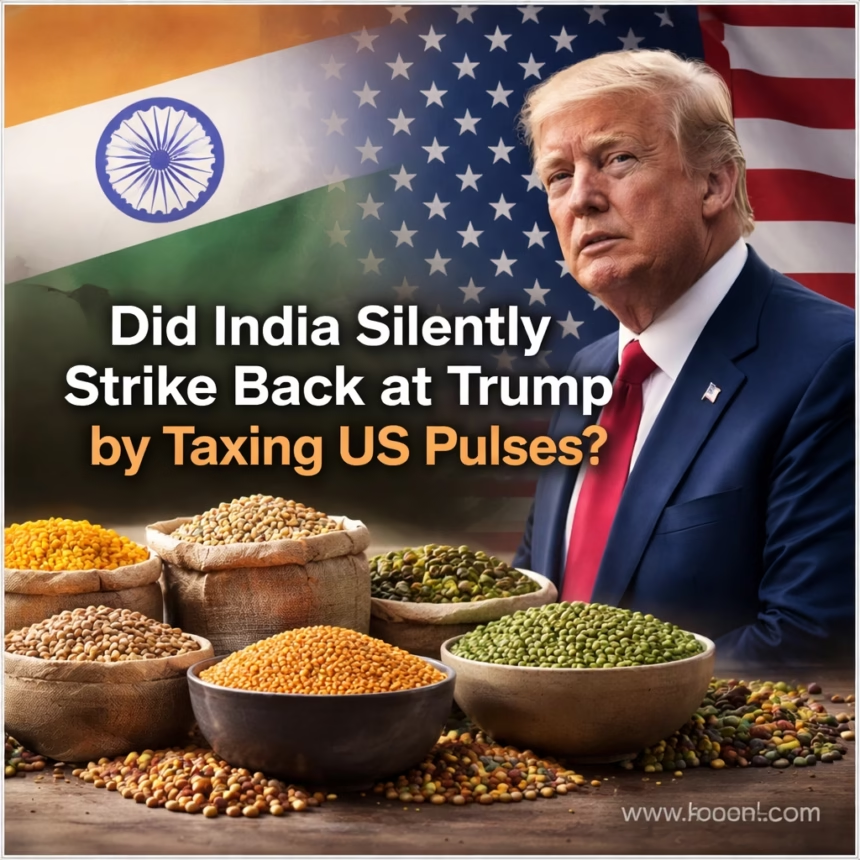
New Delhi's recent adjustments to import tariffs on certain agricultural products, particularly pulses from the United States, have sparked renewed debate among trade analysts. While Indian officials cite domestic agricultural policy as the primary driver, the timing and nature of these changes have led some observers to ponder whether they represent a delayed response to the protectionist trade measures enacted during the previous US administration. This development unfolds against a backdrop of complex bilateral trade relations between India and the United States.
Background: A Rocky Trade Path Under Trump
The relationship between India and the United States, while strategically robust, experienced significant trade friction during the administration of former President Donald Trump. Trump frequently criticized India's high tariffs on various American goods, labeling India the "tariff king." This rhetoric often targeted products ranging from Harley-Davidson motorcycles to medical devices and information technology products.
A pivotal moment occurred in June 2019 when the Trump administration revoked India's eligibility for benefits under the Generalized System of Preferences (GSP) program. The GSP, which allowed duty-free entry for thousands of products from developing countries into the US market, had provided India with preferential access for decades. Washington cited India's failure to provide "equitable and reasonable access to its markets" as the reason for the withdrawal.
In response to the GSP withdrawal and earlier US tariffs on steel and aluminum, India implemented retaliatory tariffs on 28 American products in June 2019. These tariffs targeted a diverse range of US exports, including almonds, walnuts, apples, and certain chemicals. While these specific retaliatory tariffs were later suspended in ongoing trade negotiations, the underlying tensions persisted throughout the Trump presidency, leaving a legacy of unresolved trade grievances.
India's domestic agricultural policy has also played a crucial role in its trade decisions. As a major producer and consumer of pulses, India frequently adjusts import duties to manage domestic supply, stabilize prices, and protect its vast farming community. Historically, when domestic production is high, import duties tend to rise to prevent a glut and safeguard farmer incomes. Conversely, duties may be lowered during periods of shortage to ensure food security and control inflation.
More Read

Key Developments: India’s Recent Tariff Adjustments
In late 2023 and early 2024, India made several adjustments to its import duties on certain pulse varieties. These measures included the imposition or re-imposition of tariffs on specific types of lentils, chickpeas (garbanzo beans), and peas, among others. While not exclusively targeting the United States, these tariffs significantly impact American pulse exporters, who have historically found a substantial market in India.
For instance, reports indicated that India introduced a 10% import duty on certain lentils in December 2023, and similar measures have been discussed or implemented for other pulse categories. The official stated rationale from New Delhi consistently emphasized the need to support domestic farmers and manage buffer stocks, particularly after favorable monsoon seasons led to increased local harvests.
Indian government spokespersons have largely maintained that these tariff decisions are purely a function of domestic agricultural policy and market dynamics, unrelated to past trade disputes with any specific country. They highlight India's commitment to food security and the economic well-being of its agricultural sector, which employs a significant portion of the country's workforce.
More Read

However, the timing of these tariff adjustments, coming years after the most intense period of US-India trade friction under Trump, has prompted some analysts to consider a broader context. While not a direct, immediate retaliation against the current US administration, the move could be interpreted as India asserting its trade sovereignty and signaling its willingness to use tariffs as a policy tool, a strategy that became more prominent globally during the Trump era.
Impact: Who is Affected?
The recent tariff adjustments by India have far-reaching implications for various stakeholders on both sides of the globe.
US Agricultural Exporters
American farmers, particularly those in states like Montana, North Dakota, Idaho, and Washington, which are significant producers of pulses, stand to lose substantial market access. India has historically been one of the largest buyers of US pulses, and increased tariffs make American products less competitive compared to those from other countries or India's domestic supply. This could lead to reduced demand for US pulses, lower prices for farmers, and potential shifts in planting decisions for future seasons. Exporters face challenges in fulfilling existing contracts and securing new ones, impacting their revenue streams and logistical operations.
Indian Farmers and Consumers
For Indian farmers, the tariffs are generally seen as a protective measure. By making imported pulses more expensive, the government aims to ensure that domestic produce can compete effectively in the market, thereby securing better prices for local growers. This support is crucial for the livelihoods of millions of small and marginal farmers across India.
However, the impact on Indian consumers is more nuanced. While tariffs protect farmers, they can also lead to higher domestic prices for pulses, a staple food item in India. This could potentially affect household budgets, particularly for lower-income segments of the population. The government often balances these concerns, aiming to maintain a stable supply at reasonable prices while supporting local agriculture.
Bilateral Trade Relations
While Indian officials have not explicitly linked these tariffs to past US policies, the perception of a "silent strike back" could influence the broader trade dialogue between Washington and New Delhi. The current US administration has sought to de-escalate trade tensions and build a more cooperative economic relationship with India. However, such tariff actions, regardless of their stated intent, can introduce new points of contention or complicate ongoing trade discussions. It highlights the underlying structural issues and divergent interests that continue to shape the bilateral trade landscape.
More Read

Global Pulse Market
India's significant position as both a producer and consumer of pulses means its tariff policies can send ripples across the global market. If India reduces imports from the US, it might increase sourcing from other major pulse-exporting countries like Canada, Australia, or Russia. This could lead to shifts in global trade patterns, affecting prices and supply dynamics for pulses worldwide.
What Next: Navigating Future Trade Horizons
The trajectory of these tariff policies and their broader implications for India-US trade relations remain subject to ongoing developments.
Diplomatic engagement between New Delhi and Washington D.C. will be crucial. While trade disputes are common between even close strategic partners, the manner in which they are addressed can either strengthen or strain the relationship. Discussions may focus on finding mutually agreeable solutions that balance India's domestic agricultural needs with US export interests.
The long-term outlook for India's agricultural import policies will depend on several factors, including domestic production levels, monsoon performance, and global food prices. India's commitment to food security and farmer welfare will likely continue to drive its decisions, suggesting that tariffs will remain a tool in its policy arsenal.
For the United States, the situation underscores the need for continued diversification of agricultural export markets and engagement with India on trade issues. While the current tariffs may not be a direct response to the Trump era, they serve as a reminder of the complexities and potential for friction in international trade.
Ultimately, the question of whether India's pulse tariffs constitute a "silent strike back" against Trump-era policies may never receive a definitive official answer. However, the timing and context of these moves ensure that the debate over their true intent will continue to resonate within the corridors of trade policy and international relations for some time to come.