Border Skies Ablaze: India Issues Stern Warning to Pakistan Over Persistent Drone Incursions
Border Skies Ablaze: India Issues Stern Warning to Pakistan Over Persistent Drone Incursions
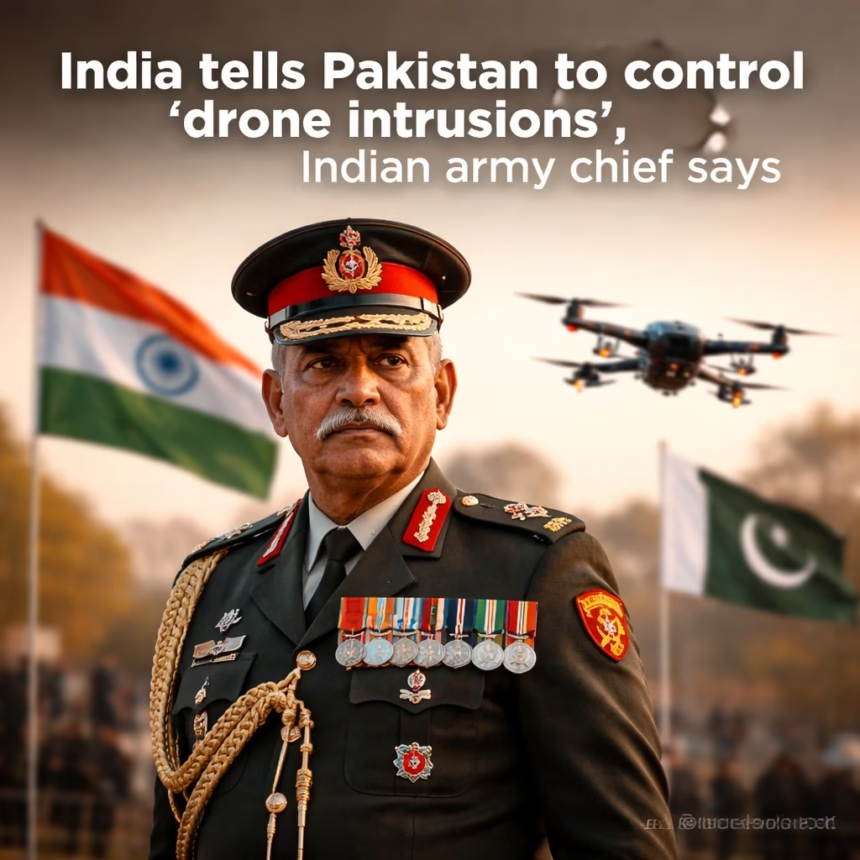
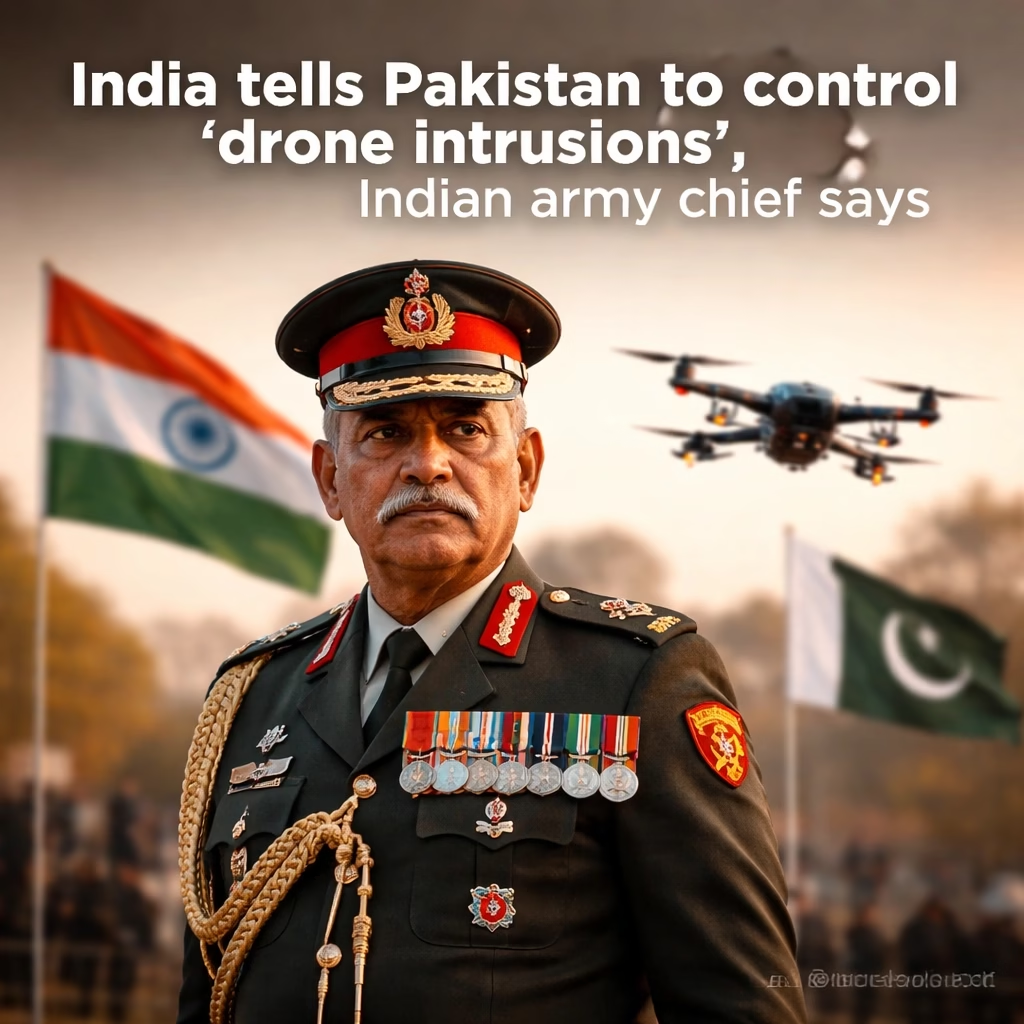
India's Army Chief, General Manoj Pande, has recently issued a strong admonition to Pakistan, urging its military to exert greater control over persistent drone intrusions originating from its territory. These aerial incursions, frequently observed across the Line of Control (LoC) and the international border, pose significant security challenges and threaten regional stability. The direct communication underscores India's growing concern over the escalating use of unmanned aerial vehicles for illicit activities.
Background: A Troubled Frontier and Evolving Threats
India and Pakistan share a deeply complex and often volatile relationship, particularly concerning the disputed region of Jammu and Kashmir. This geopolitical tension frequently manifests in various forms of cross-border transgressions, but the nature of these breaches has evolved significantly with the proliferation of drone technology.
While traditional cross-border infiltration by militants has been a persistent issue for decades, the past few years, particularly since 2019, have witnessed a marked increase in drone sightings reported by Indian security forces. This shift represents a new dimension to border security challenges.

These drones are not merely instruments of surveillance. Investigations have frequently revealed their deployment for nefarious purposes, including the smuggling of narcotics, weapons, and even currency. Such illicit activities are often linked to terror financing and broader destabilizing efforts within India, aiming to fuel insurgency and organized crime.
The primary areas of concern for these aerial intrusions include the Line of Control (LoC) in Jammu and Kashmir, which serves as the de facto border, as well as the international border spanning states like Punjab and Rajasthan. The varied terrain, from mountainous regions to plains, and demographic patterns in these regions make them particularly susceptible to such aerial operations.
Notable past incidents highlight the gravity of the threat. In June 2021, a drone attack on the Jammu Air Force station marked the first instance of drones being used for an offensive attack in India. This incident underscored the potential for drones to carry out targeted strikes. Numerous other instances, particularly in Punjab, have seen drones dropping consignments of heroin, pistols, and grenades, subsequently recovered by the Border Security Force (BSF) and state police, revealing the extensive network of smuggling operations.
More Read

In response to this evolving threat, Indian security agencies have ramped up their counter-drone capabilities. This includes deploying advanced radar systems, jammers, and kinetic interception technologies designed to detect, track, and neutralize hostile drones. Border guarding forces have also increased vigilance, establishing strict protocols for the immediate engagement of suspicious aerial objects.
Key Developments: India’s Firm Stance and Pakistan’s Evasion
General Manoj Pande, in a recent address, articulated India's unequivocal demand for Pakistan to rein in these drone activities. His statement emphasized that such intrusions are not isolated incidents but a consistent and deliberate pattern, necessitating a more robust and accountable response from the Pakistani side. He underscored India's resolve to counter these threats effectively and decisively.
Indian intelligence reports indicate a significant surge in the number of drone sightings and interceptions along the western border. There is also growing concern about the increasing sophistication of these drones, with some models capable of carrying heavier payloads, operating at higher altitudes, and exhibiting enhanced stealth features, making detection and interception more challenging for ground-based systems.
The payloads intercepted from these drones reveal a diverse and dangerous intent. While drug smuggling remains a primary concern, security forces have also recovered high-grade weapons, ammunition, and satellite phones. This suggests a broader agenda potentially linked to arming militants, facilitating communication for terror networks, and injecting illicit funds into the region.
The Indian government has consistently maintained that these drone activities constitute a clear violation of its airspace and international norms. It directly implicates Pakistan in supporting cross-border illicit activities and terror-related operations. Diplomatic channels have been utilized repeatedly to convey these grave concerns, though often met with denial or insufficient action from the Pakistani establishment.
Historically, Pakistan has either outright denied involvement in such incidents or attributed them to "non-state actors," often without providing credible evidence or taking discernible action to curb them. This consistent lack of accountability further exacerbates tensions and frustrates India's efforts to de-escalate the situation through dialogue.

The ongoing drone intrusions have spurred a technological arms race along the border. India is actively investing in indigenous counter-drone solutions, including advanced drone detection systems, signal disruptors, and even anti-drone guns. The objective is to create a multi-layered defense mechanism capable of neutralizing threats across the electromagnetic spectrum and kinetic domains.
Impact: Security, Society, and Diplomacy Under Strain
The most immediate and critical impact of persistent drone intrusions is the heightened security threat they pose to military installations, critical infrastructure, and civilian populations residing near the border. The potential for drones to be used for reconnaissance, targeted attacks, or dropping improvised explosive devices (IEDs) remains a constant and grave worry for security agencies.
Beyond direct security implications, the influx of narcotics through drone smuggling has a devastating socio-economic impact, particularly in border states like Punjab. It fuels addiction among the youth, contributes significantly to organized crime, and diverts substantial law enforcement resources away from other crucial areas. The flow of illegal weapons also destabilizes regional security, empowering criminal elements and terror groups.
For residents in border villages, life is lived under perpetual apprehension. The unsettling sound of drones overhead, coupled with an increased security presence and the fear of collateral damage from counter-drone operations, disrupts their daily routines and economic activities, particularly agriculture, which is a primary livelihood in these areas.
These persistent intrusions further strain the already fragile diplomatic relations between India and Pakistan. Each incident adds to a growing list of grievances, making constructive dialogue on other bilateral issues, such as trade or cultural exchange, more challenging and often impossible. The trust deficit deepens with every unaddressed violation.
Indian security forces are compelled to dedicate significant resources, manpower, and technology to counter the drone threat. This includes continuous patrolling, setting up observation posts, and deploying expensive anti-drone systems. Such diversions consume resources that could otherwise be allocated to other operational priorities or modernization efforts.
While not always overtly vocal, the international community observes these developments closely. Persistent cross-border activities, whether by drones or other means, contribute to the perception of South Asia as a volatile region, potentially impacting foreign investment, tourism, and regional cooperation initiatives among SAARC nations.
What Next: Fortifying Defenses and Sustaining Pressure
In the immediate future, India is expected to further bolster its border surveillance mechanisms. This includes deploying more advanced ground-based radars, integrating aerial surveillance assets such as aerostats and tethered drones, and increasing the number of anti-drone systems along vulnerable stretches of the border. The overarching objective is to create an impenetrable "drone dome" over critical areas.
There will be continued emphasis on indigenous research and development (R&D) to develop cutting-edge counter-drone technologies. This ranges from sophisticated electronic warfare systems capable of jamming drone signals to directed energy weapons and even drone-killing drones. Collaboration with international partners possessing advanced counter-drone capabilities may also be explored to accelerate technological acquisition.
India will likely continue to exert diplomatic pressure on Pakistan through various bilateral and multilateral forums. While direct high-level talks remain challenging given the current climate, channels like Director General of Military Operations (DGMO) hotlines and High Commission interactions will be utilized to reiterate concerns and demand concrete action from Pakistan to curb these activities.
Strengthening the "eyes and ears" on the ground will be crucial. This involves greater engagement with border communities, educating them about the drone threat, and establishing robust reporting mechanisms to ensure timely intelligence sharing with security forces. Local populations can serve as the first line of defense against aerial incursions.
The risk of escalation remains a significant concern. A major incident involving a drone, particularly one causing significant casualties or damage to critical infrastructure, could trigger a more robust kinetic response from India, potentially leading to a dangerous cycle of retaliation and further destabilization of the region.
Enhanced intelligence gathering, sharing, and predictive analysis will be key to preempting drone intrusions. Understanding the patterns, launch points, and operational methodologies of these drones, as well as the networks supporting them, will allow for more targeted and effective counter-operations, moving beyond reactive measures to proactive deterrence.
India may also seek greater international cooperation in combating cross-border terrorism and illicit trafficking, highlighting the regional and global implications of Pakistan-origin drone activities. This could involve sharing intelligence and best practices with friendly nations to develop a coordinated approach against this transnational threat.