Inflation Eases in November, But Still Above RBA Targets
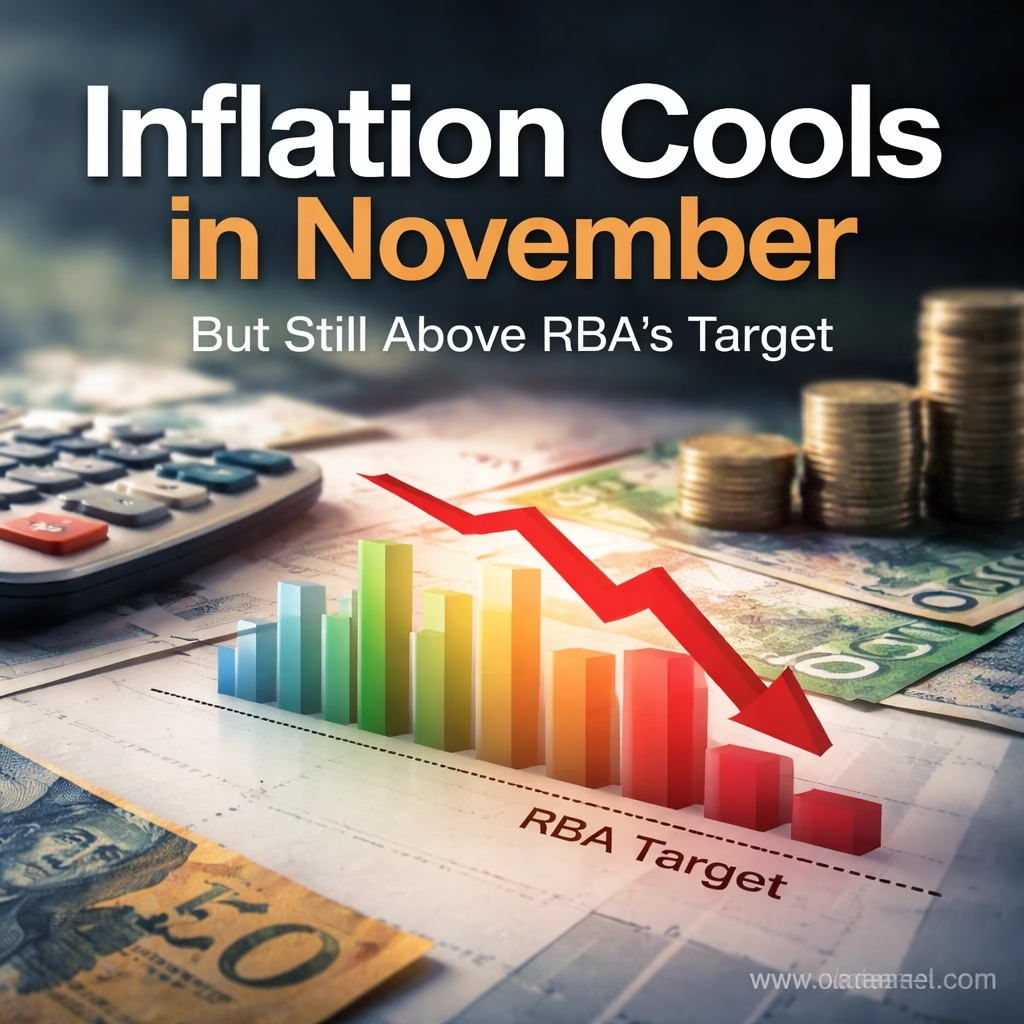
Australia's inflation rate slowed in November, marking a potential easing in the cost-of-living pressures that have plagued households and businesses. However, the latest figures remain above the Reserve Bank of Australia's (RBA) target range, leaving room for further monetary policy adjustments.
Background: Rising Inflation Over the Past Year
Over the past year, Australia has seen a surge in inflation, driven by factors such as supply chain disruptions, rising energy costs, and strong consumer demand. The RBA has been closely monitoring these trends, implementing a series of interest rate hikes to curb inflation and stabilize the economy.
In response to the rising inflation, the RBA has lifted the official cash rate from a historic low of 0.1% to 4.35% over the past 18 months. This aggressive tightening has been aimed at cooling demand and bringing inflation back within the bank's 2-3% target range.
Key Developments: November Inflation Data
The latest consumer price index (CPI) data, released by the Australian Bureau of Statistics (ABS), shows that the annual inflation rate eased to 4.3% in November. This is down from 5.4% in the previous month, indicating a slowdown in price growth.
However, the RBA's target range remains elusive, with the annual inflation rate still above the desired 2-3% range. The November data also revealed that underlying inflation remained stubbornly high, with the trimmed mean measure—often seen as a better indicator of future inflation—coming in at 4.6%.
Impact: Who Is Affected?
The high cost of living continues to weigh heavily on Australian households, particularly those on fixed incomes or with significant debt. Rising rents, groceries, and energy costs have all contributed to the financial strain.
For businesses, the prolonged period of high inflation has led to increased operational costs, reduced consumer spending, and uncertainty about future economic conditions. Small and medium-sized enterprises (SMEs) are particularly vulnerable, as they often lack the financial buffers to absorb sudden cost increases.
What Next: Will the RBA Ease Policy?
While the November inflation data suggests a potential easing of price pressures, the RBA remains cautious. The central bank has signaled that it will continue to assess economic conditions before making any further policy decisions.
Analysts predict that the RBA may hold off on further interest rate hikes in the near term, especially if inflation continues to trend downward. However, the possibility of another rate increase remains on the table if inflation fails to cool as expected.
The next key milestone will be the release of the RBA's monetary policy statement in February 2024, where the bank is expected to provide further guidance on its outlook for inflation and interest rates.
Conclusion: A Mixed Outlook
The latest inflation data offers a glimmer of hope, but the economic outlook remains uncertain. While the slowdown in price growth is a positive sign, the RBA's target range is still out of reach. Households and businesses will be watching closely as the central bank navigates the delicate balance between taming inflation and supporting economic growth.