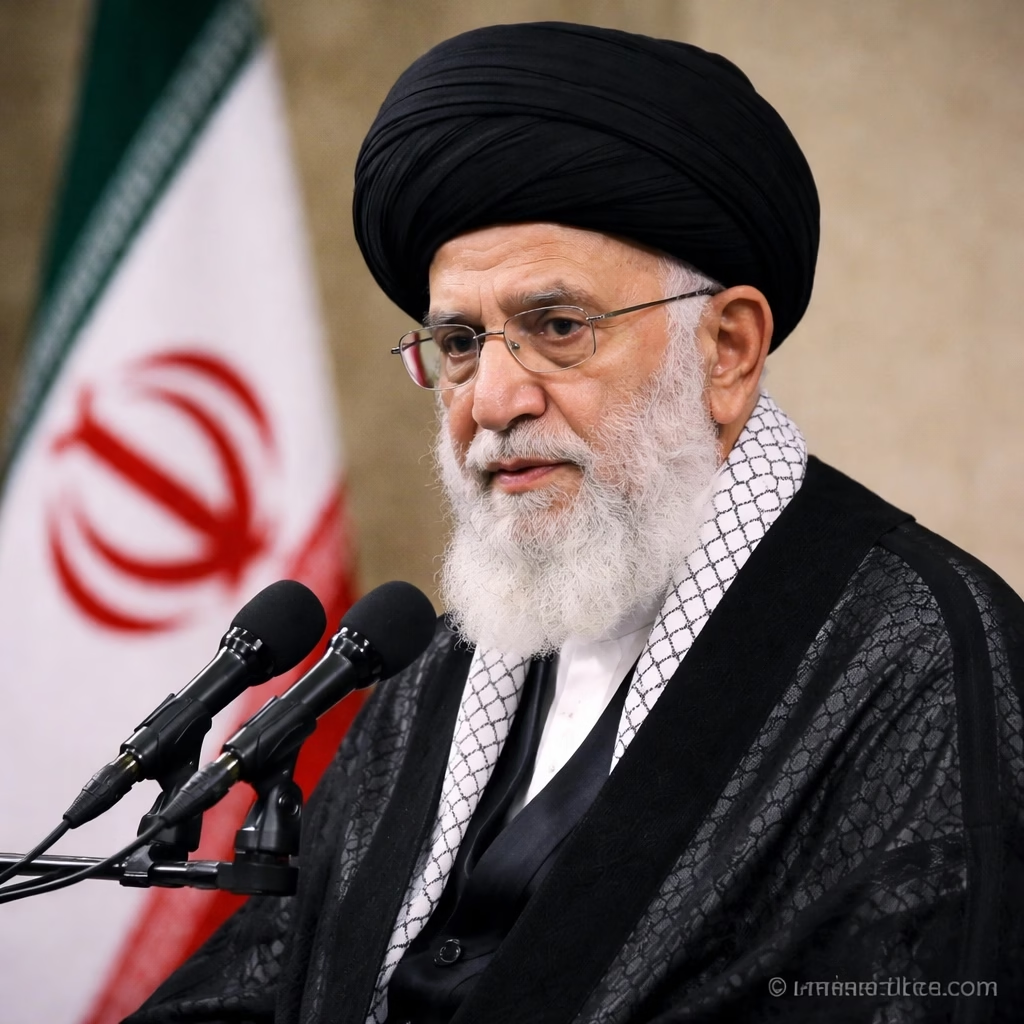
Iran's Supreme Leader, Ayatollah Ali Khamenei, recently acknowledged that "thousands" of people were killed during widespread anti-government protests that swept across the nation from late 2022 into early 2023. This unprecedented admission marks a significant shift in the official narrative surrounding the deadliest wave of unrest in the Islamic Republic's history, following months of state-led denial and minimization of casualties. The statement has reignited calls for accountability and justice for the victims and their families across Iran.
Background: A Nation Erupts
The protests, which quickly evolved into a nationwide uprising, were ignited by the death of Mahsa Amini, a 22-year-old Kurdish woman, on September 16, 2022. Amini had been detained three days prior by Iran's morality police in Tehran for allegedly violating the country's strict dress code, specifically the mandatory hijab law. Her family reported that she died in custody due to injuries sustained from police brutality, a claim vehemently denied by authorities who attributed her death to a pre-existing medical condition.
The Spark: Mahsa Amini’s Death
Amini's death became a potent symbol of state repression and gender discrimination, immediately triggering demonstrations in her hometown of Saqqez in Kurdistan province. Within days, these localized protests escalated, spreading rapidly to major cities like Tehran, Esfahan, Shiraz, and Mashhad, and eventually encompassing all 31 provinces of Iran. The initial focus on women's rights and the compulsory hijab quickly broadened to encompass wider grievances against the clerical establishment, including economic hardship, political repression, and a lack of fundamental freedoms.
Nationwide Unrest and “Woman, Life, Freedom”
The rallying cry "Woman, Life, Freedom" (Jin, Jiyan, Azadi) resonated deeply, uniting diverse segments of Iranian society, including women, students, ethnic minorities, and even some members of the working class. Universities became hotbeds of dissent, with students staging sit-ins and clashing with security forces. Schools also saw participation, with young girls removing their headscarves in defiance. The protests were characterized by their leaderless nature and reliance on social media to organize and disseminate information, often circumventing severe internet restrictions imposed by the government.
State Repression and Initial Official Figures
The Iranian government responded with a brutal crackdown, deploying security forces, including the Islamic Revolutionary Guard Corps (IRGC) and Basij militia, to quell the demonstrations. This response involved widespread arrests, with tens of thousands reportedly detained, and the use of live ammunition, tear gas, and batons against unarmed protesters. Internet access was severely restricted, particularly to platforms like Instagram and WhatsApp, to hinder communication and prevent the spread of protest footage.
More Read

Initially, Iranian state media and officials either downplayed the scale of the protests or attributed casualties to "foreign enemies" and "rioters." Official figures on deaths were often vague, inconsistent, or significantly lower than those reported by human rights organizations. For instance, in December 2022, General Amirali Hajizadeh of the IRGC admitted to over 300 deaths, while other officials cited figures closer to 200, consistently blaming external actors for the violence. These figures stood in stark contrast to estimates from international bodies and activist groups.
Key Developments: The Supreme Leader’s Acknowledgment
The recent statement by Ayatollah Ali Khamenei represents a significant departure from this previous narrative of denial. While the exact date and context of his full remarks are subject to official reporting, his acknowledgment of "thousands" of deaths marks the first time such a high-ranking official has conceded the extensive human cost of the unrest.
The Supreme Leader’s Address
Khamenei's statement, delivered during a public address or meeting, reportedly referred to the events as "riots" instigated by foreign powers, a long-standing government trope. However, crucially, he also spoke of the "thousands" of people who died, differentiating between those he considered "martyrs" (security forces and loyalists) and those who were "innocent victims" caught in the crossfire, or even "rioters" who perished. This nuanced, albeit still regime-centric, framing suggests an attempt to manage the narrative while confronting the undeniable reality of mass casualties.
More Read

Contrasting Figures from Human Rights Groups
Khamenei's admission, while significant, still falls short of figures reported by independent human rights organizations. For example, Human Rights Activists in Iran (HRANA), a U.S.-based group, reported in late 2023 that at least 527 protesters, including 71 minors, were killed by security forces. The group also documented the deaths of 70 security personnel. Amnesty International and other groups have provided similar figures, consistently placing the number of protester deaths in the hundreds, with some estimates reaching well over 600. The Supreme Leader's use of "thousands" could potentially encompass both protesters and security forces, or it might be an implicit recognition of an even higher overall toll than previously acknowledged by the state.
Implications of the Acknowledgment
This acknowledgment, regardless of its exact framing, is a crucial development. It implicitly validates the claims of numerous families who lost loved ones and the reports of international bodies. It also suggests that the internal pressure and the sheer scale of the events made continued outright denial untenable for the Iranian leadership. The motivation behind such an admission could range from an attempt to regain some public trust, to preempting further international scrutiny, or even to setting the stage for a revised official history of the protests.
Impact: A Society Grapples with Loss
The Supreme Leader's admission has profound implications for various segments of Iranian society and the country's standing on the international stage.
Victims’ Families and the Quest for Justice
For the families of those killed, the acknowledgment brings a complex mix of emotions. While it offers a form of official recognition of their immense loss, it also intensifies the demand for justice and accountability. Many families have faced intimidation, harassment, and even arrest for speaking out about their loved ones' deaths. The question remains whether this admission will lead to independent investigations, compensation, or legal recourse against those responsible for the violence. Without concrete steps towards justice, the acknowledgment may be seen as hollow or a cynical attempt to deflect criticism.
Government Credibility and Internal Dynamics
The shift in narrative could be an attempt to repair the government's credibility, which was severely damaged by months of denial and the brutal crackdown. However, it also highlights the disconnect between the official rhetoric and the lived experiences of millions of Iranians. Internally, the admission might spark further debates or divisions within the political establishment regarding the handling of dissent and the future direction of the country. Hardliners might view it as a concession, while others might see it as a necessary step towards stability.
International Scrutiny and Human Rights
Internationally, the admission is likely to intensify calls for accountability from human rights organizations, the United Nations, and Western governments. It provides further evidence for ongoing investigations into human rights abuses in Iran and could strengthen arguments for sanctions or other diplomatic pressures. The UN Human Rights Council's Fact-Finding Mission on Iran, established in November 2022, will likely incorporate this statement into its findings, further scrutinizing the state's actions.
More Read
Societal Trauma and Divisions
The protests and the subsequent crackdown have left deep scars on Iranian society. The Supreme Leader's acknowledgment underscores the scale of the trauma experienced by countless individuals and communities. It also risks exacerbating existing societal divisions, particularly between those who supported the protests and those who remained loyal to the state. Healing these wounds will require more than just an admission of casualties; it will necessitate genuine efforts towards reconciliation and reform.
What Next: Path Towards Accountability?
The Supreme Leader's unprecedented acknowledgment opens a new, albeit uncertain, chapter in the aftermath of the widespread protests. Several potential developments and milestones could emerge in the coming months.
Calls for Independent Investigations
Following Khamenei's statement, there will undoubtedly be renewed and intensified calls from international bodies, human rights organizations, and Iranian civil society for independent, transparent investigations into the deaths. These calls will likely demand a comprehensive accounting of all casualties, identifying those responsible for the violence, and ensuring that perpetrators are held accountable under national and international law. The UN Fact-Finding Mission will be crucial in this regard, with its reports expected to shed further light on the events.
Government Response and Potential Reforms
The Iranian government faces a critical juncture. It could choose to follow up on the Supreme Leader's admission with concrete actions, such as establishing an official inquiry committee, offering compensation to victims' families, or even granting pardons to some of the thousands of individuals arrested during the protests. Such moves, however, would represent a significant shift from its historical approach to dissent. Alternatively, the government might attempt to control the narrative further, perhaps by blaming specific low-level officials while maintaining the overall stance that the protests were foreign-instigated. Any genuine reform would likely be met with skepticism both domestically and internationally.
Future of Protests and Dissent
The impact on future protest movements is complex. On one hand, the acknowledgment of deaths could embolden some segments of the population, validating their grievances and pushing them to demand further change. On the other hand, the sheer scale of the crackdown and the high human cost might deter others, reinforcing a climate of fear. The government's subsequent actions, or lack thereof, regarding justice and accountability will heavily influence the calculus of future dissent.
International Pressure and Diplomacy
International pressure on Iran regarding its human rights record is expected to continue, and possibly intensify. The Supreme Leader's admission provides further ammunition for countries and organizations advocating for stronger sanctions or other diplomatic measures. The global community will closely watch for any signs of genuine reform or continued repression, shaping future engagement with Tehran. The ongoing nuclear negotiations and regional security concerns will also continue to intersect with the human rights agenda, creating a complex diplomatic landscape.
Economic Challenges and Societal Unrest
Underlying economic challenges, including high inflation, unemployment, and corruption, continue to fuel popular discontent in Iran. Without addressing these root causes, the potential for future unrest remains high. The memory of the recent protests and the acknowledgment of thousands of deaths will linger, influencing the social and political fabric of the nation for years to come. The path forward for Iran remains fraught with challenges, as it grapples with the legacy of a tumultuous period and the demands for greater accountability and freedom.