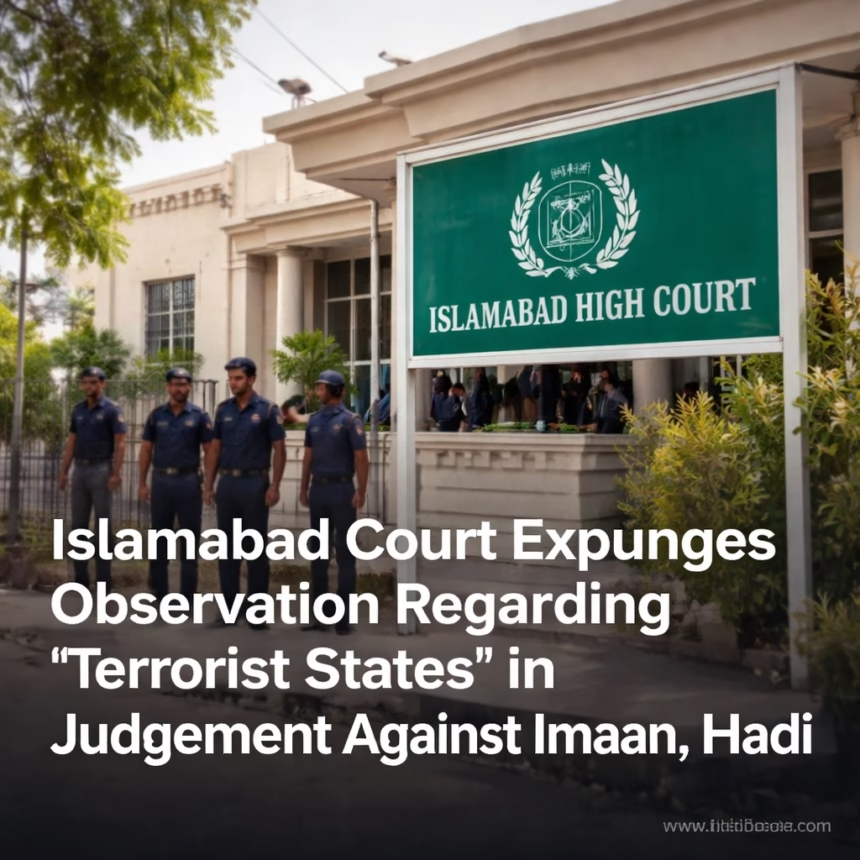
Court Backs Down on Controversial Term in Imaan Mazari Case
An Islamabad court has retracted a controversial observation regarding "terrorist states" from its judgment concerning activist Imaan Mazari and lawyer Hadi Abidi. The recantation, issued on May 16, 2024, follows widespread criticism and concerns about potential misinterpretations of the court's earlier remarks.
Background
Imaan Mazari, a prominent human rights activist, and lawyer Hadi Abidi were convicted on charges of inciting sedition and promoting anti-state activities. The verdict was delivered on March 22, 2024, by a special court in Islamabad. The case stemmed from a 2020 protest against the alleged involvement of Pakistan in the war in Ukraine and its perceived support for Russia. Mazari and Abidi appeared in a video clip where they questioned the Pakistani government’s stance on the conflict and raised concerns about the country’s foreign policy.
During the initial judgment, the court included an observation referencing "terrorist states" in relation to the individuals’ actions and alleged connections. This phrase ignited immediate controversy, sparking debate about the court's interpretation of international law and its potential impact on freedom of expression. Critics argued the term was overly broad and carried significant legal implications, potentially impacting individuals and entities linked to countries deemed "terrorist."
Key Developments
The recantation of the observation came after days of intense scrutiny and legal challenges. Several legal experts and civil society organizations raised concerns about the potentially chilling effect the phrase could have on dissent and free speech within Pakistan. They argued the term lacked clear legal definition and could be used to stifle legitimate criticism of government policies.

The recantation was formally issued by the court registrar on May 16, 2024, stating that the observation regarding "terrorist states" was a "misinterpretation" and was not intended to be construed as a legally binding statement. The court clarified that its judgment focused solely on the individuals' actions and their alleged violation of Pakistan's law. The amended judgment explicitly removes the problematic phrase.
Impact
The recantation is expected to alleviate concerns regarding the broader implications of the initial judgment. It significantly reduces the potential for misinterpretation and prevents the misuse of the "terrorist states" phrase to unfairly target individuals or entities. However, the conviction of Mazari and Abidi on the original charges remains in place.
More Read

Human rights advocates have cautiously welcomed the development, emphasizing the importance of protecting freedom of expression and ensuring judicial pronouncements are clear, precise, and avoid potentially harmful generalizations. They continue to advocate for the complete acquittal of Mazari and Abidi and the repeal of laws that restrict dissent.
What Next
The recantation does not overturn the conviction itself. Imaan Mazari and Hadi Abidi are still facing the consequences of the original judgment, including potential fines or imprisonment. They are expected to continue pursuing legal avenues to challenge their convictions.
Potential Appeals
Mazari and Abidi have the right to appeal the decision to higher courts. The next step could involve appealing to the High Court in Islamabad, arguing that the initial judgment was flawed and violated fundamental rights. The timeline for filing an appeal is typically within 30 days of the judgment's date.
Ongoing Advocacy
Civil society organizations and international human rights groups are expected to continue their advocacy efforts to secure the complete acquittal of Mazari and Abidi and to promote reforms in Pakistan's legal framework to protect freedom of expression and ensure fair trials.