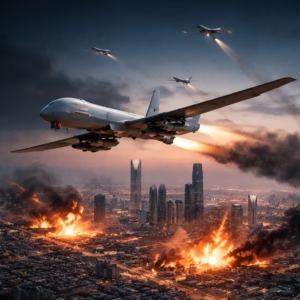
Red Alert in Jerusalem: Israel Braces for Potential US-Iran Showdown
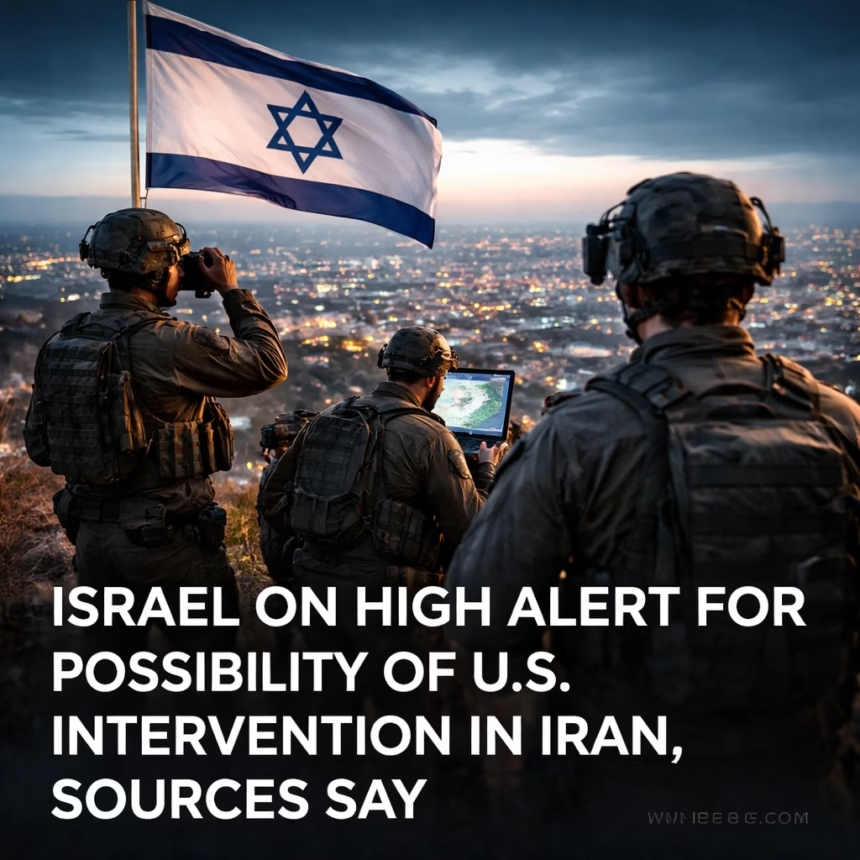
Israel has reportedly elevated its national security posture, preparing for potential fallout from a possible United States military intervention against Iran. The heightened alert reflects deep concerns in Jerusalem regarding regional stability and the immediate implications for Israeli security, as tensions between Washington and Tehran escalate in recent weeks.
Background: A Decades-Long Shadow
The current state of apprehension is rooted in a complex, decades-long rivalry involving the United States, Iran, and Israel. Relations between Washington and Tehran deteriorated sharply following the 1979 Iranian Revolution and the subsequent hostage crisis at the US embassy. Decades of sanctions, aimed at curbing Iran's nuclear ambitions and support for regional proxies, have punctuated this contentious relationship.
The 2015 Joint Comprehensive Plan of Action (JCPOA), a multilateral agreement to limit Iran's nuclear program in exchange for sanctions relief, offered a brief period of de-escalation. However, the US withdrawal from the deal in 2018 under the Trump administration, followed by a "maximum pressure" campaign of renewed sanctions, reignited tensions. The Biden administration's efforts to revive the JCPOA have largely stalled, leaving the diplomatic path uncertain.
For Israel, Iran's nuclear program represents an existential threat, a sentiment frequently articulated by successive Israeli governments. Beyond nuclear proliferation, Israel views Iran's extensive network of proxy forces—including Hezbollah in Lebanon, various militias in Syria and Iraq, Hamas and Palestinian Islamic Jihad in Gaza, and the Houthi movement in Yemen—as a direct challenge to its security. Israel has long pursued a "campaign between wars," conducting numerous airstrikes in Syria and other covert operations to degrade Iranian military infrastructure and prevent advanced weapons transfers to proxies.

Recent months have seen a significant uptick in regional hostilities. Attacks on US forces in Iraq and Syria by Iran-aligned groups, often met with US retaliatory strikes, have become more frequent. Maritime incidents in the Persian Gulf and Red Sea, attributed to both Iranian and proxy forces, have further destabilized vital shipping lanes. These incidents, coupled with intelligence assessments suggesting advancements in Iran's nuclear enrichment capabilities, have brought the US-Iran confrontation to a critical juncture.
Key Developments: Shifting Sands of Conflict
The immediate trigger for Israel's heightened alert stems from a convergence of intelligence assessments and visible military posturing. Reports from various intelligence agencies indicate a growing internal debate within the US administration regarding potential military options against Iran, particularly concerning its nuclear facilities or its regional proxy network.
US Military Reinforcements in the Region
Over recent weeks, there have been noticeable movements of US military assets into the Middle East. This includes the deployment of additional naval vessels, potentially an aircraft carrier strike group, to the Persian Gulf and surrounding waters. Furthermore, air defense systems and advanced fighter jets have been reinforced at US bases in the region. These deployments are widely interpreted as a deterrent against Iranian aggression, but also as a preparatory measure for potential offensive operations, should diplomatic efforts fail.
More Read

Israel’s Defensive Posture
In response, Israel has reportedly intensified its own defensive preparations. This includes reviewing and updating operational plans for air defense, particularly concerning its multi-layered missile defense systems like Iron Dome, David’s Sling, and Arrow. Military exercises, simulating responses to missile and drone attacks from multiple fronts, have been conducted with increased frequency. Civilian defense protocols are also being re-evaluated, with authorities ensuring readiness for potential emergencies.
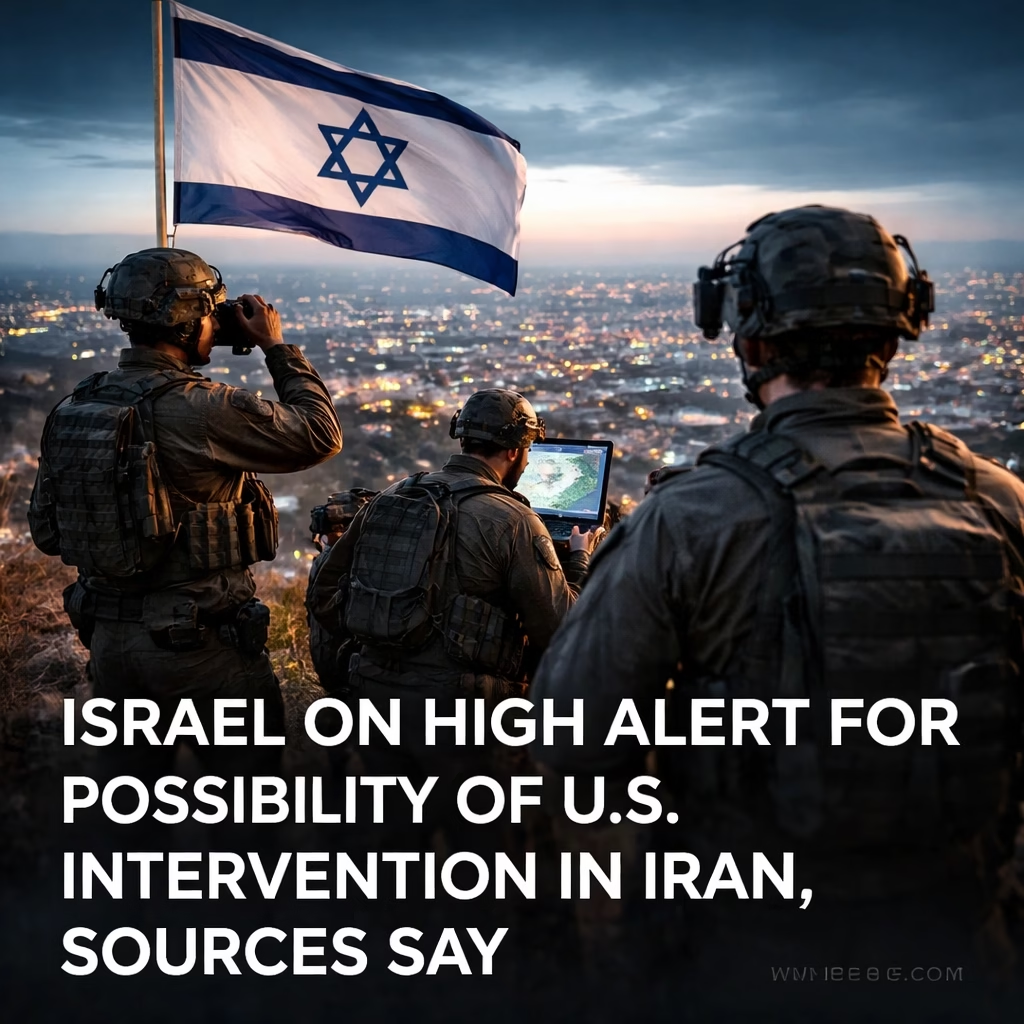
Statements from senior Israeli defense officials, while often guarded, have emphasized the country’s readiness to defend itself against any threat, regardless of external intervention. This includes maintaining a credible offensive capability, should pre-emptive action be deemed necessary to protect national interests.
Heightened Proxy Activity
Concurrently, there has been an observable increase in rhetoric and limited operational activity from Iran-backed groups across the region. This ranges from missile and drone launches by the Houthis in Yemen targeting commercial shipping, to increased patrols and surveillance by Hezbollah along Israel’s northern border. These actions are seen as a demonstration of readiness for potential retaliation against either US or Israeli targets, should a military confrontation erupt.
Impact: A Region on the Brink
A US military intervention in Iran, and the subsequent Israeli response, would send immediate and profound shockwaves across the Middle East and beyond, affecting multiple stakeholders.
Impact on Israel
For Israel, the primary concern is direct retaliation from Iran and its proxies. This could manifest as barrages of missiles and drones targeting Israeli cities and strategic infrastructure from Iran, Lebanon, Syria, and potentially Gaza. Such an escalation would trigger widespread civilian disruption, significant economic costs, and potentially a protracted conflict on multiple fronts. The social fabric of the nation would be severely tested, and the political landscape could be dramatically reshaped.

Impact on the United States
A military conflict with Iran carries substantial risks for the United States. It could lead to a prolonged engagement, potentially drawing US forces into a complex and costly war. Economic repercussions, including a sharp spike in global oil prices and disruption to international trade routes, would be immediate. Furthermore, it could strain US alliances, particularly with European nations that advocate for a diplomatic solution, and potentially empower rival global powers.
Impact on Iran
For Iran, a US military strike would inflict significant damage on its military capabilities, nuclear infrastructure, and potentially its economy. Such an event could destabilize the current regime, potentially igniting internal dissent or consolidating hardliner control. The human cost would be immense, and the country’s regional standing could be irrevocably altered, either through further isolation or by galvanizing resistance.
Regional and Global Repercussions
Neighboring countries like Saudi Arabia, the United Arab Emirates, and Jordan would face immense pressure and potential spillover effects, including refugee flows, economic instability, and the risk of becoming collateral damage. The Strait of Hormuz, a critical choke point for global oil shipments, would likely be disrupted, sending energy markets into turmoil worldwide. The global economy, already facing headwinds, would confront a new layer of uncertainty and volatility, affecting supply chains and consumer prices across continents.
What Next: Pathways Through Peril
The immediate future remains highly uncertain, with several potential pathways forward. Diplomatic efforts, though currently stalled, are not entirely abandoned. Back-channel communications and renewed mediation attempts by international actors could still emerge as a final effort to avert conflict. However, the window for such solutions appears to be narrowing.
Militarily, both the US and Israel are expected to continue their demonstrations of force, aiming to deter escalation while maintaining readiness. Further joint military exercises or intelligence-sharing initiatives could be announced to underscore alliance solidarity. Iran, for its part, may continue to accelerate its nuclear program or intensify proxy activities as leverage, further complicating de-escalation efforts.
Key milestones to watch include any official statements from the US administration regarding its policy on Iran, particularly after high-level security consultations. Similarly, any public declarations or visible mobilizations from Israeli defense authorities will signal the perceived imminence of a threat. The international community remains on high alert, hoping for a diplomatic breakthrough while bracing for the profound implications of a potential military confrontation in one of the world's most volatile regions.