Rising Dragon? Japan's Military Shift Stirs Regional Tensions
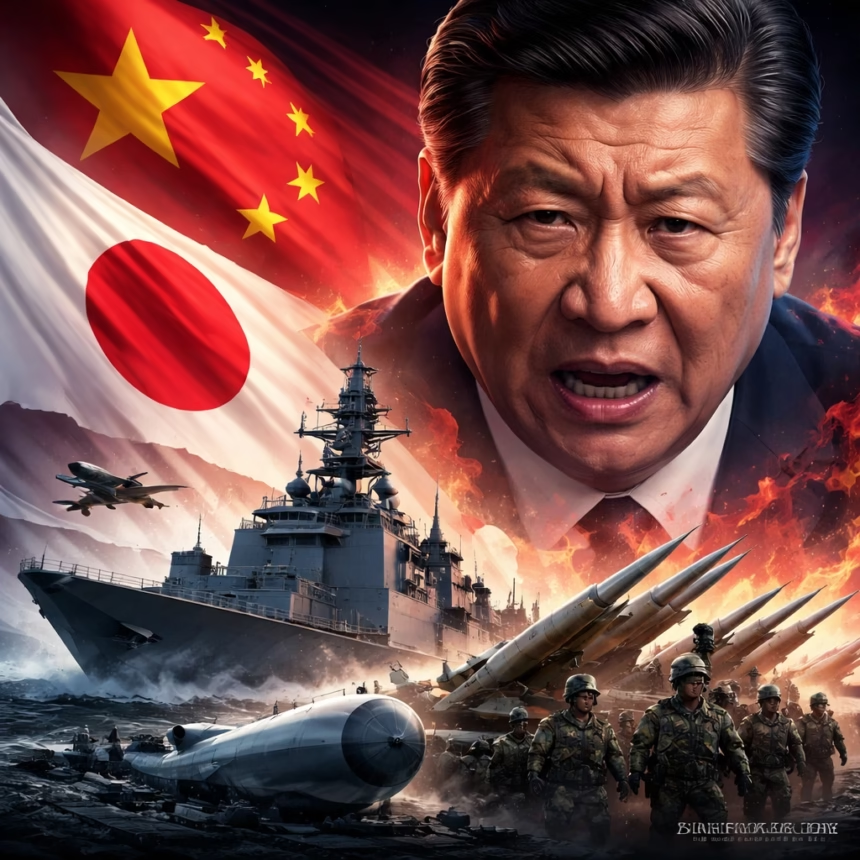
Japan is significantly expanding its defense capabilities in response to escalating security concerns, particularly regarding China and North Korea. This move, announced in March 2023 and gaining momentum throughout 2024, has sparked considerable debate and apprehension across East Asia, especially in Beijing.
Background
Post-World War II, Japan’s constitution, particularly Article 9, renounced war as a means of settling international disputes. For decades, Japan relied heavily on the United States for its defense. However, shifting geopolitical dynamics, including China’s growing military assertiveness in the East China Sea and the ongoing tensions on the Korean Peninsula, have prompted a reassessment of Japan’s security posture.
The Liberal Democratic Party (LDP), currently in power, has advocated for constitutional revision to allow for a more robust defense capability. This has been a long-standing, often contentious, political issue in Japan. The change in government in October 2023 further accelerated these discussions.
Key Developments
Japan's defense spending has seen a substantial increase. The 2024 defense budget, approved in January, reached a record 680 billion yen (approximately $4.7 billion USD), a significant jump from previous years. This represents a nearly 20% increase over the previous year's budget.
More Read

A cornerstone of this shift involves acquiring advanced weaponry. Japan plans to invest heavily in missile defense systems, including interceptor missiles capable of countering ballistic threats. They are also procuring long-range cruise missiles, a departure from their historically defensive posture. The acquisition of F-35 fighter jets, a collaboration with the United States, is also proceeding at a rapid pace.
Furthermore, Japan is strengthening its intelligence capabilities and enhancing its cyber defense infrastructure, recognizing the growing importance of these domains in modern warfare.
Impact
China views Japan's military buildup with considerable concern. Beijing has repeatedly expressed reservations about Japan's increased defense spending and its potential to destabilize the region. The Chinese government has characterized Japan's actions as a “rearmament” effort and a continuation of its militaristic past.
More Read

The increased military presence in the East China Sea, particularly around the Senkaku/Diaoyu Islands, has heightened tensions. These islands are claimed by both China and Japan, and frequent naval encounters have raised the risk of accidental escalation.
Regional allies of Japan, including the United States, Australia, and South Korea, are closely monitoring the situation. While these countries have not explicitly criticized Japan's actions, they have emphasized the importance of maintaining regional stability and avoiding actions that could escalate tensions.
What Next
Constitutional Revision
The most significant, and potentially most disruptive, development would be a revision of Article 9 of the Japanese constitution. The LDP has proposed amendments that would allow Japan to more readily participate in collective defense operations and maintain a larger standing army. However, such a revision would require a two-thirds majority in the Japanese parliament, a process fraught with political challenges and public debate. The timing of any potential vote is uncertain.
Further Arms Acquisitions
Japan is expected to continue its procurement of advanced military technologies, including unmanned aerial vehicles (UAVs) and anti-ship missiles. The government has outlined plans for further investment in these areas over the next decade.
Military Exercises and Partnerships
Increased joint military exercises with the United States and other allies are anticipated. These exercises are intended to enhance interoperability and demonstrate a united front against potential threats.
More Read

The situation remains fluid, and the long-term implications of Japan's military shift are still unfolding. The coming months will be crucial in determining the direction of regional security and the potential for increased tensions between Japan and China.