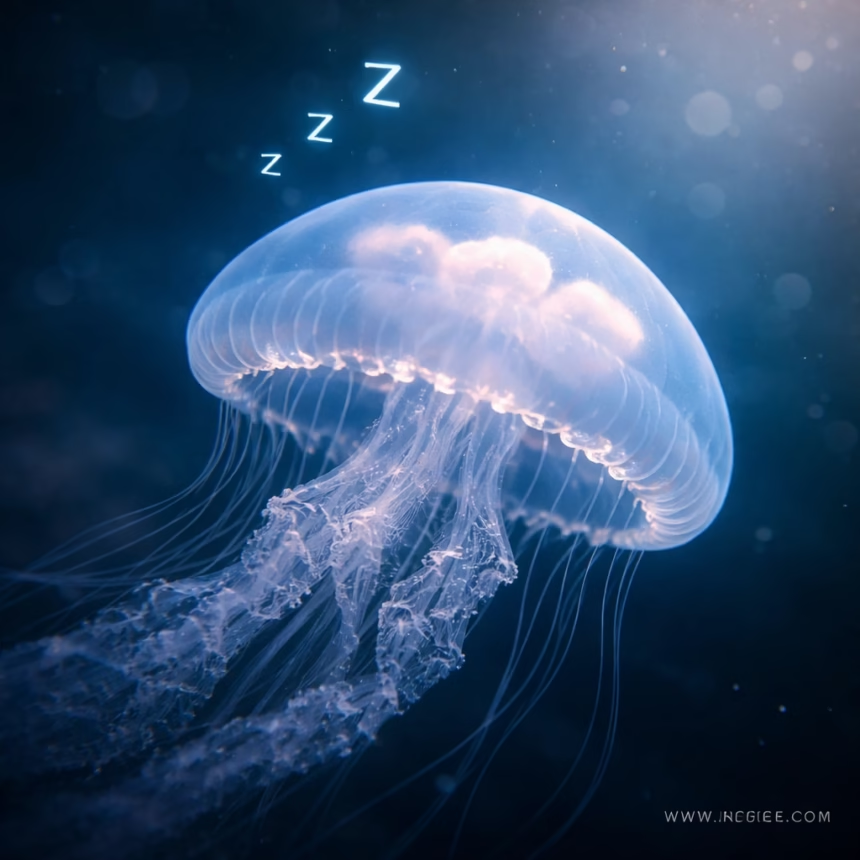
Researchers have discovered that jellyfish, despite lacking a brain, exhibit sleep-like behaviors similar to humans. This finding, published in the journal Current Biology, challenges long-held assumptions about the origins of sleep and its necessity for survival.
Background
For decades, scientists believed only complex animals with centralized nervous systems could experience sleep. Jellyfish, with their decentralized nerve networks, were never considered candidates for sleep behavior. However, studies on moon jellyfish (Aurita aurita) in the Gulf of Mexico revealed patterns of inactivity that closely resemble sleep in vertebrates.
In 2017, a team led by Dr. Ravi Dehejia observed that jellyfish would periodically pause their pulsing movements, a key behavior for locomotion, and enter a state of reduced responsiveness. These periods lasted for hours, paralleling the sleep cycles of mammals. The discovery was initially met with skepticism, as jellyfish were thought to lack the biological machinery for sleep regulation.
Key Developments
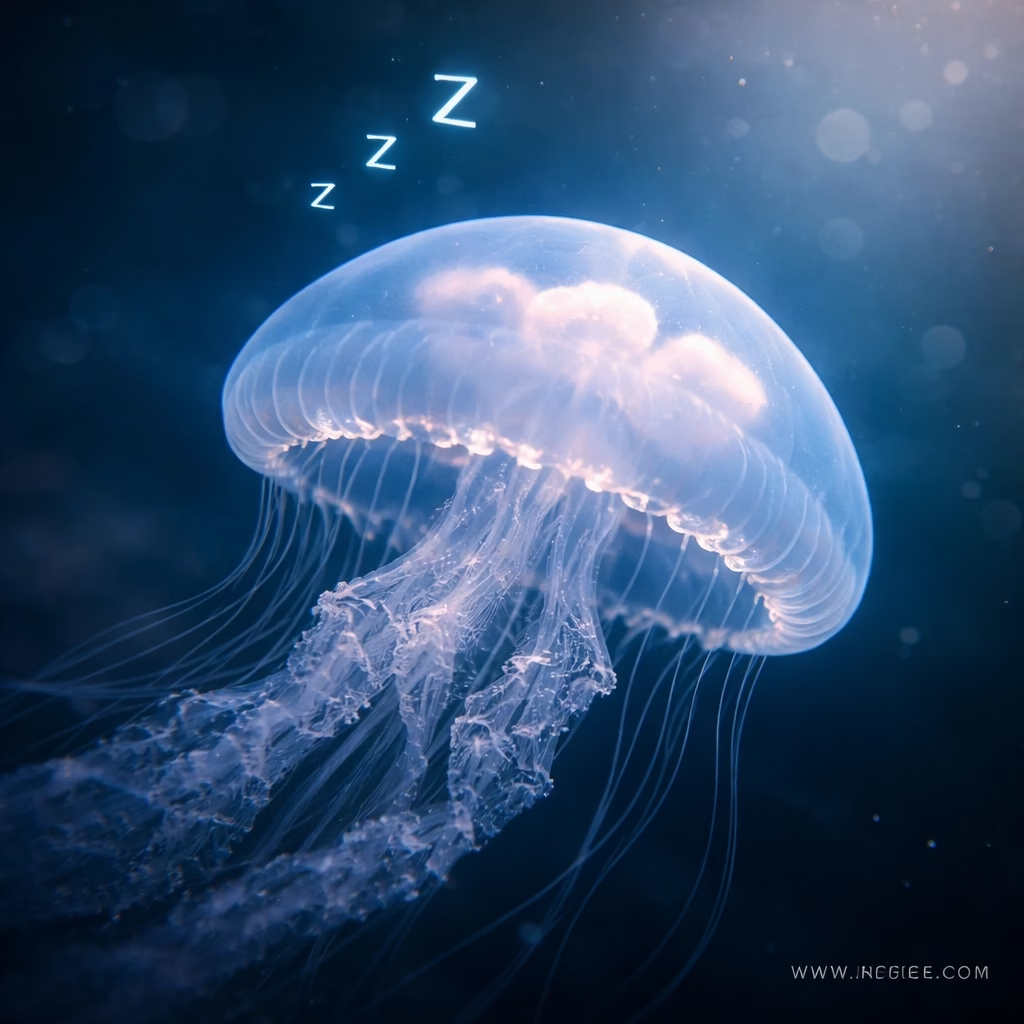
Further research confirmed that these inactive phases were not just passive rest but true sleep. The jellyfish displayed slower pulsation rates, weaker responses to stimuli, and a lower metabolic rate—hallmarks of sleep. Importantly, they would “wake up” when disturbed, demonstrating a reversible state of reduced awareness.
More Read

In a 2020 study, scientists identified specific neurons in the jellyfish’s nerve ring that fire less frequently during these sleep-like states. This suggests that even simple nerve networks can coordinate sleep-like functions. The findings imply that sleep may be an ancient and fundamental trait, predating the evolution of complex brains.
Impact
The discovery has reshaped our understanding of sleep’s evolutionary roots. If jellyfish, with their primitive nervous systems, can sleep, it implies that sleep may be a fundamental survival mechanism, not just a byproduct of brain complexity. This could lead to new insights into sleep disorders in humans and other animals.
Biologists are now re-evaluating sleep in other simple organisms, such as sea anemones and sponges, to see if similar patterns exist. The research also challenges the definition of sleep itself, as scientists must now consider whether decentralized nervous systems can support sleep-like states.
More Read

What Next?
Future studies will explore the molecular and genetic mechanisms behind jellyfish sleep. Researchers hope to uncover whether these simple creatures follow a circadian rhythm or if their sleep is driven by other factors. Additionally, the findings may inspire new bioengineering applications, such as designing sleep-like states in artificial systems.
As scientists continue to unravel the mysteries of jellyfish sleep, one thing is clear: the boundaries of sleep are far more fluid than we once thought. What we once considered a uniquely “human” or “mammalian” trait may, in fact, be a universal feature of life itself.