Strategic Shake-Up: China-Pakistan Dialogue Charts New Course for Regional Power Dynamics
Strategic Shake-Up: China-Pakistan Dialogue Charts New Course for Regional Power Dynamics
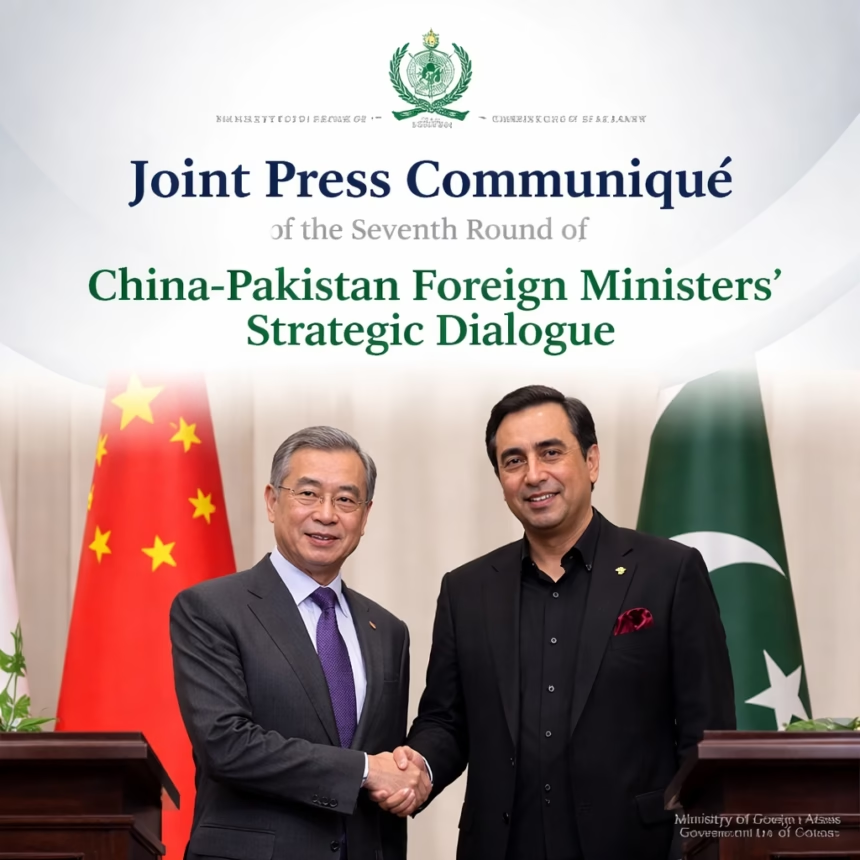
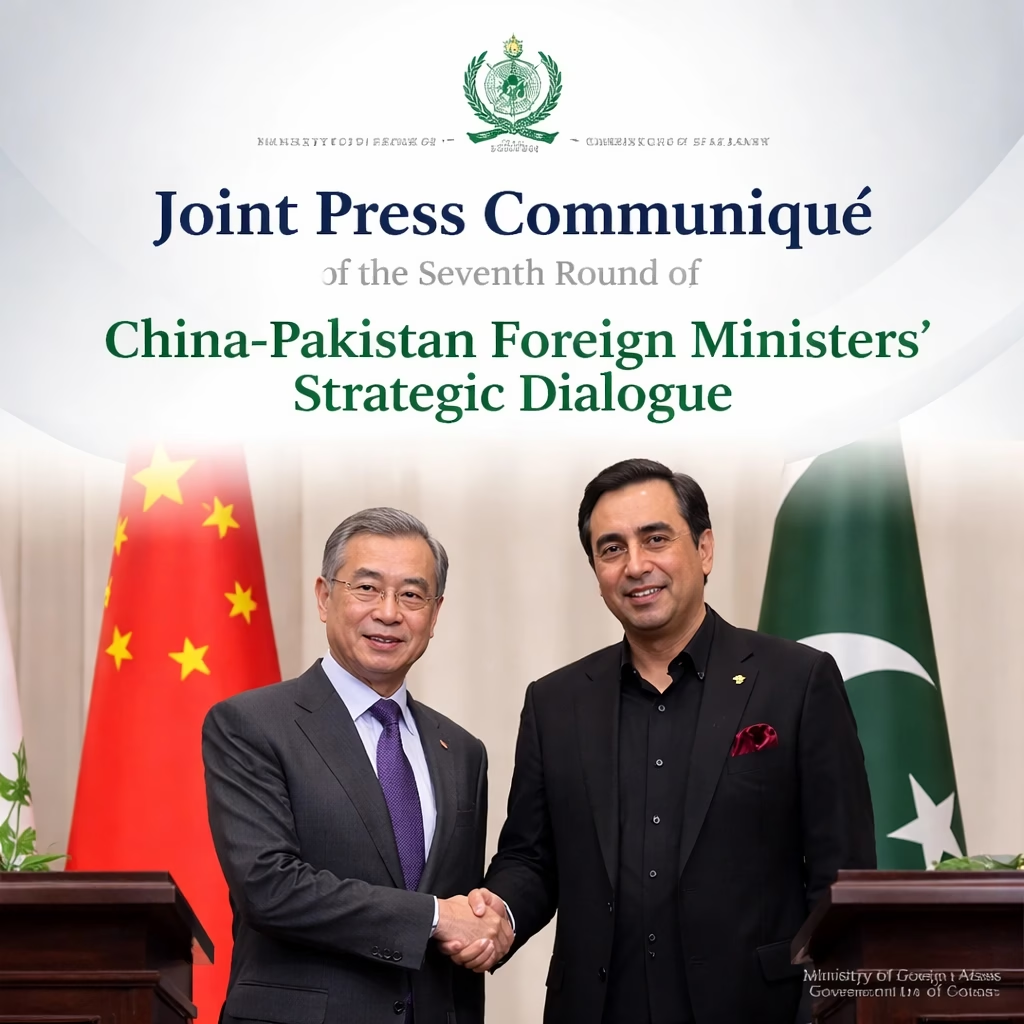
On May 16, 2024, the seventh round of the China-Pakistan Foreign Ministers’ Strategic Dialogue concluded, culminating in a joint press communiqué outlining extensive bilateral cooperation. Conducted virtually, the high-level talks between Islamabad and Beijing underscored a deepening strategic partnership crucial for regional stability and economic development. This dialogue reaffirmed both nations' unwavering commitment to a multifaceted relationship spanning political, economic, security, and cultural spheres.
Background: Decades of Enduring Partnership
The relationship between China and Pakistan, often described as an “all-weather strategic cooperative partnership,” dates back to the 1950s. This enduring bond is characterized by mutual trust, shared strategic interests, and consistent high-level engagements. Over decades, the two nations have fostered robust cooperation across defense, trade, and infrastructure development, laying the groundwork for ambitious initiatives like the China-Pakistan Economic Corridor (CPEC).
CPEC, launched in 2013 as a flagship project of China’s Belt and Road Initiative (BRI), has transformed Pakistan’s infrastructure landscape, focusing on energy projects, road networks, and the strategic Gwadar Port. These strategic dialogues serve as crucial platforms for reviewing progress, addressing challenges, and setting future directions for this comprehensive partnership. Previous rounds have systematically expanded the scope of cooperation, moving beyond traditional areas to encompass new dimensions like environmental protection, digital economy, and social development.

Both nations consistently reiterate their support for each other’s core interests. China has steadfastly backed Pakistan’s stance on the Kashmir dispute, while Pakistan has reciprocated by supporting China on issues concerning Taiwan, Xinjiang, Tibet, and Hong Kong. This reciprocal political support forms a bedrock of their strategic alliance, distinguishing it from many other bilateral relationships in the region.
Key Developments: A New Blueprint for Cooperation
The seventh round of the Strategic Dialogue outlined a comprehensive roadmap, signaling a significant evolution in the bilateral relationship. The joint communiqué highlighted several critical areas of enhanced cooperation, reflecting both nations’ adaptation to contemporary global and regional challenges.
CPEC Phase II: Shifting Gears Towards Industrialization and Innovation
A central theme of the dialogue was the accelerated implementation of CPEC Phase II. This new phase marks a strategic shift from large-scale infrastructure development to industrial cooperation, agricultural modernization, science and technology advancement, and the digital economy. The focus is now on high-quality development, aiming to unlock Pakistan’s industrial potential, boost agricultural output through modern techniques, and integrate digital solutions across various sectors. Special Economic Zones (SEZs) under CPEC are poised to attract Chinese investment, fostering local manufacturing and job creation.
More Read

Enhanced Security and Counter-Terrorism Cooperation
Security remained a paramount concern. Both foreign ministers strongly condemned terrorism in all its forms and manifestations, reiterating their firm resolve to combat extremist forces. A particular emphasis was placed on protecting Chinese personnel and projects in Pakistan, especially those under CPEC. The dialogue underscored the commitment to further strengthen defense cooperation, including joint military exercises, intelligence sharing, and capacity building to counter emerging security threats effectively. This collaboration is vital for regional peace and stability, addressing threats from groups like the East Turkistan Islamic Movement (ETIM) and Tehrik-i-Taliban Pakistan (TTP).
Multilateralism and Global Governance
The communiqué highlighted a shared commitment to upholding the international system with the United Nations at its core, based on international law. Both nations voiced opposition to unilateralism and protectionism, advocating for a more just and equitable global governance system. They pledged to strengthen coordination and cooperation within multilateral frameworks such as the UN, the Shanghai Cooperation Organization (SCO), and other regional and international bodies, particularly on issues like climate change, global health, and sustainable development.
Regional Stability and Afghanistan
Discussions also covered the regional security landscape, with a particular focus on Afghanistan. Both sides emphasized the importance of a peaceful, stable, and prosperous Afghanistan, free from terrorism. They called for continued international humanitarian assistance to the Afghan people and reiterated the need for an inclusive government in Kabul. China and Pakistan committed to coordinating efforts to support Afghanistan’s reconstruction and integration into regional connectivity initiatives.
Deepening People-to-People and Cultural Ties
Beyond strategic and economic imperatives, the dialogue reaffirmed the importance of strengthening people-to-people bonds. Initiatives to promote cultural exchanges, educational scholarships, student mobility, and tourism were discussed. The establishment of new cultural centers and sister-city relationships aims to foster greater understanding and appreciation between the two nations, building on their historical and civilizational connections.
Impact: Reshaping Regional and Global Dynamics
The outcomes of the seventh strategic dialogue carry significant implications for Pakistan, China, the wider region, and international relations.

Economic Transformation for Pakistan
For Pakistan, the renewed focus on CPEC Phase II is expected to be a catalyst for economic transformation. The emphasis on industrialization, agriculture, and digital technologies promises to create jobs, enhance productivity, and diversify its economic base. This strategic shift could reduce reliance on traditional sectors, boost exports, and attract further foreign direct investment, ultimately improving living standards and fostering sustainable growth across the country.
Strategic Depth and Connectivity for China
China benefits from enhanced strategic depth in its Belt and Road Initiative, securing crucial trade routes and fostering greater regional connectivity. The stability and development of Pakistan are integral to the success of BRI’s western corridor, providing China with vital access to the Arabian Sea via Gwadar Port. This partnership also strengthens China’s position in South Asia, supporting its geopolitical and economic objectives in a complex regional environment.
Regional Geopolitical Landscape
The deepening China-Pakistan alliance has notable implications for the regional geopolitical landscape. It reinforces a strategic axis that balances other regional powers, particularly India, which views CPEC with skepticism due to its passage through disputed territories. The joint efforts on Afghanistan also signal a coordinated approach to regional stability, potentially influencing the trajectory of post-conflict reconstruction and security in Central and South Asia.
Reinforcing Multilateralism
Globally, the joint stance of China and Pakistan on multilateralism and international law provides a significant voice against unilateral tendencies. Their coordinated efforts in international forums contribute to shaping a global order that prioritizes cooperation, equity, and shared development, offering an alternative perspective to prevailing geopolitical narratives.
What Next: Future Milestones and Implementation
The successful conclusion of the seventh strategic dialogue sets the stage for a series of implementation-focused initiatives and continued high-level engagements.
Accelerated Project Implementation
The immediate future will likely see an acceleration in the planning and execution of CPEC Phase II projects. This includes the establishment of new industrial units in SEZs, the rollout of agricultural technology demonstration zones, and the initiation of digital infrastructure projects. Ministerial-level committees and working groups are expected to meet frequently to ensure timely progress and address any bottlenecks.
Continued High-Level Dialogues and Visits
Both nations are committed to maintaining regular high-level exchanges. This includes the next round of the Strategic Dialogue, as well as potential visits by heads of state or government, and other cabinet ministers. Such interactions are crucial for providing strategic guidance, reviewing progress, and further solidifying the “all-weather” partnership.
Enhanced Security Protocols
Following the emphasis on security, specific protocols and joint mechanisms to protect CPEC projects and Chinese personnel are expected to be further strengthened. This may involve increased intelligence sharing, joint security drills, and advanced technological solutions to enhance surveillance and threat detection capabilities.
Expanding People-to-People Linkages
Efforts to expand people-to-people connections will intensify. This includes an increase in scholarship programs for Pakistani students in China, more cultural exchange events, and initiatives to promote tourism between the two countries. The aim is to build a deeper foundation of mutual understanding and goodwill among the younger generations.