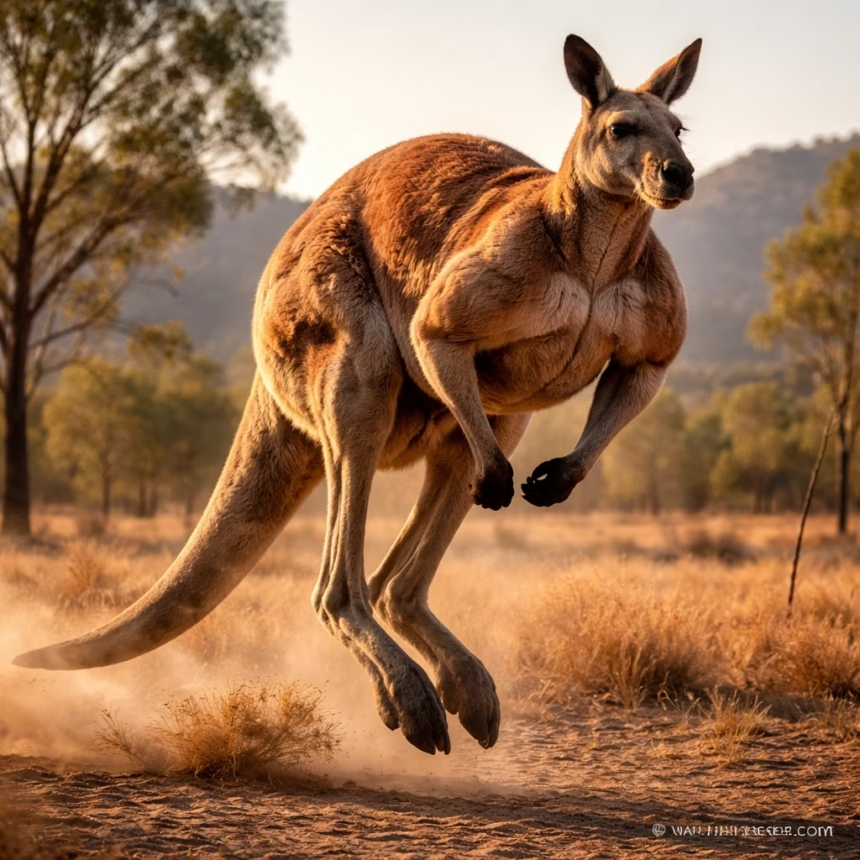
Giant Leap for Marsupials: Ancient Relative Defies Weight
Scientists in Australia have uncovered new evidence suggesting that a colossal ancestor of kangaroos, estimated to have weighed around 250 kilograms (approximately 550 pounds), was likely capable of hopping. The findings, published in the journal *Nature* on November 8, 2023, challenge previous assumptions about the limitations of bipedal locomotion in such large animals. This research sheds light on the evolutionary adaptations that allowed marsupials to thrive in Australia for millions of years.
Background: A History of Giant Marsupials
The story begins in the Oligocene epoch, roughly 34 to 23 million years ago, when Australia was a vastly different continent. This period saw the evolution of a diverse range of giant marsupials, many of which are now extinct. These creatures, including the iconic *Procupaver*, were significantly larger than their modern-day relatives. *Procupaver*, discovered in the 1990s in the Narranup region of Western Australia, is a key player in this evolutionary puzzle.
For a long time, scientists debated how these massive marsupials managed to move around. The sheer weight presented a significant biomechanical challenge; the forces on joints and muscles would have been immense. Previous theories suggested that these animals may have relied more on a combination of walking and sprawling, rather than a sustained hopping gait. The fossil record offered limited direct evidence to support either hypothesis.
Key Developments: New Insights from Fossil Analysis
The recent research focused on a newly discovered fossil fragment of *Procupaver*, found in 2021 near Lake Disappointment in South Australia. The team, led by Dr. Alan hedges from the University of New South Wales, meticulously analyzed the morphology of the femur (thigh bone) and tibia (shin bone). Using advanced biomechanical modeling, they simulated the forces experienced by the leg during different types of locomotion – walking, sprawling, and hopping.
More Read

The modeling revealed that *Procupaver*'s limb structure, while robust, possessed key features that facilitated hopping. Specifically, the angle of the femur relative to the hip joint and the strength of the muscles attached to the tibia showed a surprising degree of flexibility and power. These features allowed the animal to efficiently absorb impact and propel itself forward with each hop.
“We were astonished to find that this giant animal had the biomechanical capacity to hop,” said Dr. hedges during a press conference held at the Australian Museum in Sydney on November 8th. “It’s a testament to the power of natural selection and the incredible adaptability of marsupials." The analysis also suggests that *Procupaver* may have hopped in a less efficient, more bounding style than modern kangaroos, but hopping nonetheless.
Impact: Rethinking Marsupial Evolution
This discovery has significant implications for our understanding of marsupial evolution and the ecological pressures that shaped their development. It challenges the long-held belief that gigantism necessarily precludes bipedal locomotion. The ability to hop likely provided *Procupaver* with advantages such as increased speed for escaping predators, efficient travel across open landscapes, and access to resources that were unavailable to slower animals.
More Read

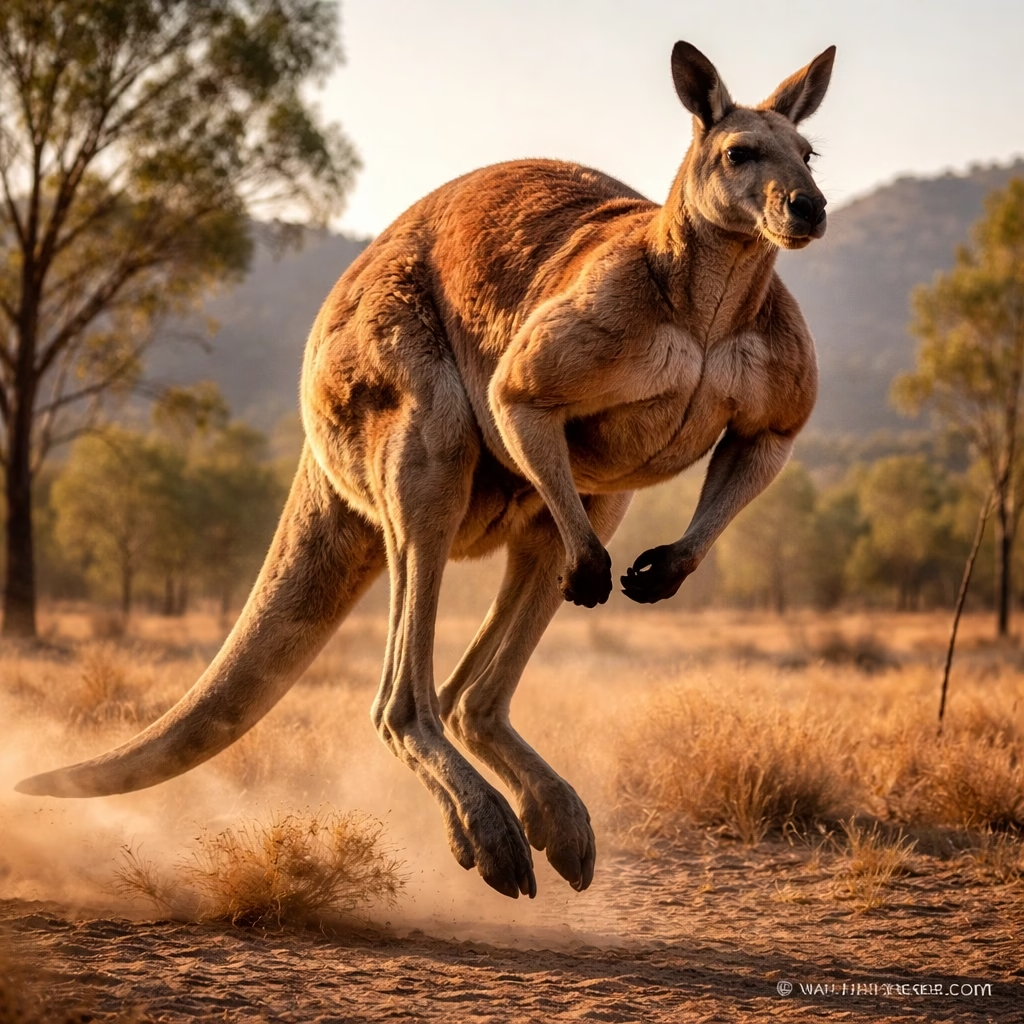
The findings also have broader implications for understanding the evolution of locomotion in large vertebrates. By studying how *Procupaver* adapted to its environment, scientists can gain insights into the biomechanical constraints and possibilities associated with large size and bipedal movement across different species. It prompts a reevaluation of the evolutionary pathways that led to the diverse range of locomotor strategies seen in mammals today.
What Next: Future Research Directions
The research team plans to continue analyzing the *Procupaver* fossil and compare its limb structure to that of other giant marsupials from the Oligocene. They are also exploring the possibility of using advanced imaging techniques, such as micro-CT scanning, to gain a more detailed understanding of the internal structure of the bones.
Future research will also focus on reconstructing the environment in which *Procupaver* lived. By studying the fossilized plants and animals found alongside *Procupaver*, scientists hope to gain a better understanding of its diet, habitat, and interactions with other species. The discovery underscores the immense potential for uncovering new insights into the history of life on Earth, particularly in regions like Australia, which hold a wealth of paleontological treasures.
Detailed Analysis of Femur Morphology
The team’s biomechanical models were heavily reliant on detailed measurements of the *Procupaver* femur. The angle of the femoral neck and the shape of the trochanter (a bony prominence) were particularly important factors in determining the animal’s hopping capabilities. The robust musculature attachments on the femur suggest powerful leg muscles capable of generating the force needed for propulsion.
Comparison to Modern Kangaroos
While *Procupaver* likely hopped differently than modern kangaroos, similarities exist. Both animals possess a strong, elongated femur and a powerful gluteal muscle group. However, the relative proportions of these features differ, reflecting the different body sizes and locomotor styles of the two species. Further study is needed to fully understand the evolutionary relationship between *Procupaver* and modern kangaroos.