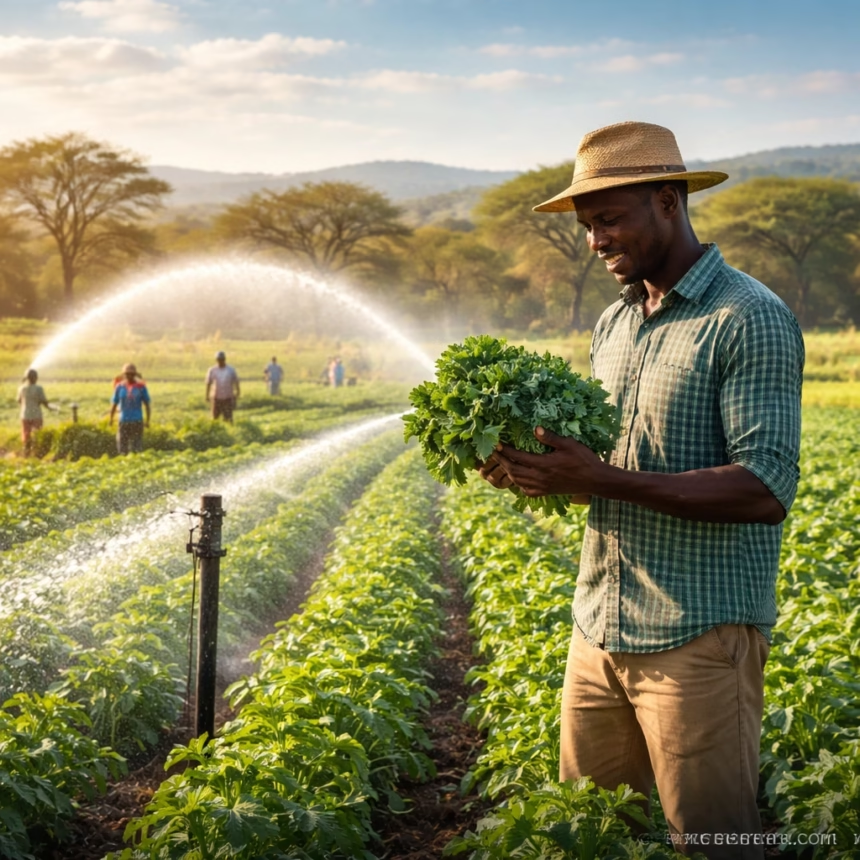
Kenya is aggressively expanding its national irrigation infrastructure, signaling a decisive shift from rain-fed agriculture. This ambitious drive aims to bolster food security and build resilience against the escalating impacts of climate change across the nation's diverse landscapes. The strategic pivot is set to transform livelihoods and agricultural productivity in the coming years.
Background: A Nation’s Vulnerability and Vision
For decades, Kenya's agricultural sector, the backbone of its economy, has remained largely dependent on erratic rainfall patterns. This reliance has exposed millions to severe food insecurity, particularly during prolonged dry spells. The recent devastating Horn of Africa drought, which gripped the region for several seasons, underscored the urgent need for sustainable water management solutions.
Agriculture contributes approximately 25-30% to Kenya's Gross Domestic Product (GDP) and employs over 70% of the rural population. This makes stability in food production not just an economic imperative but a social necessity. Historically, irrigation efforts have seen varying degrees of success, with schemes like Mwea, Hola, and Bura demonstrating potential but often facing underfunding or operational challenges.
The nation's long-term development blueprint, Vision 2030, identifies agriculture as a key pillar for economic growth and poverty reduction. Within this framework, enhancing food security and mitigating climate risks through robust irrigation infrastructure has been a consistent, though not always fully realized, policy objective. The current administration's intensified focus represents a renewed commitment to these foundational goals.
Key Developments: Scaling Up the Water Revolution
The current administration, led by President William Ruto, has placed irrigation at the forefront of its development agenda. A key target involves bringing an additional 500,000 acres under irrigation within the next five years, with an ultimate goal of reaching 1 million acres nationwide. This commitment is backed by substantial budgetary allocations and a concerted effort to attract both local and international investment.
More Read

Revitalization of Major Projects
Significant resources are being channeled into revitalizing and expanding large-scale schemes. The Galana Kulalu Food Security Programme, a flagship initiative, is undergoing a major overhaul. Initially envisioned to transform vast arid lands into productive farms, the project is now focusing on cultivating staple crops like maize and rice, aiming to reduce Kenya's reliance on imports. Progress includes expanding acreage and improving water delivery systems.
Smallholder Empowerment and Technology Adoption
Beyond large-scale projects, there's a strong emphasis on empowering smallholder farmers. Community-led irrigation schemes, often utilizing drip irrigation and efficient water harvesting techniques, are being promoted. The National Irrigation Authority (NIA) plays a crucial role in coordinating these efforts, providing technical support, and facilitating access to modern farming practices.
Technological advancements are central to the strategy. The deployment of solar-powered pumps reduces operational costs and environmental impact, particularly in remote areas lacking grid electricity. Smart irrigation systems, leveraging sensors and data analytics, are being introduced to optimize water use, ensuring that every drop contributes maximally to crop growth.

Infrastructure Development
Investment in new water storage and conveyance infrastructure is critical. The completion and operationalization of projects like the Thiba Dam, which significantly boosted water supply to the Mwea Irrigation Scheme, exemplify this commitment. Further dam construction and rehabilitation of existing canals are underway across various Arid and Semi-Arid Lands (ASALs) to capture and distribute water more effectively. These efforts aim to provide a consistent water supply, enabling multiple cropping seasons annually.
Impact: Transforming Livelihoods and National Outlook
The expanded irrigation drive is poised to deliver multifaceted benefits, profoundly impacting individuals, communities, and the national economy.
Farmer Resilience and Prosperity
For farmers, the most immediate impact is a dramatic reduction in dependence on unpredictable rainfall. This translates into increased yields, the ability to cultivate high-value crops, and the potential for multiple harvests per year. Farmers in newly irrigated areas report higher incomes, improved food security for their households, and greater stability in their livelihoods. Diversification into crops like rice, horticultural produce, and even aquaculture becomes viable, opening new market opportunities.
Job Creation and Rural Development
The irrigation push is a significant engine for job creation. Construction and maintenance of canals, dams, and associated infrastructure generate employment. Furthermore, intensified farming activities, from land preparation to harvesting and processing, create sustained agricultural jobs. This economic activity helps to revitalize rural communities, reducing poverty and potentially curbing rural-urban migration as opportunities emerge locally.
National Food Security and Economic Growth
At a national level, increased domestic food production directly addresses food insecurity. A reduced reliance on food imports saves valuable foreign exchange and buffers the country against global price fluctuations. The goal is to move Kenya towards self-sufficiency in staple foods and even become a net exporter of certain agricultural products, contributing significantly to the national strategic food reserves. This boost to the agricultural sector, in turn, fuels overall economic growth.
Climate Change Adaptation
Irrigation serves as a crucial adaptation strategy against climate change. By decoupling agricultural productivity from direct rainfall, it provides a buffer against increasingly frequent and severe droughts. More efficient water use practices also promote sustainable resource management, mitigating the environmental impact often associated with traditional farming.
More Read

What Next: Milestones and Sustained Commitment
Kenya's irrigation journey is ongoing, with several key milestones and challenges ahead. The government remains committed to achieving its ambitious targets, recognizing that sustained investment and strategic planning are paramount.
Continued Expansion and Modernization
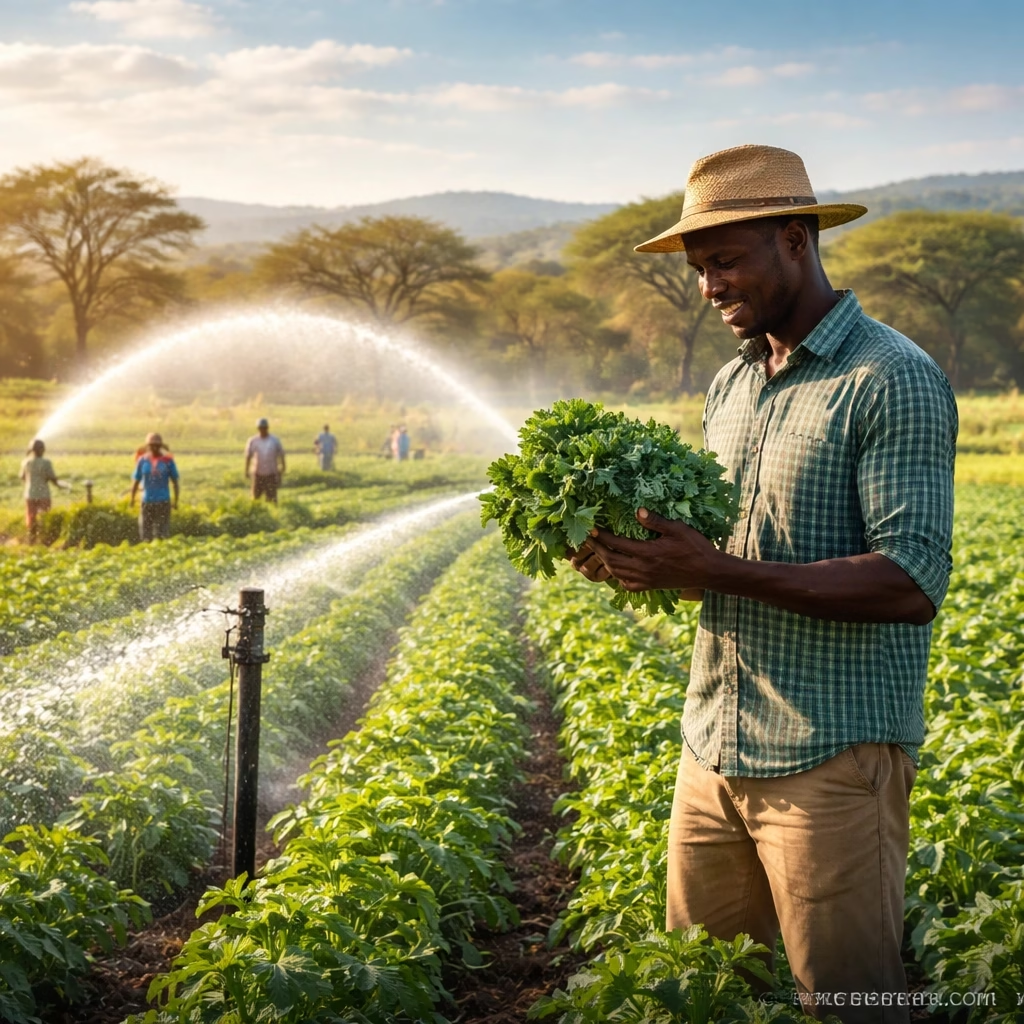
The drive towards the 1 million-acre irrigation target will continue through phased implementation. Future efforts will likely focus on integrating more sophisticated technologies, including precision agriculture, AI-powered water management systems, and the development of drought-resistant crop varieties tailored to specific regional conditions. The aim is to maximize efficiency and productivity per unit of water.
Capacity Building and Policy Refinement
To ensure the long-term success of these initiatives, extensive capacity building programs are being rolled out. Farmers will receive training in modern irrigation techniques, sustainable water management, and market access strategies. Concurrently, ongoing review and refinement of land tenure systems, water rights policies, and agricultural market regulations will be essential to create an enabling environment for sustained growth.
Addressing Sustainability Challenges
While the benefits are clear, the expansion of irrigation also presents sustainability challenges. Careful management of water sources is critical to prevent depletion and ensure equitable distribution among users. Addressing potential environmental impacts, such as soil salinization or waterlogging, through appropriate drainage and soil management practices, will be crucial. Ensuring the financial viability and operational efficiency of schemes, particularly for smallholders, will also require innovative financing models and support mechanisms.
Kenya's intensified irrigation drive represents a bold, strategic investment in its future. By harnessing its water resources more effectively, the nation aims to not only feed its growing population but also build a resilient, prosperous, and climate-adaptive agricultural sector for generations to come.