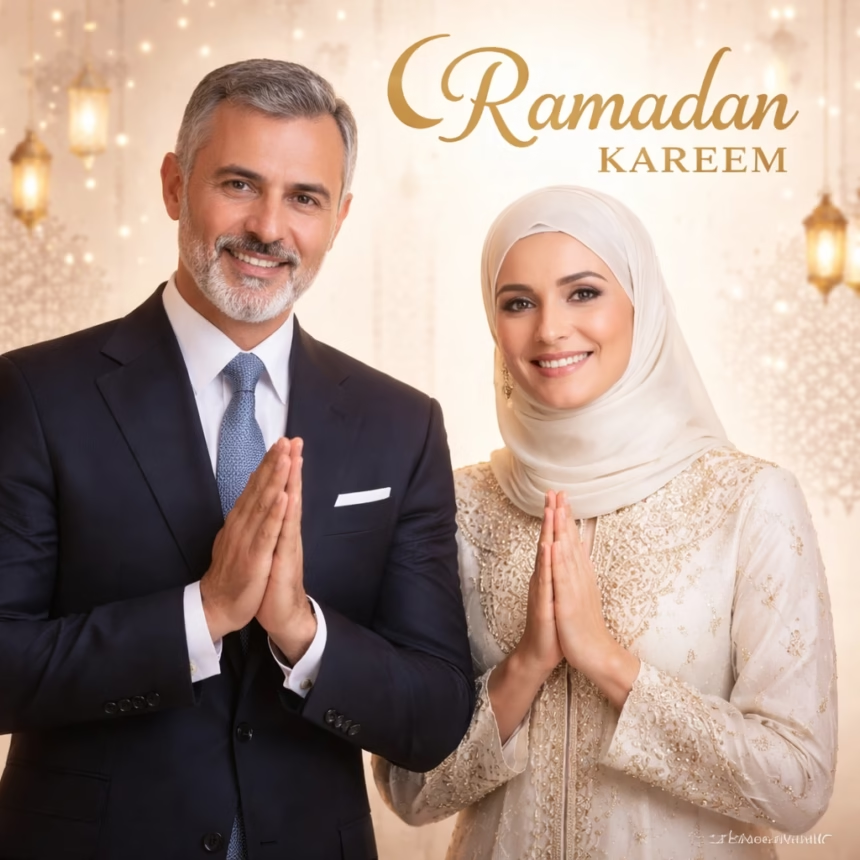
Their Majesties King Charles III and Queen Camilla have extended their profound wishes to Muslim communities across the United Kingdom and the Commonwealth, marking the advent of the holy month of Ramadan. The deeply personal message, disseminated from Buckingham Palace on Sunday, March 10, 2024, underscored themes of peace, reflection, and the enduring strength of community spirit during this sacred period.
Background: A Legacy of Interfaith Engagement
The tradition of the British monarchy acknowledging and celebrating the diverse religious festivals observed by its subjects is deeply rooted, yet its public expression has evolved significantly over recent decades. Historically, royal communications primarily focused on Christian holidays, reflecting the established Church of England and the nation's historical religious landscape. However, as the United Kingdom and the Commonwealth have become increasingly multicultural and multifaith, the Royal Family's outreach has broadened to embrace a wider spectrum of beliefs and celebrations.
The late Queen Elizabeth II notably pioneered a more inclusive approach, often hosting interfaith gatherings and sending messages of goodwill to various religious communities. Her annual Commonwealth Day messages frequently highlighted the rich tapestry of cultures and faiths united under the Commonwealth banner. These engagements were not merely symbolic; they were instrumental in fostering a sense of belonging among diverse populations and reinforcing the monarchy's role as a unifying force transcending religious divides.
Ramadan, the ninth month of the Islamic calendar, is a period of fasting, prayer, reflection, and community for millions of Muslims worldwide. It commemorates the revelation of the Quran to the Prophet Muhammad and is one of the five pillars of Islam. The observance emphasizes spiritual introspection, self-discipline, and acts of charity, culminating in the joyous celebration of Eid al-Fitr. For the monarchy to formally acknowledge this period underscores its recognition of the significant contribution and presence of Muslim communities within the UK and across the Commonwealth realms.
King Charles III, throughout his tenure as Prince of Wales, demonstrated a keen and consistent interest in interfaith dialogue and understanding. He has often spoken passionately about the importance of mutual respect between different faiths and has engaged extensively with leaders and members of various religious communities. His deep understanding of Islamic culture and history, often reflected in his speeches and patronages, has prepared him to continue and expand this legacy of inclusive royal engagement. This background provides crucial context for understanding the significance and depth of the current Ramadan message, positioning it not as an isolated gesture but as a continuation of a thoughtful, evolving strategy of royal outreach. The move solidifies a long-standing commitment to representing all citizens, irrespective of their creed.

Key Developments: A Message of Modern Resonance
This year's Ramadan greeting from Their Majesties carries particular weight, not just for its timing but also for its nuanced content and delivery. Unlike previous years, where messages might have been primarily text-based statements, the 2024 communication included elements designed for broader digital dissemination, including a prominent feature on the official Royal Family website and social media channels. This digital-first approach ensures wider reach and immediate engagement, reflecting modern communication strategies.
The message itself, while upholding traditional themes of peace and community, also subtly acknowledged contemporary global challenges. It spoke to the resilience of faith in difficult times and highlighted the collective responsibility towards those less fortunate, aligning with Ramadan's emphasis on charity (Zakat) and compassion. Specific wording referenced the importance of "empathy and service," which resonated deeply with community leaders who noted the King's consistent advocacy for humanitarian causes.
Personal Touch and Thematic Depth
Observers noted a more personal tone in the message, suggesting direct input from the Monarchs. Rather than a generic statement, it referenced the "strength found in shared humanity" and the "power of quiet contemplation," themes that align with King Charles III's known philosophical inclinations. The Queen's contribution, often focusing on community cohesion and the role of women in fostering social bonds, was also discernible in the emphasis on family and neighborly support during the fasting period. This blend of individual royal perspectives lends authenticity and depth to the message, moving beyond mere formality.
More Read

Strategic Outreach and Community Engagement
Beyond the public statement, Buckingham Palace confirmed that private receptions and virtual engagements are being planned throughout Ramadan, involving representatives from various Muslim charities, community organizations, and interfaith groups. These events aim to provide direct platforms for dialogue and demonstrate active royal participation in the spirit of the holy month. Such strategic outreach signifies a proactive approach to fostering stronger ties, moving beyond symbolic greetings to tangible interaction. This marks a notable development from previous years, where direct royal engagement during Ramadan was less formalized or publicly highlighted.
Impact: Fostering Unity and Global Goodwill
The royal Ramadan greetings reverberate deeply within Muslim communities, both domestically and internationally, carrying significant symbolic and practical impact. In the United Kingdom, the message serves as a powerful affirmation of identity and belonging for its estimated 3.9 million Muslim citizens. It signals that their faith and cultural practices are recognized and valued at the highest level of state, contributing to a stronger sense of national inclusion and reducing feelings of marginalization. Community leaders have often stressed the importance of such gestures in building bridges and fostering social cohesion.
Internationally, particularly across the 14 Commonwealth realms where Islam is a prominent faith, the message reinforces the monarchy's role as a unifying figurehead. Nations with significant Muslim populations, such as Pakistan, Bangladesh, Malaysia, and Nigeria, view these greetings as a gesture of respect and solidarity. This soft power diplomacy can contribute to strengthening bilateral relations and enhancing the UK's global standing as a nation that champions religious freedom and diversity. It subtly counters narratives of cultural insensitivity sometimes directed at Western nations, projecting an image of openness and mutual respect.
Inter-Faith Dialogue and Social Cohesion
Beyond the Muslim community, the royal message plays a crucial role in promoting broader inter-faith dialogue within the UK. By publicly acknowledging and celebrating Ramadan, the Monarchs encourage non-Muslim citizens to learn about and appreciate the traditions of their Muslim neighbours. This can lead to increased understanding, reduced prejudice, and stronger community bonds, particularly in diverse urban areas. Local interfaith groups often leverage such royal endorsements to amplify their own efforts in fostering cross-cultural understanding and collaboration on community projects.
Youth Engagement and Identity
For younger generations of Muslims in the UK, the royal greeting can have a profound impact on their sense of identity and belonging. Seeing their faith acknowledged by the Head of State can instill pride and confidence, helping them navigate their dual identities as British Muslims. It reinforces the idea that their religious heritage is an integral and respected part of the national fabric, rather than something to be hidden or compartmentalized. This recognition is particularly vital in an era where young people are often navigating complex issues of identity and belonging in a globalized world.

What Next: Sustaining the Spirit of Inclusivity
The extension of Ramadan greetings by Their Majesties is not an isolated event but rather a strategic step within a broader commitment to fostering a truly inclusive monarchy. Looking ahead, several key milestones and developments are anticipated, building upon the foundation laid by this and previous royal engagements.
The immediate next phase will involve the aforementioned private receptions and virtual dialogues. These events, expected to take place throughout Ramadan, will likely culminate in a significant royal presence or message for Eid al-Fitr, the festival marking the end of the fasting month. An Eid message or even an Eid reception at one of the royal residences would further solidify the commitment, offering another visible demonstration of royal recognition and appreciation for Muslim communities. Such an event would provide an opportunity for the Monarchs to personally interact with a diverse group of British Muslims, hearing directly about their experiences and contributions.
Beyond Ramadan, observers anticipate a continued emphasis on interfaith engagement as a core component of the King's reign. This could manifest in several ways:
* Expanded Patronages: The King and Queen may take on new patronages related to interfaith dialogue, Muslim charities, or cultural organizations, providing sustained support and visibility to these causes.
* Educational Initiatives: There might be royal support for educational initiatives aimed at increasing religious literacy across all communities, helping to build a more informed and tolerant society.
* International Diplomacy: The royal family’s international visits are likely to continue incorporating strong interfaith elements, particularly in Commonwealth countries with significant Muslim populations. These visits serve as powerful tools of cultural diplomacy, reinforcing bonds and promoting mutual understanding on a global scale.
The long-term strategy appears to be one of embedding religious diversity within the fabric of royal public life, ensuring that the monarchy remains relevant and representative in an ever-changing society. This ongoing commitment is crucial for maintaining the institution's unifying role and ensuring it reflects the rich tapestry of beliefs and cultures that define modern Britain and the Commonwealth. The Ramadan message, therefore, serves not just as a seasonal greeting but as a reaffirmation of a progressive and inclusive vision for the monarchy's future. Its impact will be measured not only in the immediate goodwill it generates but also in the sustained efforts to build a more cohesive and understanding society.