Supreme Court's Role Intensifies in Impeachment Proceedings
The U.S. Supreme Court is increasingly positioned to play a significant role in the ongoing impeachment proceedings related to former President Donald Trump. Recent legal challenges and arguments have brought the court into the center of a highly contentious political and legal battle unfolding in Washington, D.C.
Background
The impeachment process began in the House of Representatives in December 2019, initiated by a resolution alleging abuse of power and obstruction of Congress related to Trump's dealings with Ukraine. The House Judiciary Committee drafted articles of impeachment, which were then voted on and approved by the full House in January 2021. The articles centered on allegations that Trump pressured the Ukrainian government to investigate Joe Biden and his son, Hunter Biden, in exchange for military aid and a potential White House visit.
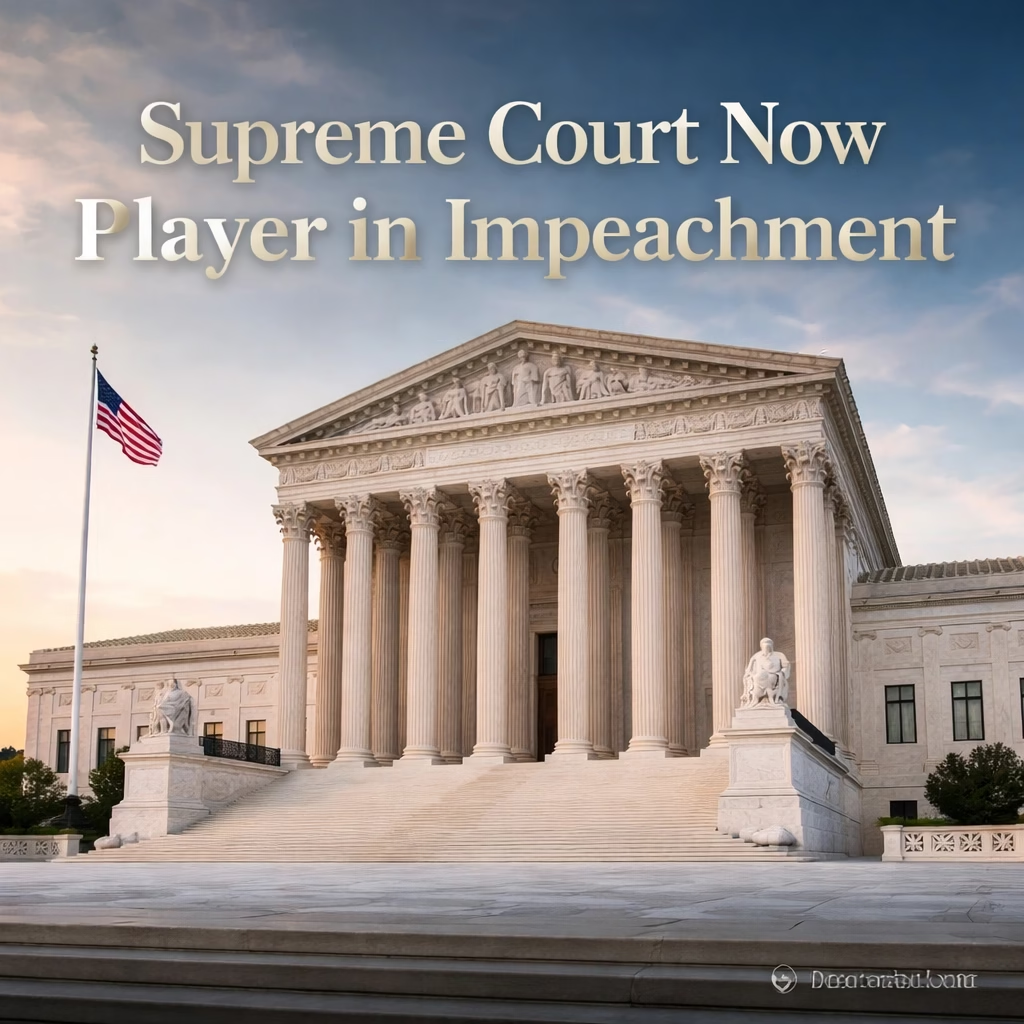
Following the House impeachment, the Senate held impeachment trials in February and March 2021. Trump was acquitted on both articles, falling short of the two-thirds majority needed for conviction. However, legal challenges related to the impeachment process and potential future actions have kept the Supreme Court in the spotlight.
More Read

Key Developments
The most recent developments involve legal challenges to the scope of presidential immunity and the power of the executive branch to withhold documents and testimony. Several lawsuits, brought by various parties, have reached the Supreme Court seeking to determine the extent to which a former president is shielded from legal accountability.
One significant case concerns a request by Special Counsel Jack Smith for access to classified documents related to the January 6, 2021, attack on the U.S. Capitol. The Justice Department, under Attorney General Merrick Garland, has been navigating complex legal questions regarding executive privilege and national security. The Supreme Court's decision on whether to grant a stay to prevent the release of these documents is anticipated in the coming weeks.
Furthermore, ongoing legal battles over the January 6th investigation, led by Special Counsel Smith, have raised questions about the balance of power between the executive branch, Congress, and the judiciary, potentially leading to Supreme Court involvement.
More Read

Impact
The Supreme Court's involvement has broad implications for the future of presidential power and the balance of authority within the U.S. government. The court's rulings could significantly impact the ability of future presidents to act without facing legal challenges and could shape the scope of executive privilege.
Beyond the immediate impeachment context, the decisions could affect ongoing investigations into Trump and other political figures. The rulings will also influence how future administrations handle classified information and respond to congressional inquiries. The court’s decisions have resonated across the political spectrum, impacting debates about accountability, transparency, and the rule of law.
Executive Privilege and Classified Documents
The court’s deliberations on executive privilege are particularly noteworthy. Executive privilege, the right of the president to withhold certain information from Congress and the courts, has been a recurring point of contention throughout the impeachment process and is now being actively challenged. The Supreme Court’s interpretation of executive privilege will set a precedent for future administrations.
Potential for Further Legal Challenges
The current legal landscape surrounding the Trump administration and related investigations is complex and evolving. The Supreme Court's rulings on executive privilege and presidential immunity could pave the way for further legal challenges and investigations in the future.
What Next
The Supreme Court’s decisions on the requests for a stay on the release of classified documents are expected in the coming weeks. These rulings will likely influence the timeline and scope of the January 6th investigation.
Beyond this immediate issue, the court may be asked to rule on other legal challenges related to the impeachment process and the conduct of investigations. The court’s workload is substantial, and the timing of future rulings remains uncertain. However, the Supreme Court's participation in the impeachment-related legal battles ensures that the proceedings will continue to be shaped by legal arguments and judicial interpretations.
More Read

Possible Future Scenarios
Depending on the Supreme Court’s rulings, several scenarios are possible. A ruling in favor of disclosure could accelerate the release of documents and potentially lead to further legal actions. Conversely, a ruling upholding executive privilege could significantly limit the scope of the investigation. These scenarios highlight the critical role the Supreme Court plays in shaping the legal and political landscape surrounding the impeachment proceedings.