Trade War on Hold? EU Reacts to Trump's Greenland Stance
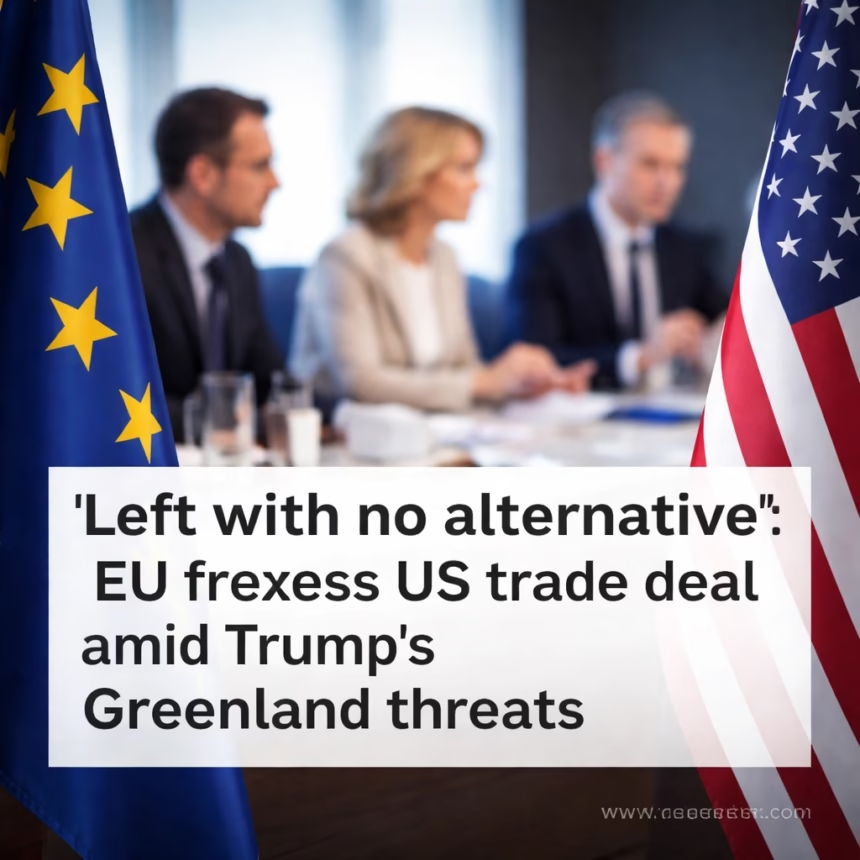
Brussels, Belgium – The European Union has effectively paused negotiations on a long-awaited trade deal with the United States, citing concerns over President Donald Trump’s recent threats to withdraw from the agreement if Greenland doesn't sell to the U.S. This move throws the future of transatlantic commerce into uncertainty.
Background: Years of Negotiation
The Comprehensive and Progressive Agreement for Trans-Pacific Partnership (CPTPP), often referred to as a US-EU trade deal, has been under negotiation for years. Discussions began in earnest in 2017, with the aim of removing tariffs and other trade barriers between the EU and the US. The deal's potential economic benefits were projected to be substantial, with estimates suggesting billions of euros in increased trade.
Key sticking points included agricultural subsidies in the US, particularly those impacting European farmers. Other areas of contention involved rules on steel and aluminum imports, digital trade, and intellectual property protection. Despite numerous rounds of talks, a final agreement remained elusive, with both sides facing political headwinds.
Key Developments: Greenland’s Role
The situation escalated sharply in late July 2019 when President Trump announced he was open to buying Greenland, a self-governing territory within the Kingdom of Denmark. This bold statement raised concerns within the EU that the US was prioritizing geopolitical strategy over trade commitments. European officials viewed the Greenland gambit as a tactic to pressure Denmark, and by extension, the EU, into conceding on trade terms.

Following Trump's comments, the European Commission, the EU's executive branch, issued a statement expressing "serious concerns" about the US approach. The Commission announced it would "freeze" further steps in the trade deal negotiations until the situation surrounding Greenland was resolved. This freeze effectively stalls the momentum that had been building over the past several years.
The US State Department defended President Trump’s actions, asserting that the Greenland proposal was not directly linked to the trade negotiations. They emphasized the strategic importance of Greenland to national security and regional stability. However, the EU remains unconvinced, interpreting the move as a veiled attempt to leverage trade talks for political gain.
More Read

Impact: Farmers, Businesses, and Economies
The potential impact of this pause is far-reaching. European farmers, particularly those involved in agricultural exports to the US, stand to benefit from the trade deal, which promised reduced tariffs on products like dairy, meat, and wine. The delay casts doubt on these potential gains, creating uncertainty for their businesses and livelihoods.
European businesses, especially those engaged in cross-border trade with the US, are also affected. The uncertainty surrounding the deal makes it difficult to plan for the future and invest in new ventures. Sectors like automotive, aerospace, and pharmaceuticals rely heavily on smooth trade relations between the two continents. A stalled agreement could impede growth and competitiveness.
Economically, the pause represents a setback for both the EU and the US. Analysts estimate that a finalized trade deal could boost both economies by several percentage points. The delay postpones these potential benefits and increases the risk of further trade tensions.
What Next: A Wait-and-See Approach
The future of the US-EU trade deal remains uncertain. The EU has stated it will resume negotiations once the Greenland situation is resolved and concerns are addressed. The timeframe for this resumption is unclear and depends heavily on the political developments in Denmark and the US.
Possible Scenarios
Resolution in Greenland: If the Greenland situation is resolved without further escalation, negotiations could resume within a few months.
US-Denmark Agreement: If a deal is reached between the US and Denmark regarding Greenland, the EU may be more willing to restart negotiations.
Deal Abandonment: There is a risk that the US may abandon the trade deal altogether, especially if President Trump continues to prioritize geopolitical considerations over economic ones.
Revised Terms: It's also possible that the deal will be renegotiated with altered terms to address the concerns raised by the EU.
For now, the EU is taking a cautious approach, prioritizing its interests and refusing to be pressured into making concessions. The coming weeks will be crucial in determining whether the trade deal can be salvaged or if the transatlantic relationship will continue to be strained by political maneuvering.