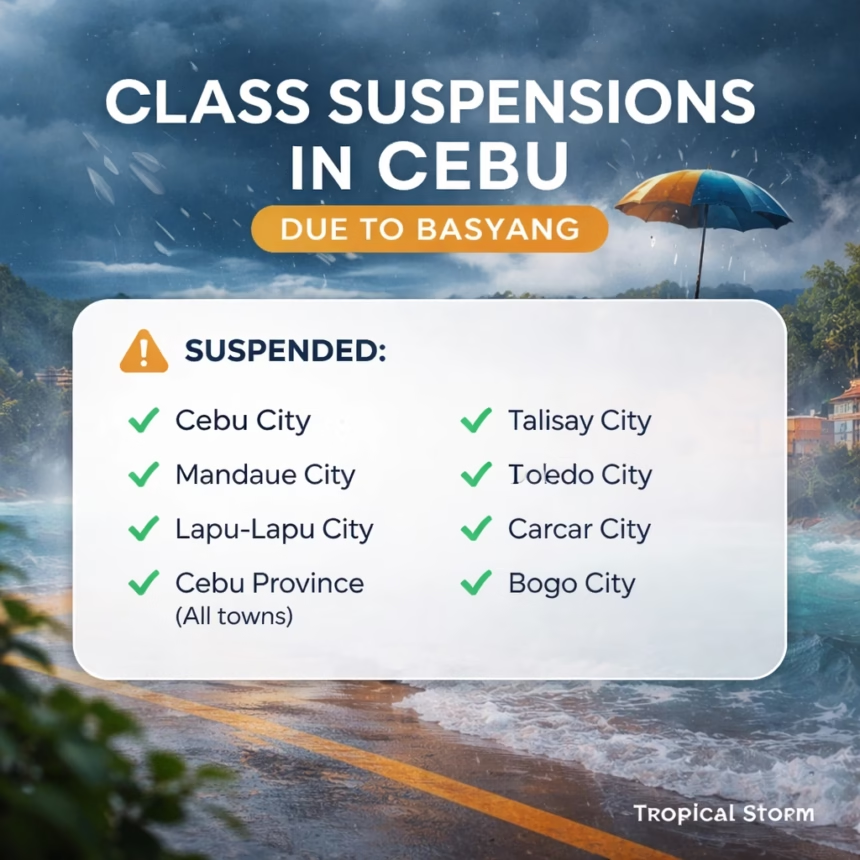
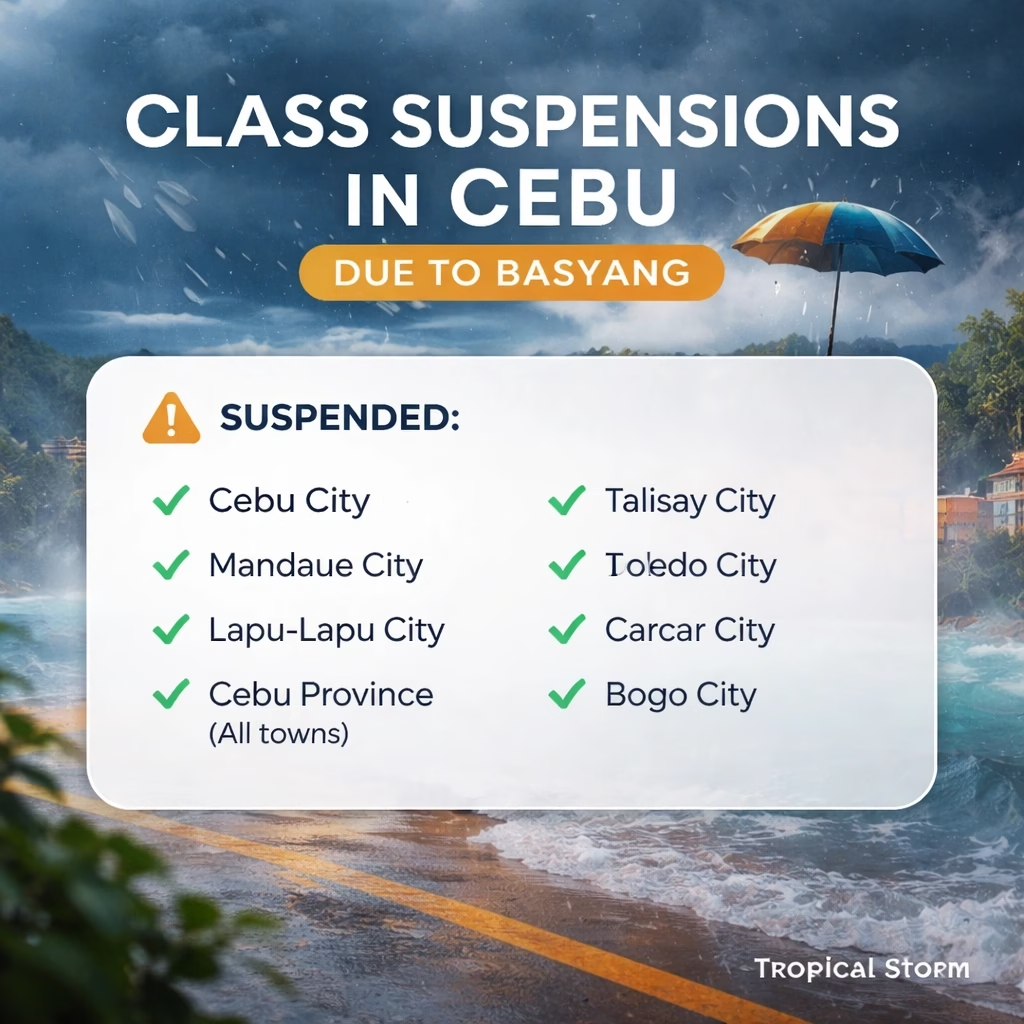
Cebu province, including its highly urbanized cities, has declared extensive class suspensions across all levels as Tropical Storm Basyang intensifies and brings torrential rains and strong winds to the region. The preemptive measure, implemented from February 5 to 7, 2024, aims to ensure the safety of students and school personnel amidst the looming threat of flooding and landslides.
Background: Basyang’s Approach and Initial Warnings
Tropical Storm Basyang, locally known as "Basyang," began its approach towards the Visayas region late last week, prompting early advisories from the Philippine Atmospheric, Geophysical and Astronomical Services Administration (PAGASA). Initially categorized as a tropical depression, Basyang rapidly intensified as it tracked westward, exhibiting sustained winds of 65 kilometers per hour (kph) near the center and gustiness of up to 80 kph. Its projected path indicated a direct hit or close proximity to parts of Eastern and Central Visayas, including the entire province of Cebu.
PAGASA issued Orange Rainfall Warnings for several areas in Cebu by the afternoon of February 4, signaling a high likelihood of heavy rainfall (15-30 mm per hour) and potential for widespread flooding, especially in low-lying areas and near river systems. Wind signals were also raised, with Signal No. 2 declared for northern Cebu and Signal No. 1 for the rest of the province, indicating the potential for moderate to strong winds that could pose risks to structures and transportation.
Timeline of Declarations
The first announcements for class suspensions began trickling in late Sunday evening, February 4, as local government units (LGUs) anticipated Basyang's impact.
February 4, 8:00 PM: Cebu City Mayor Michael Rama was among the first to declare suspensions, initially for preschool to senior high school for Monday, February 5, citing the PAGASA rainfall warnings.
* February 4, 9:30 PM: Governor Gwendolyn Garcia of Cebu Province followed suit, suspending classes for all levels (public and private) across the entire province for February 5, extending the directive to include tertiary education.
* February 4, 10:00 PM onwards: Mandaue City Mayor Jonas Cortes and Lapu-Lapu City Mayor Junard Chan also issued their respective executive orders, mirroring the province-wide and Cebu City declarations for February 5, covering all educational levels.
* February 5, 1:00 PM: As Basyang showed little sign of weakening and continued to bring intermittent heavy rains, local chief executives, in consultation with disaster risk reduction and management councils (DRRMCs), extended the class suspensions. Cebu City, Mandaue City, Lapu-Lapu City, and the Provincial Government all announced the continuation of suspensions for February 6 and 7, effectively shutting down schools for three consecutive days.
More Read

Key Developments: Escalation and Precautionary Measures
The decision to extend class suspensions was not made lightly, reflecting the evolving meteorological conditions and the need for heightened vigilance. Authorities emphasized a proactive approach to disaster management, prioritizing human life over academic schedules.
Intensifying Weather Conditions
Throughout February 5, Basyang continued its slow westward movement, bringing significant rainfall accumulations to many parts of Cebu. Reports from the Cebu Provincial DRRMO indicated minor flooding in several municipalities, particularly in Daanbantayan, San Remigio, and parts of the southwestern towns. Strong gusts of wind were also reported in coastal areas, leading to concerns over potential sea travel disruptions and damage to light structures. PAGASA's updated advisories maintained the Orange Rainfall Warning for much of Cebu, reinforcing the LGUs' decisions.
More Read

Coordination and Preparedness
Local DRRMCs in cities and municipalities across Cebu have been on high alert. Emergency response teams were activated, and pre-emptive evacuations were considered for residents in identified high-risk areas, such as those near rivers, coastal zones, and landslide-prone slopes. The Department of Education (DepEd) Cebu Provincial and City Divisions disseminated the LGU advisories promptly to all public and private schools, ensuring widespread awareness among students, parents, and teachers.
Specific LGU Actions
Cebu City: Mayor Rama underscored the importance of community cooperation, urging residents to stay indoors and monitor official announcements. City disaster teams were deployed to monitor flood-prone areas like Colon Street, Guadalupe, and Mabolo.
* Cebu Province: Governor Garcia instructed all municipal mayors to activate their respective DRRMCs and ensure the readiness of evacuation centers. Provincial social welfare offices prepared relief goods for potential distribution.
* Mandaue City: Mayor Cortes highlighted the city's ongoing drainage improvement projects, which were expected to mitigate some flooding, but still stressed the need for extreme caution, especially in areas like barangays Paknaan and Subangdaku.
* Lapu-Lapu City: Mayor Chan focused on coastal communities and island barangays, advising fishermen against venturing out to sea and preparing for potential storm surges, although Basyang was primarily a rain-bearing storm.
Impact: Disruption to Daily Life and Education
The widespread class suspensions have had a profound impact on hundreds of thousands of students, parents, and the broader community in Cebu. While primarily a safety measure, it inevitably leads to disruptions in various aspects of daily life.
Educational Disruption
An estimated 1.5 million students across all levels in Cebu province, including its highly urbanized cities, are directly affected by the three-day suspension. This includes pupils from preschool, elementary, junior high, senior high, and college students from both public and private institutions. The lost school days will necessitate adjustments to the academic calendar, with schools likely needing to implement make-up classes or extend the school year, as per DepEd guidelines for disaster-related interruptions. Crucial lessons, scheduled exams, and extracurricular activities have all been postponed, potentially causing stress for students and educators.
Challenges for Parents and Guardians
Parents, particularly working parents, face significant challenges in arranging childcare for their children who are unexpectedly home. Many have had to take leave from work or find alternative arrangements, adding to the economic strain. The sudden change in routine also impacts household dynamics and daily planning. For families in vulnerable communities, the combination of class suspensions and potential adverse weather conditions can amplify existing hardships.
Economic and Social Implications
While direct economic impact might be limited to certain sectors, reduced mobility due to weather conditions and the absence of school-related activities can indirectly affect local businesses, particularly those catering to students and school communities. Public transportation may also experience reduced ridership or limited operations in some areas, affecting commuters. The overall social fabric experiences a temporary slowdown as communities prioritize safety and shelter.
More Read

Infrastructure and Safety Concerns
The primary concern remains the safety of individuals. The suspensions mitigate risks associated with students commuting to and from schools in hazardous conditions. However, school buildings themselves could be vulnerable to strong winds and heavy rains, particularly older structures. Authorities are monitoring reports of minor damage, if any, to ensure schools are safe for re-occupancy once classes resume.
What Next: Monitoring, Resumption, and Recovery
As Tropical Storm Basyang continues its trajectory, authorities remain on high alert, with plans for class resumption contingent on ongoing weather assessments and post-storm evaluations.
Ongoing Weather Monitoring
PAGASA is expected to issue its next severe weather bulletin within the coming hours, providing updated information on Basyang's strength, speed, and projected path. Local DRRMCs will closely monitor these advisories, alongside real-time ground reports of rainfall, flooding, and wind conditions. The decision to lift class suspensions will be based on a comprehensive assessment of safety, considering not just the immediate weather but also the aftermath, such as road conditions and the availability of essential services.
Reassessment for Class Resumption
Local chief executives, in coordination with DepEd officials, are expected to convene on February 7 to reassess the situation. A formal announcement regarding the resumption of classes for February 8 and beyond will be made once the all-clear is given. Parents and students are strongly advised to refer only to official pronouncements from their respective LGUs and DepEd offices.
Academic Calendar Adjustments
DepEd-Cebu divisions will issue guidelines for schools on how to manage the lost school days. This may involve compressing lessons, holding Saturday classes, or extending the school year, ensuring that the required number of contact hours and learning competencies are still met. Schools are also expected to conduct rapid damage assessments if any structural issues arise from the storm.
Continued Vigilance and Preparedness
Even after Basyang has passed, communities are urged to remain vigilant, especially those in areas prone to landslides and flash floods, as residual moisture can still pose risks. Disaster preparedness efforts will continue, focusing on clearing debris, restoring any disrupted services, and assisting affected communities. The public is reminded to secure their homes, avoid unnecessary travel, and continue to monitor official news channels for updates.