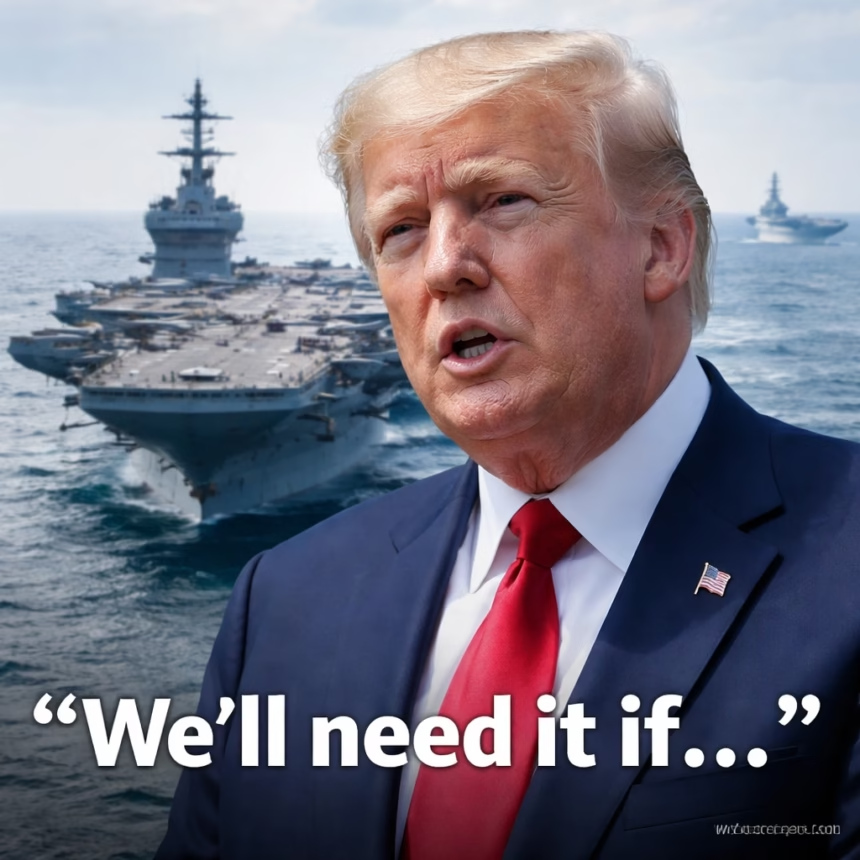
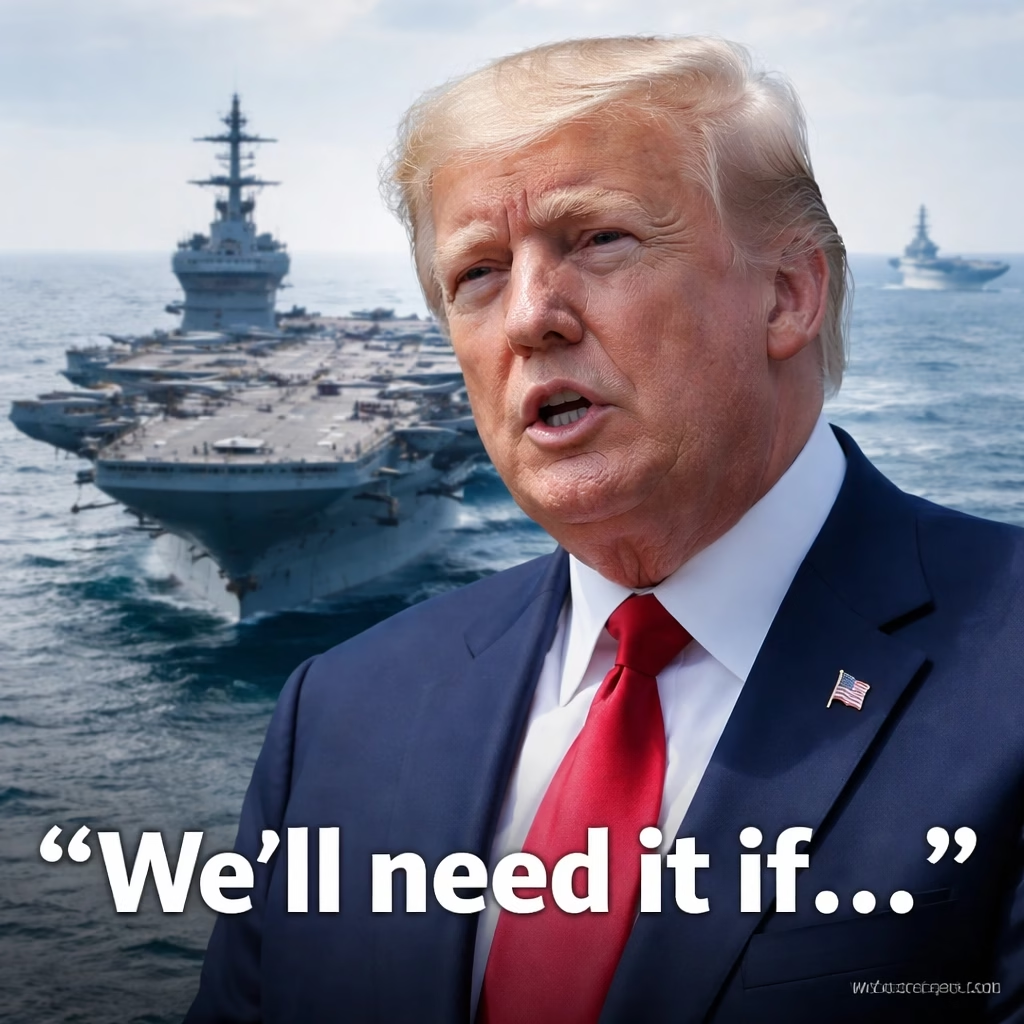
Amid escalating tensions in the Persian Gulf, the United States has confirmed the deployment of a second aircraft carrier to the region. This move, announced on April 18, 2024, follows heightened concerns over Iranian actions and signals a significant escalation of military presence. The deployment underscores a delicate balance between deterrence and de-escalation in a volatile geopolitical landscape.
Background
The current surge in tensions between the US and Iran stems from a confluence of factors, including disagreements over Iran's nuclear program, its regional influence, and concerns about maritime security in the Strait of Hormuz. Following the withdrawal of the United States from the Iran nuclear deal (JCPOA) in 2018 under the Trump administration, sanctions were reimposed on Iran, crippling its economy. This has fueled resentment and contributed to a more confrontational stance from the Iranian government.
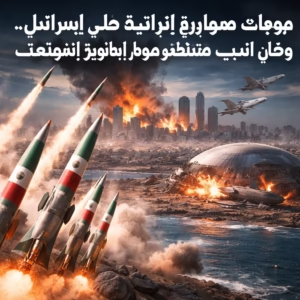
In recent months, there have been a series of incidents involving Iranian-backed militias targeting US interests in Iraq and the UAE. These attacks, often attributed to groups like Kata'ib Hezbollah, have prompted retaliatory US airstrikes and increased military deployments to the region. The US Navy has consistently maintained a strong presence in the Persian Gulf, conducting freedom of navigation operations (FONOPs) to challenge Iranian maritime claims. These operations are frequently met with protests and confrontations from Iranian forces.
Key Developments
The confirmation of the second aircraft carrier deployment, USS Dwight D. Eisenhower (CVN-65), was announced by the U.S. Navy on April 18th. The USS Eisenhower is joining the USS Nimitz (CVN-68), already positioned in the region. This represents a substantial increase in naval power projected into the Persian Gulf. The decision follows reports of increased Iranian naval activity, including the deployment of fast attack craft and patrol boats in the Strait of Hormuz.
More Read

The Pentagon has emphasized that the carrier deployments are primarily for deterrence and to ensure freedom of navigation. "This is a precautionary measure, a demonstration of our commitment to the security of the region and the freedom of navigation," stated a senior Pentagon official during a press briefing. The official also reiterated the US commitment to preventing Iran from disrupting global energy supplies.
Furthermore, recent reports indicate increased communication between the US and Iran through back channels, although details remain scarce. These discussions are believed to be focused on de-escalation and preventing miscalculations that could lead to a broader conflict. However, progress on these talks has been slow, and significant disagreements persist.
Impact
The deployment of additional US naval assets is likely to escalate tensions in the Persian Gulf. It could provoke further retaliatory actions from Iran, potentially leading to increased maritime incidents and confrontations. The increased military presence also raises the risk of miscalculation and accidental clashes between US and Iranian forces.
More Read
The situation has significant implications for global energy markets. The Strait of Hormuz is one of the world's most critical chokepoints for oil shipments, carrying a significant portion of global crude oil production. Any disruption to shipping in the Strait could lead to a sharp increase in oil prices, impacting economies worldwide. Several major oil companies, including BP and Shell, have recently reviewed their operations in the region due to the heightened risk.
Regional countries bordering the Persian Gulf, including Saudi Arabia, the UAE, and Oman, are also closely monitoring the situation. They are likely to increase their own security measures and may seek further assurances from the US regarding their safety. The situation is creating considerable uncertainty and anxiety across the region.
What Next
Diplomatic Efforts
The immediate focus will likely remain on diplomatic efforts to de-escalate tensions. Indirect talks between the US and Iran, potentially mediated by Oman or other regional actors, are expected to continue. The success of these talks will depend on both sides’ willingness to compromise and address each other’s concerns. A key sticking point will likely be the future of the JCPOA.
Military Posturing
The US military is expected to maintain a high level of readiness in the region. Additional carrier strike groups and other naval assets could be deployed if the situation deteriorates. The US is also likely to continue conducting freedom of navigation operations in the Strait of Hormuz to challenge Iranian maritime claims.
International Response
The international community is urging both the US and Iran to exercise restraint and avoid further escalation. The United Nations Security Council is expected to hold discussions on the situation, and various countries are likely to offer diplomatic support for de-escalation efforts. The European Union is also expected to play a key role in facilitating dialogue between the two nations.
The coming weeks will be crucial in determining whether the current tensions can be managed and de-escalated. The risk of miscalculation and conflict remains high, and the situation requires careful monitoring and proactive diplomatic engagement.