A significant diplomatic ripple spread across Europe following reports of former U.S. President Donald Trump's stated interest in purchasing Greenland. Several European heads of state and government swiftly voiced strong objections, reaffirming their commitment to Greenland's sovereignty and its enduring relationship with Denmark. These reactions underscored a broader concern over established international norms and the escalating strategic importance of the Arctic region.
Background: A Proposal and Its Repercussions
In August 2019, reports emerged that then-President Trump had repeatedly discussed the idea of the United States purchasing Greenland, an autonomous territory within the Kingdom of Denmark. The proposition, initially met with skepticism, was later confirmed by Trump himself, who cited Greenland's strategic value and potential mineral wealth as key motivators.
The Danish Rejection and Diplomatic Fallout
Denmark's Prime Minister Mette Frederiksen unequivocally dismissed the notion, calling the discussion "absurd" and firmly stating that Greenland was not for sale. This forthright rejection led to a swift diplomatic escalation. President Trump subsequently canceled a planned state visit to Denmark, expressing displeasure with Frederiksen's comments, which he characterized as "nasty." The incident strained transatlantic relations and drew immediate international attention to the unique status and geopolitical significance of Greenland.
Greenland’s Autonomy and Strategic Importance
Greenland operates as a self-governing territory, exercising extensive autonomy over its internal affairs, including resource management and policing, while Denmark retains control over foreign policy, defense, and monetary policy. Its vast, ice-covered landscape holds immense strategic value due to its geographical location, serving as a critical gateway to the Arctic. The presence of the U.S. Thule Air Base underscores its military importance. Furthermore, Greenland is believed to possess significant deposits of rare earth minerals and other natural resources, which have become increasingly accessible due to melting ice caps, adding to its economic and geopolitical allure.
Key Developments: Europe’s Unified Front
The Danish government's firm stance was quickly bolstered by a chorus of condemnation and support from across Europe. Leaders from several key European nations and institutions rallied behind Denmark, emphasizing respect for international law, sovereignty, and the principle of self-determination. The overarching message was one of solidarity and a clear rejection of any unilateral attempts to alter established territorial arrangements.
More Read

Statements of Solidarity from European Capitals
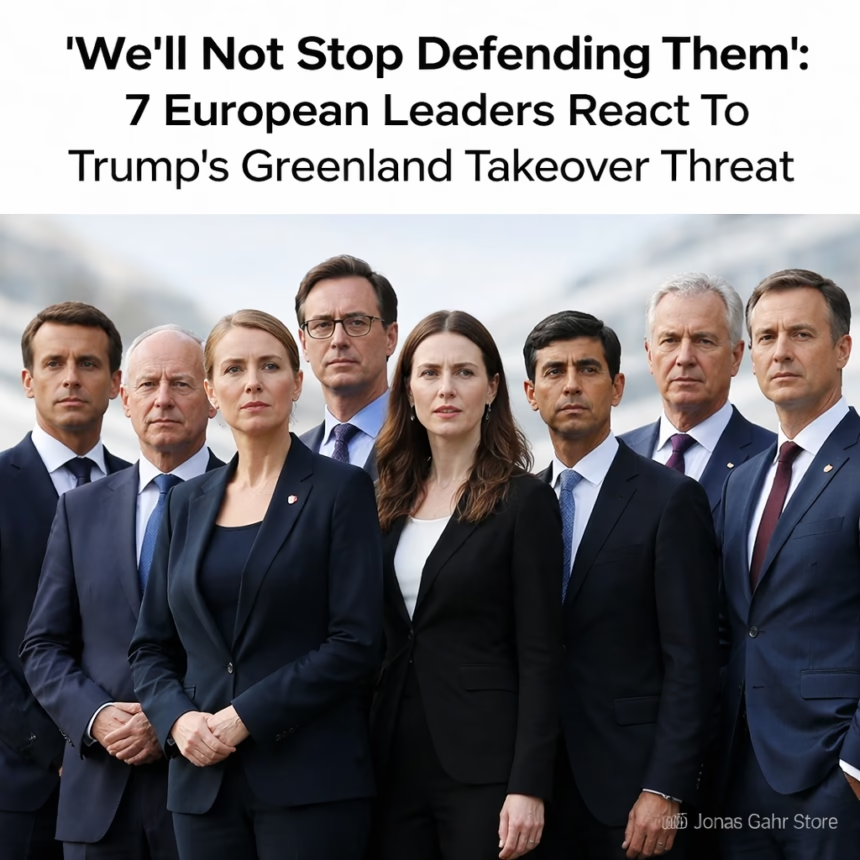
Seven prominent European leaders or their representatives articulated a unified position against the proposed takeover, emphasizing the inviolability of national sovereignty.
Danish Prime Minister Mette Frederiksen reiterated her government's position, stating, "Greenland is not Danish. Greenland is Greenlandic. I strongly hope that this is not meant seriously." She emphasized the strong bond between Denmark and Greenland, built on mutual respect.
* French President Emmanuel Macron underlined the importance of international law and multilateralism. A spokesperson from the Élysée Palace indicated France's firm belief in respecting the sovereignty of nations and the established international order, implicitly rejecting any notion of territorial acquisition through purchase.
* German Chancellor Angela Merkel (at the time) conveyed Germany's unwavering support for Denmark. Her government stressed the sanctity of national borders and the principle that territories are not commodities to be bought or sold, highlighting the bedrock principles of European stability.
* UK Prime Minister Boris Johnson (at the time) affirmed the United Kingdom's close alliance with Denmark and expressed understanding for Denmark's position. A Downing Street representative reiterated the UK's commitment to respecting national sovereignty and international norms.
* Norwegian Prime Minister Erna Solberg emphasized the unique status of Arctic nations and the importance of cooperative governance in the region. She stated that such proposals undermine the spirit of cooperation vital for Arctic stability and development.
* Swedish Prime Minister Stefan Löfven voiced strong support for Denmark and Greenland, underscoring the importance of regional stability and adherence to international legal frameworks. He highlighted the Nordic commitment to peaceful international relations.
* The European Union, through spokespersons for its key institutions, affirmed its solidarity with Denmark, a member state. The EU underscored the importance of upholding international law and the sovereignty of nations, signaling a collective European stance against any attempts to bypass these fundamental principles.
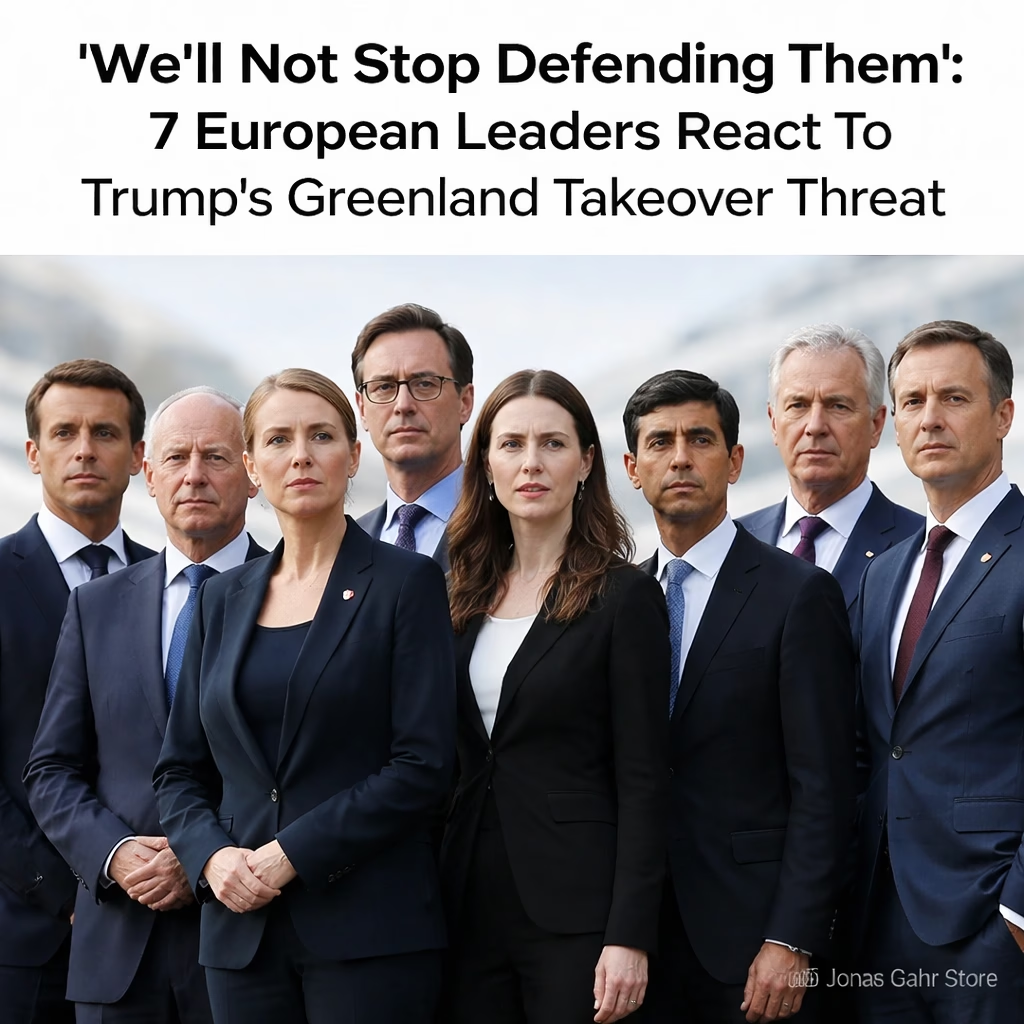

These statements collectively reinforced the sentiment that such proposals were not only diplomatically inappropriate but also challenged fundamental tenets of international relations, particularly in an era striving for peaceful coexistence and respect for national integrity.
Impact: Geopolitical Repercussions and Regional Shifts
The Greenland takeover threat, though ultimately dismissed, had far-reaching impacts on various stakeholders, from national governments to the broader geopolitical landscape of the Arctic.
Denmark’s Sovereignty and Transatlantic Relations
For Denmark, the proposal represented a direct challenge to its sovereignty and its historical relationship with Greenland. The diplomatic spat with the United States placed strain on transatlantic relations, forcing Denmark to assert its national dignity while navigating its role as a key NATO ally. The incident highlighted the complexities of maintaining strategic alliances when faced with unconventional diplomatic approaches.
Greenland’s Identity and Future
For Greenland, the discussion, while affirming its status as "not for sale," also brought renewed global attention to its unique identity and its aspirations for greater self-determination. The debate underscored its rich natural resources and the potential for economic development, but also the environmental challenges posed by climate change. It spurred further internal discussions about its path towards economic independence and its role on the international stage.
Arctic Geopolitics and International Norms
The incident significantly heightened global awareness of the Arctic region's escalating geopolitical importance. It served as a stark reminder of the competing interests of global powers in an area increasingly made accessible by climate change. The European reaction reinforced the importance of multilateralism and international law in governing territorial claims and resource management, contrasting with unilateral ambitions. It also prompted renewed discussions within the Arctic Council and other international forums about responsible governance and environmental stewardship in the region.
What Next: Sustained Focus and Evolving Dynamics
While the immediate threat of a U.S. purchase of Greenland has receded, the underlying strategic interest in the territory and the broader Arctic region persists. Future developments are likely to focus on strengthened partnerships, sustainable development, and multilateral cooperation.
More Read

Reinforced European-Danish-Greenlandic Ties
Expect continued and possibly intensified political, economic, and cultural support from European nations to Denmark and Greenland. This will likely manifest in increased investment in Greenland's infrastructure, sustainable industries, and research, emphasizing a partnership model over any notion of acquisition. European countries will likely continue to advocate for Greenland's self-determination within the framework of the Kingdom of Denmark.
Continued Focus on Arctic Governance
The incident has solidified the commitment of European nations to multilateral cooperation in the Arctic. The Arctic Council and other international bodies will remain crucial platforms for addressing issues ranging from climate change and environmental protection to resource management and indigenous rights, contrasting sharply with any unilateral approaches.
Greenland’s Path to Self-Determination
Greenland's own journey towards greater economic independence will continue to be a central theme. Discussions about leveraging its natural resources responsibly, developing its tourism sector, and diversifying its economy will shape its future trajectory. The increased international attention may also lead to greater direct engagement between Greenland and other nations, within the parameters of its autonomous status.
Evolving US Engagement in the Arctic
While the specific proposal for purchasing Greenland was rejected, the United States' strategic interest in the Arctic remains. Future U.S. administrations are likely to pursue engagement through cooperation agreements, scientific partnerships, and diplomatic channels, focusing on shared security interests and environmental concerns, rather than territorial acquisition. The melting ice caps will ensure Greenland remains a focal point for international attention, making its future a critical component of global geopolitical and environmental discussions.