Manila's Half-Billion Peso Lifeline: Payouts Begin Jan 28 Amidst Economic Currents
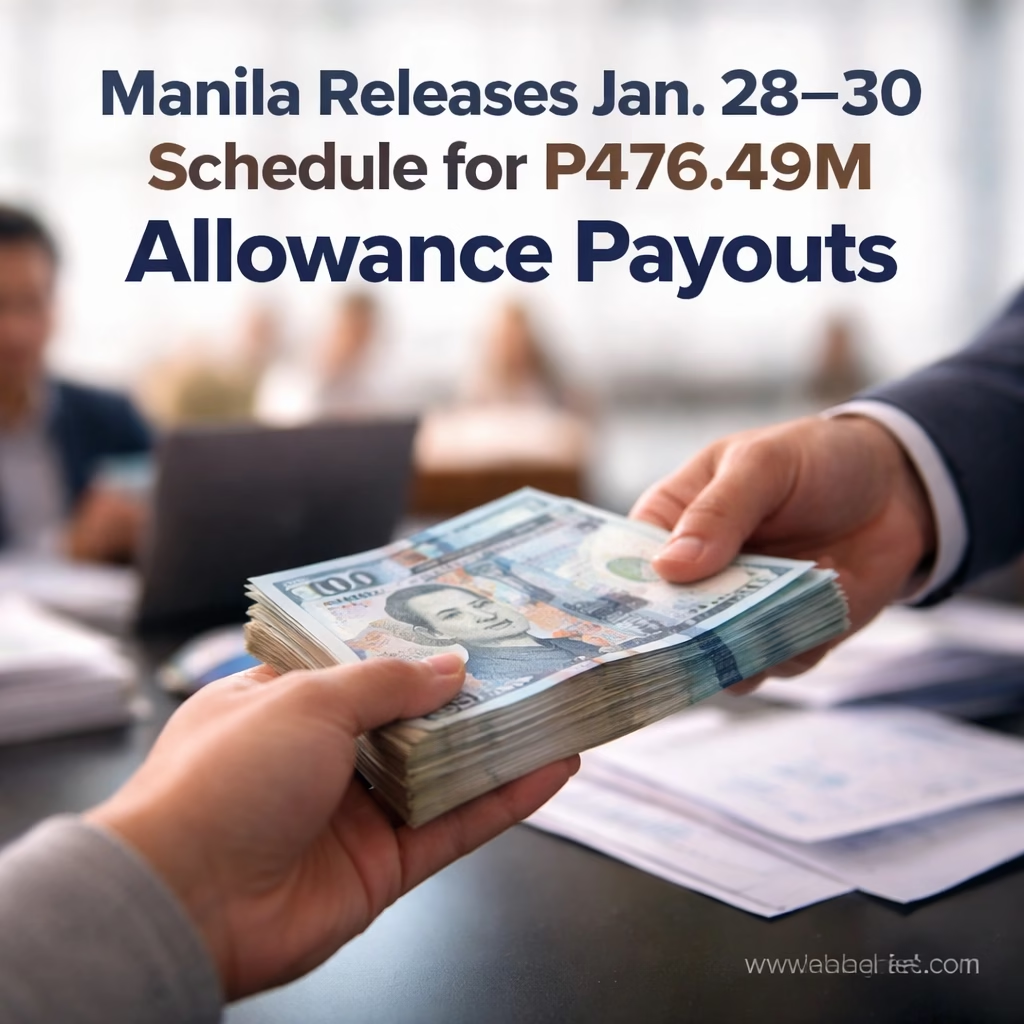
Manila City is set to disburse a substantial P476.49 million in allowance payouts, with a detailed schedule released for January 28 to 30. This significant financial aid targets various vulnerable sectors within the capital, providing crucial support amidst ongoing economic challenges.
Background: A Legacy of Social Welfare
The distribution of allowances and financial assistance has long been a cornerstone of Manila's social welfare programs, aimed at alleviating poverty and supporting its most vulnerable residents. These initiatives typically cater to senior citizens, persons with disabilities (PWDs), solo parents, students, and indigent families, forming a critical safety net within the densely populated urban center.
The city government, through its Department of Social Welfare (DSW) and other relevant offices, regularly allocates substantial portions of its budget to these direct aid programs. These allowances are not merely one-time handouts but often represent a consistent effort to provide supplementary income for daily necessities, educational expenses, and medical needs.
In recent years, the frequency and magnitude of these payouts have increased, reflecting a heightened commitment to social equity and economic resilience, particularly in the wake of global and national economic shifts. The current P476.49 million allocation represents one of the largest single disbursement events scheduled by the city government, underscoring the scale of its commitment to its constituents.
More Read

Historical Context of City Aid
Manila's history of direct financial assistance traces back decades, evolving from localized barangay-level support to comprehensive city-wide programs. These programs often gain momentum during periods of economic downturns or public health crises, where the need for immediate relief becomes paramount. The city's DSW meticulously maintains databases of eligible beneficiaries, ensuring that aid reaches those who meet specific criteria for vulnerability.
Previous payout cycles, while perhaps not always reaching this specific magnitude, have consistently demonstrated the city's capacity to organize and execute large-scale financial distributions, often involving thousands of personnel and volunteers across its districts. These past experiences provide valuable lessons in logistics, security, and public management, which are now applied to the upcoming disbursement schedule.
Key Developments: Precision in Payouts
The city's announcement details a precise three-day schedule for the P476.49 million allowance payouts, designed to ensure an orderly and efficient distribution process. The disbursements are slated for January 28, 29, and 30, with specific venues and time slots expected to be communicated directly to beneficiaries or through barangay offices.
More Read

Logistical preparations are already in full swing, involving coordination between the City Treasurer's Office, the Department of Social Welfare, the Manila Police District (MPD), and various barangay units. This multi-agency approach is crucial for managing the expected influx of beneficiaries and maintaining peace and order at distribution sites.
Logistical Framework and Security Measures
Distribution centers are strategically chosen across Manila's districts, often utilizing large public spaces like gymnasiums, community halls, and school auditoriums to accommodate thousands of recipients while adhering to crowd control protocols. Beneficiaries are typically required to present valid identification and their beneficiary cards for verification, a critical step to prevent fraud and ensure that funds reach the rightful individuals.
Security is a paramount concern for such large cash distributions. The Manila Police District will deploy personnel to each payout site to ensure the safety of both beneficiaries and city employees handling the funds. Measures include perimeter security, crowd management, and plainclothes officers to deter any illicit activities. Furthermore, health and safety protocols, including mandatory mask-wearing and social distancing where feasible, remain in effect, reflecting the city's ongoing vigilance against public health risks.
Streamlined Verification Process
To expedite the process and minimize waiting times, the city has implemented a streamlined verification system. This often involves pre-registered lists, digital scanning of IDs, and designated lanes for different categories of beneficiaries. The goal is to make the experience as smooth and dignified as possible for the recipients, many of whom are elderly or have mobility challenges.
Impact: A Boost for Manila’s Vulnerable
The P476.49 million allowance payout is anticipated to have a profound and immediate impact on thousands of households across Manila. For many beneficiaries, this financial assistance is a critical lifeline, directly addressing urgent needs for food, medicine, utilities, and educational supplies for their children.
Senior citizens often rely on these allowances to cover medical expenses and daily sustenance, supplementing meager pensions or lack thereof. Persons with disabilities find the funds invaluable for specialized care, mobility aids, or simply to cope with the higher cost of living associated with their conditions. Solo parents receive crucial support for raising their children, easing the financial burden of single parenthood.
More Read

Economic and Social Ripple Effects
Beyond individual households, the mass disbursement is expected to inject a significant amount of capital into the local economy. Beneficiaries will likely spend the money on essential goods and services from local markets, sari-sari stores, and small businesses within their communities. This localized spending can create a ripple effect, stimulating economic activity at the grassroots level and supporting small entrepreneurs.
Socially, such programs contribute to a sense of security and stability among vulnerable populations. Knowing that the city government is actively providing support can alleviate stress and foster a stronger sense of community and trust in local governance. It underscores the city's commitment to inclusive growth, ensuring that no segment of its population is left behind in its development agenda.
Enhancing Quality of Life
The allowances directly contribute to an improved quality of life for recipients. Access to better nutrition, necessary medication, and educational opportunities can have long-term positive effects on health outcomes, academic performance, and overall well-being. For families struggling to make ends meet, this financial boost can mean the difference between hardship and a measure of comfort and stability.
What Next: Sustaining Support and Future Initiatives
Following the successful completion of the January 28-30 payouts, the city government is expected to conduct a post-distribution assessment to evaluate the efficiency and reach of the program. This review will inform future payout schedules and potential adjustments to the aid distribution mechanisms.
The continuity of these allowance programs is a key priority for Manila's leadership. Discussions are ongoing regarding the sustainability of such large-scale financial aid, exploring options for budget allocations in upcoming fiscal years. The city aims to not only maintain but potentially expand the scope and reach of its social welfare initiatives to cover more vulnerable sectors or increase the frequency of assistance.
Long-Term Vision for Social Welfare
Looking ahead, Manila is exploring innovative approaches to social welfare, including the potential for digital disbursement methods to further enhance efficiency and security. While cash payouts remain prevalent, the city is gradually integrating technology to streamline registration, verification, and payment processes, aiming for greater convenience and reduced logistical burdens for both the government and the beneficiaries.
The city government's long-term vision includes strengthening community-based support systems, providing skills training and livelihood programs alongside direct financial aid. This holistic approach aims to empower residents to achieve self-sufficiency, reducing long-term dependence on government assistance while fostering a resilient and thriving urban community. The P476.49 million payout is a testament to Manila's unwavering dedication to its people, setting the stage for continued support and development initiatives.