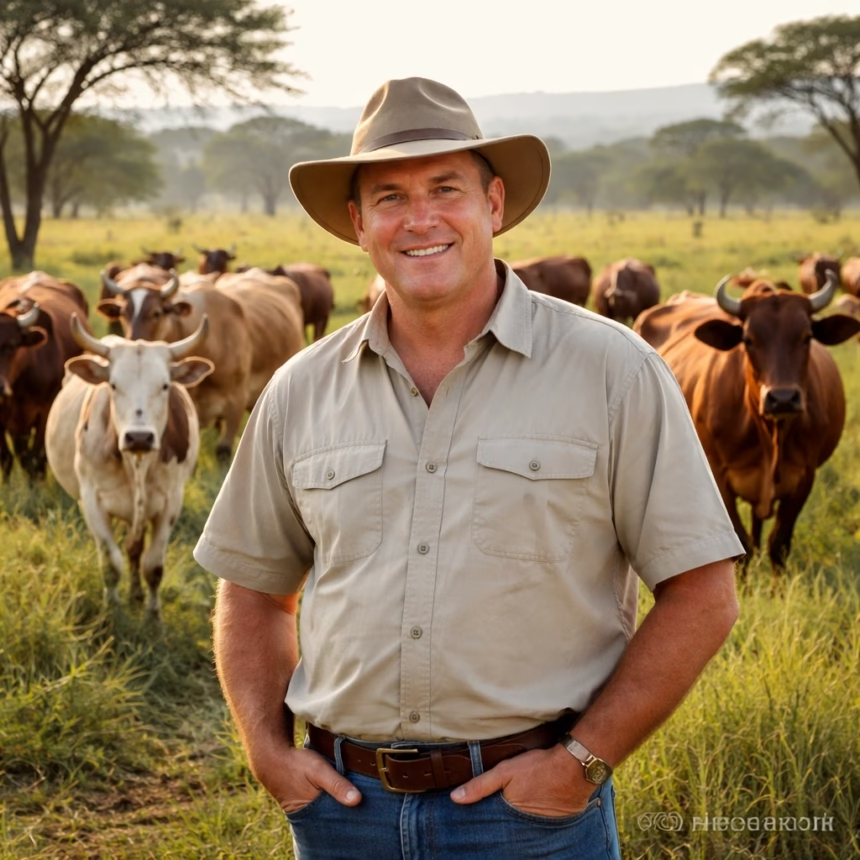
In a significant move poised to reshape Zimbabwe's livestock landscape, prominent farmer Mark Hook is spearheading the revitalization of the Boran and Nkone cattle societies. This ambitious initiative, unfolding across key agricultural regions of Zimbabwe since 2017, aims to re-establish these resilient indigenous breeds as cornerstones of the nation's beef and dairy industries. The concerted effort seeks to harness the breeds' inherent hardiness and adaptability, offering sustainable solutions for local farmers amidst evolving environmental and economic challenges.
A Legacy Lost and Found: The Historical Context
Zimbabwe's cattle industry has a rich history, deeply intertwined with its diverse indigenous breeds. The Nkone, a Sanga type cattle, is indigenous to Southern Africa, particularly noted for its striking black and white coat patterns and exceptional adaptability to harsh local conditions. Historically, Nkone were prized by local communities for their dual-purpose capabilities, providing both meat and milk, alongside their use as draught animals. The Boran, originating from the Borana Oromo people of southern Ethiopia, gained prominence across East Africa for its remarkable drought resistance, disease tolerance, and excellent beef characteristics. Both breeds were present in Zimbabwe for decades, valued by commercial and communal farmers alike for their resilience in the face of prevalent diseases and challenging climates.
However, the late 20th and early 21st centuries saw a gradual decline in the formal recognition and structured breeding of these indigenous breeds. Economic shifts, land reform programs, and a growing emphasis on exotic European breeds, perceived to offer faster growth rates and higher milk yields, led to a dilution of purebred populations. Farmers often cross-bred, inadvertently losing the unique genetic advantages of Boran and Nkone. Formal breed societies struggled to maintain momentum, with many becoming dormant or ceasing operations entirely. This period resulted in a significant loss of structured genetic improvement programs, performance recording, and organized marketing channels for these invaluable local assets.
Mark Hook, a third-generation Zimbabwean farmer with deep roots in the livestock sector, witnessed this decline firsthand. His family's ranching operations, spanning decades, had always valued the hardiness and efficiency of indigenous stock. Recognizing the immense untapped potential and the critical need for genetically sound, climate-adapted cattle, Hook began advocating for the re-establishment of formal structures to support these breeds. His vision was to not only preserve genetic purity but to elevate Boran and Nkone to their rightful place as commercially viable and sustainable options for all Zimbabwean farmers.
Pivotal Developments: Rebuilding from the Ground Up
The journey to revive these societies officially began in 2017 with the re-establishment of the Boran Society of Zimbabwe (BSZ). Mark Hook took on the chairmanship, assembling a dedicated team of breeders and enthusiasts. The initial phase focused on identifying existing purebred Boran herds across the country, many of which had been maintained informally by a handful of committed farmers. The BSZ quickly moved to establish a robust framework for breed registration, mandating strict adherence to breed standards and the implementation of DNA profiling to ensure genetic authenticity. By early 2018, the society had enrolled over 20 founding members, collectively representing several thousand Boran cattle.

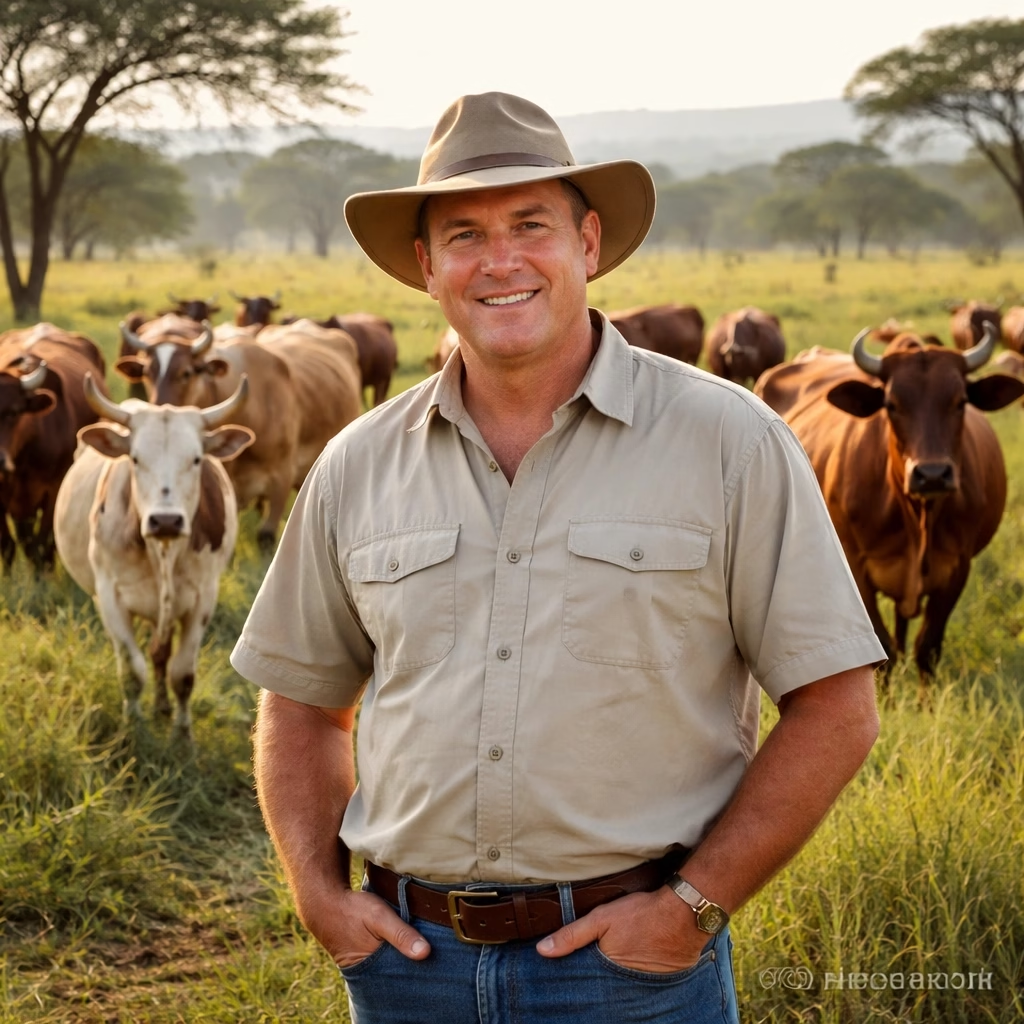
Following the success and growing interest in the Boran revival, Hook turned his attention to the Nkone breed. In late 2023, the Nkone Cattle Breeders Society of Zimbabwe (NCBSZ) was officially launched, with Hook again at the helm. This launch was met with enthusiasm from both commercial and small-scale communal farmers, recognizing the Nkone's unique attributes for diverse farming systems. The NCBSZ immediately set out to mirror the Boran society's successful model, focusing on genetic preservation, performance recording, and the development of a comprehensive national herd book. Initial membership for the NCBSZ included 15 committed breeders, primarily from Matabeleland and Midlands provinces, areas historically known for Nkone populations.
Key to both societies' strategies is the implementation of rigorous performance testing programs. These programs track crucial traits such as growth rates, calving intervals, fertility, and disease resistance, providing breeders with data-driven insights to make informed breeding decisions. The societies are also actively collaborating with the Department of Livestock and Veterinary Services and local academic institutions, including the University of Zimbabwe, to conduct research and develop best practices tailored to the Zimbabwean environment. Educational workshops and field days have become regular features, empowering farmers with knowledge on genetics, animal husbandry, and marketing strategies. The first official Boran auction held in September 2020 saw impressive prices for registered animals, signaling strong market confidence and the growing demand for quality indigenous genetics.
More Read

Far-Reaching Impact: Benefits for Farmers and the Nation
The revival of the Boran and Nkone societies is already yielding tangible benefits across Zimbabwe's agricultural sector. For individual farmers, particularly those operating in marginal rainfall areas or facing significant disease challenges, these breeds offer a lifeline. Boran cattle are renowned for their exceptional feed efficiency, thriving on low-quality forage, and their inherent resistance to common tick-borne diseases, reducing veterinary costs significantly. Farmers adopting Boran genetics report improved calving rates, increased calf survival, and a substantial reduction in input expenses. The beef quality of Boran is also highly regarded, commanding premium prices in local and regional markets.
Similarly, the Nkone's resurgence provides a robust solution for diversified farming. Its dual-purpose nature means farmers can benefit from both milk and meat production, enhancing household food security and income streams. The breed's docile temperament makes it ideal for smallholder farmers, and its hardiness ensures productivity even under harsh conditions. By focusing on purebred animals and structured breeding, farmers can now access registered Nkone bulls and heifers, ensuring predictable genetic outcomes and accelerating herd improvement.
Beyond individual farm gates, the initiative contributes significantly to national food security and climate resilience. By promoting breeds that are naturally adapted to the Zimbabwean climate, the societies are fostering a more sustainable and less resource-intensive livestock industry. This genetic diversity acts as a crucial buffer against the impacts of climate change, such as prolonged droughts and increased disease pressure. Furthermore, the formalization of these breed societies is creating new economic opportunities, from specialized breeding operations to value-added processing, contributing to rural development and employment. The increased availability of high-quality indigenous genetics is also boosting the overall quality of the national herd, potentially positioning Zimbabwe as a regional leader in sustainable livestock production.
Looking Ahead: Milestones and Future Prospects
The momentum generated by Mark Hook and the revitalized Boran and Nkone societies is set to continue, with ambitious plans for the coming years. Both societies aim to significantly expand their membership base, targeting over 100 active members for each by the end of 2025. This expansion will involve extensive outreach programs, particularly to communal farming areas, to demonstrate the practical benefits of indigenous breeds.
A key milestone for the near future includes the establishment of a fully integrated, national herd book system for both breeds, leveraging digital technologies for efficient record-keeping and genetic analysis. This system will facilitate easier access to pedigree information, further enhancing transparency and trust within the breeding community. Regular national breed shows and highly publicized auction sales are planned to showcase top-quality animals, stimulate competition, and drive market demand. The first annual Nkone National Show is tentatively scheduled for late 2024, expected to draw significant interest.
The societies also envision exploring regional collaboration and export potential. With the Southern African Development Community (SADC) region increasingly focused on climate-smart agriculture, Zimbabwe's Boran and Nkone genetics could offer valuable solutions to neighboring countries. Challenges remain, including securing consistent funding for research and development, training a new generation of extension officers skilled in indigenous breed management, and overcoming lingering biases towards exotic breeds. However, with the dedicated leadership of Mark Hook and the growing enthusiasm among Zimbabwean farmers, the future for Boran and Nkone cattle looks brighter than ever, promising a resilient and prosperous livestock sector for the nation.